
3 minute read

Meet the Authors
Key Takeaways
What you need to know
Gasmig is implementing SAP Sales and Service Cloud for Utilities and integrating it with SAP CCS and SAP ECC, putting integration quality at the center of its customer experience modernization.
The project shows utilities and oil and gas operators how to pursue front-office gains while the SAP digital core decision stays separate, with only 15% of organizations running unified, governed data across SAP and non-SAP systems.
For SAP CX leaders, integration architects, and ERP modernization leaders, Gasmig's disclosure reframes the 360-degree customer view as an operational data dependency, not a screen design.
The Minas Gerais Gas Company’s (Gasmig’s) customer experience modernization is a front-office project with core-system dependencies, and that tension is the whole story. As reported by SAP Brazil, Gasmig is implementing SAP Sales and Service Cloud for Utilities and integrating it with SAP CCS and SAP ECC. The payoff depends on whether customer, billing, contract, consumption, and service data remain sufficiently consistent to support the intended 360-degree view.
That makes Gasmig a useful reference point for utilities and oil and gas operators who want customer-facing wins while keeping digital core modernization a separate decision. The company is centralizing customer relationship management and sales management to reduce response times and provide service teams with a consolidated view of interactions. The architecture is the part worth watching. SAP CCS continues to handle contracts, measurement, and billing, while SAP ECC remains in the operating landscape.
Why This Matters Now
Gasmig’s sequencing reflects a broader pattern. Asset-intensive operators face pressure to improve service while back-end modernization runs in parallel or is deferred to a later phase. Forty-one percent of respondents to SAPinsider’s Enterprise Transformation survey cite changing customer expectations as a key driver of modernization, and another 41% point to architecting systems to improve customer experience and usage insights.
Explore related questions
Ask SAPi
A CX-first move gives call center operators and field sales teams a better interface for work they already do. It also tests how much the underlying SAP environment can support the integration customers now expect.
A 360-Degree View With Dependencies
The operational intent is specific. Call center agents should be able to see consumption history, billing, requests, and service status in a single view, which should prevent customers from repeating themselves and help agents resolve requests faster. For a gas distributor, response speed and information accuracy can affect customer confidence and safety during maintenance, emergencies, or service disruptions.
The same platform is meant to help field sales teams track the customer cycle from first contact through contract formalization, using centralized data to spot patterns and refine the sales process.
Rodrigo Messias, SAP digital solutions analyst at Gasmig, framed the intent. “Modernizing customer service and sales management is a fundamental step in evolving our relationship with customers,” Messias said. “With an integrated view of information, we can act more quickly, offer a more efficient service, and strengthen the experience across all channels.”
The Integration Layer Is Central
The hard work sits beneath the interface. SAP Sales and Service Cloud for Utilities must integrate with SAP CCS and SAP ECC to ensure customer records, billing, contracts, service requests, and status remain consistent across departments. That is where the risk concentrates. Additionally, a 360-degree view, the familiar promise of every record everywhere and preferably correct, is credible only when the data behind it is governed, timely, and trusted.
Natália Quadros, Head of CX LA Sales BR&SO at SAP, framed the same point around complexity: “Data integration and the centralization of interactions allow companies to advance in personalized service and operational efficiency, especially in environments with high service complexity.”
There is upside. Integration built for CX can inform broader modernization planning. Finally, CX integrations designed for reuse can serve current service goals while shaping later ERP decisions.
What This Means for SAPinsiders
Treat the 360-degree view as an operational dependency. SAP CX leaders should judge this rollout by whether agents can rely on customer, billing, request, and service-status data without manual reconciliation. The interface is the easy part. The proof is whether the data behind it holds up during a maintenance event or emergency, when accuracy carries safety weight. SAPinsiders should pressure-test the data feeds before celebrating the dashboard.
Scope the CCS and ECC interfaces for reuse, as integration is the real asset. SAP integration architects should design the SAP CCS and SAP ECC connections to outlast this project. CX integration will expose data quality issues that later SAP S/4HANA or RISE planning will confront anyway. IT leaders should solve the immediate service problem, but document every data gap they uncover, since it becomes the input for the modernization business case.
Keep the digital core timeline visible even when CX moves first. SAP ERP modernization leaders should not let a front-office win quiet the maintenance clock. Gasmig’s disclosure does not state whether an SAP S/4HANA or RISE roadmap is tied to this CX project. That silence is the point: end-of-maintenance pressure, cited by 57% of organizations surveyed by SAPinsider, continues to shape ERP planning regardless of where CX lands. Map this CX work against core timelines now, so integration done today feeds the migration decision rather than colliding with it.
More Resources
See All Related Content
Beyond Greenfield and Brownfield: Rethinking SAP ModernizationIn a recent Lemongrass Live discussion, experts emphasized that SAP organizations should prioritize creating immediate business value through AI innovations rather than solely focusing on the Greenfield or Brownfield migration paths to S/4HANA.
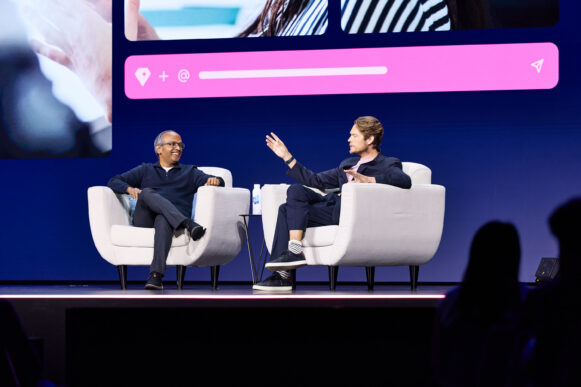
SAP’s CX Keynote Puts B2B Selling in FocusSAP Connect 2026 put ERP integration at the center of SAP's Customer Experience AI strategy. New B2B commerce capabilities, quoting assistants and marketing agents aim to connect customer-facing work with operational data, while Ericsson's quoting project shows how companies are beginning to put that approach into practice.
4 minute read

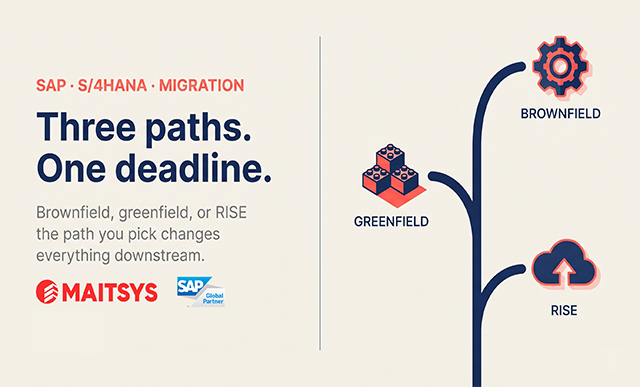
ECC to S/4HANA: Brownfield, Greenfield, or Selective Data Transition?To effectively transition from SAP ECC to S/4HANA, organizations must separately decide on their system transformation approach—whether through system conversion, new implementation, or selective data transition—and their operational model, with RISE with SAP primarily addressing the latter.
8 minute read