
Accelerate and secure your SAP Cloud journey with our unique, fully supported SAP-tailored platform, streamlining your SAP containerized deployments from design to operation anywhere.

Back to Vendor Directory






















SUSE
SUSE is a global leader in innovative, reliable, and secure enterprise open source solutions. We focus on business-critical Linux, enterprise container management, AI, and edge solutions. By collaborating with partners and communities, we empower our customers to innovate everywhere—from the data center to the cloud, the edge, and beyond.
SAP and SUSE have been innovating with open source business-critical solution platforms for over 25 years. We continue this success story by supporting our customers on their cloud journeys. We offer SAP-validated infrastructure solutions tailored to their hybrid-cloud and container-native needs, such as Edge Integration Cell , the next-generation hybrid integration runtime offered with SAP Integration Suite on SAP BTP. Today, most SAP customers choose SUSE as their preferred solution for running SAP applications. For more information, visit www.suse.com.
Featured Solutions
Safeguard your business continuity, futureproof your SAP project, and minimize risks and costs with a secure foundation for your SAP projects from your on-premises SAP S/4HANA to SAP Cloud.
Featured Content
This white paper outlines a strategic approach for CIOs and CSOs to navigate the unavoidable mandate of SAP Modernization, focusing on risk mitigation, security and operational agility.
Discover the key benefits and critical considerations for a secure and accelerated SAP S/4HANA transformation, focusing on infrastructure optimization and operational resilience.
Multimedia Center
See how SUSE solutions enables you to rapidly deploy and scale mission-critical SAP applications on your choice of hyperscalers with high availability and reduced complexity. Learn more at suse.com/cloud-for-sap.
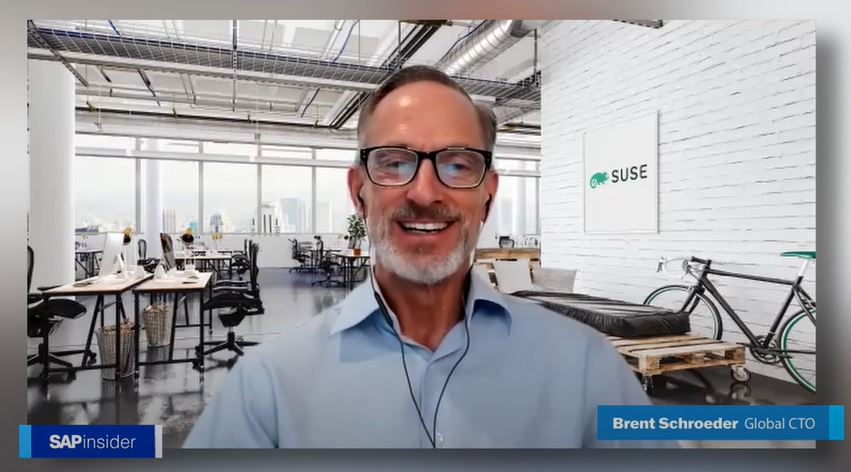
In this interactive interview, we sit down with Brent Schroeder, Global CTO, from SUSE to better understand the core issues and challenges that must keep on you radar to be successful with running SAP S/4HANA in the cloud.
Articles / Case Studies / Videos
How Bunge South America Slashed SAP Processing Times by 75%Bunge South America enhanced SAP performance by 50% and reduced infrastructure costs by a third by migrating from legacy AIX and PowerPC systems to SUSE Linux Enterprise Server, highlighting the benefits of platform modernization for business agility and sustainability.

SUSE Unveils SLES for SAP Applications 16 with AI-Driven OperationsSUSE has launched SUSE Linux Enterprise Server 16 for SAP applications, featuring a modern OS foundation and Trento 3.0 with AI-driven insights, aimed at simplifying operational complexities and enhancing automation for organizations transitioning to SAP S/4HANA.
How SUSE Delivers Digital Sovereignty in the CloudAs enterprises migrate SAP workloads to the cloud, maintaining control over data location, access, and compliance is increasingly challenging, prompting SUSE to offer policy-driven solutions and EU Sovereign Premium Support to help organizations navigate complex regulations and ensure data sovereignty.
Scaling SAP HANA Performance on Amazon EC2 High Memory InstancesSelecting the right environment for an SAP S/4HANA deployment is critical. Organizations need to ensure that any infrastructure choices provide appropriate flexibility and scalability while effectively managing costs. This is especially true for the SAP HANA in-memory computing platform. However, making the right infrastructure choices can be challenging as it is important to consider topics such as speed of deployment, operational agility, software integration options, and flexible cost management.
In this session, representatives from SUSE, Amazon Web Services, and Intel discuss how to achieve scale and performance for SAP HANA workloads using Amazon EC2 High Memory instances built with Intel processors and running SUSE technology. The webinar will provide insights into Amazon EC2 High Memory instances, and how they provide in-memory computing capabilities. These SAP-certified instances support up to 32 TiB of memory, offering a highly effective cloud solution.
Watch this session to learn how to:
- Reduce technical debt of your SAP systems
- Increase the value of your IT environments
- Innovate and become more resilient with SAP on AWS


Addressing Hybrid Integration Challenges with Edge Integration CellNavigating hybrid integration challenges is more critical than ever as enterprises aim to balance agility, security, and compliance. In this on-deamand webinar, discover how SUSE and SAP Edge Integration Cell (EIC) can work together to deliver a secure, scalable solution for hybrid environments. Learn how to deploy and manage EIC on Kubernetes with SUSE Rancher, and how to overcome common barriers such as skills gaps, security, and observability.
Whether you're looking to modernize legacy PI/PO systems or ensure data sovereignty while integrating with the cloud, this session will provide practical insights and a roadmap for success. Watch to explore how SUSE’s SAP-validated Kubernetes platform streamlines deployment and operations—no deep container expertise required.
Watch Now to learn how to:
Leverage Kubernetes without in-deep technology knowledge
Use the newest technology for EIC from SUSE Learn from practical use cases
Leverage these solutions for your unique integration needs
CONA’s Accelerated Journey to S/4HANA with SUSE and MicrosoftCONA Services, the IT leader behind Coca-Cola's North American bottling, successfully migrated to SAP S/4HANA on Azure Cloud using open source technology, achieving 99% faster SAP system builds, a 90% improvement in build quality, and a 60% reduction in costs.
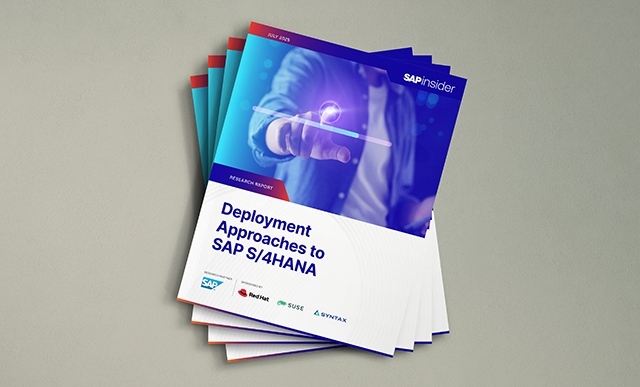
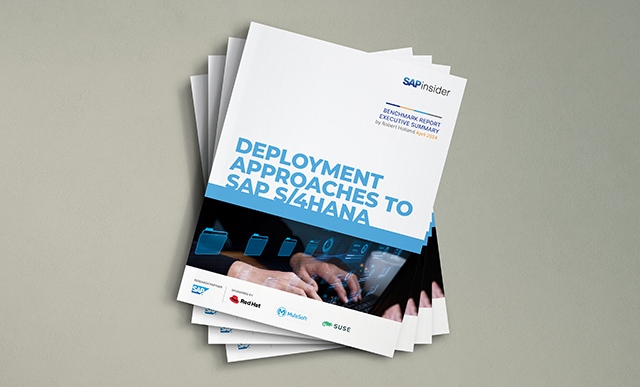
Deployment Approaches to SAP S/4HANA 2025The first productive release of SAP S/4HANA, version 1511, is just a few months shy of being 10 years old. In that time the market has changed significantly, although that change has been accelerating over the last 12-18 months as against changing steadily over time. Despite the launch of RISE with SAP in 2021, and SAP's push towards cloud ERP in general, most SAPinsiders have followed a more traditional approach in terms of both licensing and deployment. This has largely involved perpetual software licenses installed in on-premise infrastructure, although there has been a shift towards more of these deployments being in infrastructure-as-a-service environments in the private or public cloud. Despite not being new, it was originally launched not long after SAP S/4HANA itself, SAP S/4HANA Cloud has seen an increase in adoption over the years particularly due to the connection with RISE with SAP. However, that SAP S/4HANA Cloud adoption only represented a relatively small proportion of the SAP S/4HANA customer base.
This year that has changed. For the first time there is significant movement in the SAP S/4HANA market and the upcoming end of mainstream maintenance is driving that change. A majority of SAPinsiders are now focused on moving to SAP S/4HANA as quickly as possible. More than a third plan on deploying SAP S/4HANA Cloud through either RISE with SAP or GROW with SAP. And nearly a quarter of SAPinsiders now report that they will not complete a transition to SAP S/4HANA until after 2027. The combination of these factors, along with other data from the research, shows a market that has changed rapidly over the last year.
This year's research also explored the deployment model that SAPinsiders plan to use. The emphasis on getting to SAP S/4HANA quickly means that more organizations than in the last few years are considering a system conversion, or brownfield, deployment. However, SAPinsiders must weigh this approach against the work that they will have to do after deployment to achieve a cleaner core.
The findings indicate that the race to deploy SAP S/4HANA before 2027 has become more serious, and that many SAPinsiders have realized that this goal is not readily achievable. However, for those that have been properly preparing, there is still time.
Download the benchmark report to read the full data analysis and receive recommendations for your own plans.
- Understand the how SAPinsiders are deploying SAP S/4HANA and the environments they will use.
- Explore the factors that are having the biggest impact on deployment timeline.
- Learn about the infrastructure that is planned for those SAP S/4HANA deployments.
- See what role SAP Cloud ERP is playing moving forward.
Take Your SAP Hybrid Integration to the Next Level with SUSEExplore SAP's new flexible hybrid integration runtime, Edge Integration Cell, as an extension to SAP Integration Suite, which aids in API management and integration within private landscapes while providing guidance for migrating from PI/PO and ensuring data compliance and high availability.
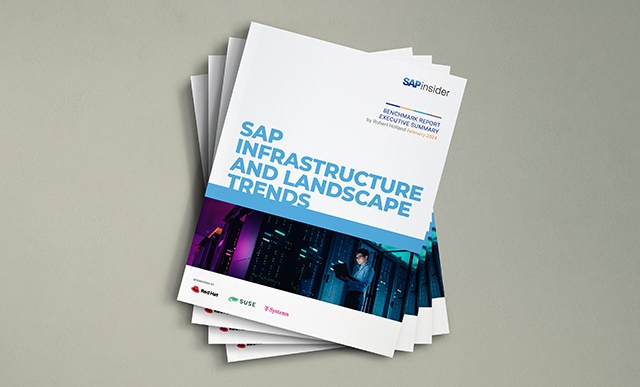
SAP Infrastructure and Landscape Trends 2024Infrastructure is the foundation of any SAP landscape. Although SAP has a goal of becoming a cloud company, many organizations have yet to make the move to cloud-based infrastructure. This is because a significant number of existing systems reside on legacy infrastructure. However, this infrastructure is changing. When SAPinsider first researched infrastructure and landscape trends in 2022, the top two infrastructure choices were a private-cloud environment and multi-tenant hyperscaler or public cloud. The third most likely infrastructure choice was new on-premise infrastructure, selected by more than a quarter of survey respondents. Now, many respondents are considering infrastructure from RISE with SAP as one of the more likely infrastructure choices after private-cloud or hosted environments.
The survey asked the respondents to about their SAP workloads, the infrastructure on which those workloads are running, plans for future infrastructure, the importance of sustainability goals in infrastructure planning, and how the organization was planning on achieving those infrastructure goals. Sustainability has become more important to organizations over the last two years, and there continues to be more focus on cloud-based infrastructure for the future. The most important goals of infrastructure change continue to related to minimizing operational inefficiencies and reducing costs while at the same time increasing flexibility and improving resilience.
Download the benchmark report to read the full data analysis from 176 members of the SAPinsider community and receive recommendations for your own plans.
- Explore the infrastructure that organizations are planning to use for their SAP workloads.
- Understand the timeline for updating that infrastructure.
- Learn about how respondents are planning to measure the success of infrastructure initiatives.
- See the actions they are taking to support more sustainable infrastructure.
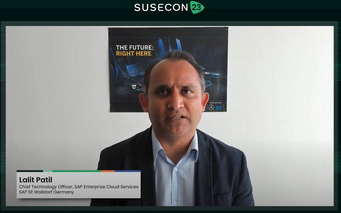
The CIO’s Transformation Report Card 2023 – SuseOver 50% of tech leaders are prioritizing two transformation initiatives: business process automation, standardization, or redesign, and transitioning to SAP S/4HANA. This is according to SAPinsider’s CIO 2023 Transformation Report Card and represents a considerable growth compared to last year, with 17 and 22 percentage point increases. Tech leaders identified two main drivers of digital transformation. Nearly 50% of respondents cited the business need for greater flexibility and innovation as the top driver of transformation, 17 points higher than last year. Over a third of respondents noted the upcoming end of maintenance for ECC, 18 points higher than last year. Regarding SAP’s role in transformation initiatives, a shift in perception has been observed over the past 12 months. This year, 47% reported using SAP for core ERP, new cloud solutions and innovation, 11 points higher than last year, and 33% reported SAP would be back-end primarily while best-of-breed would provide cloud and innovation, down 9 points from last year.
Cybersecurity Next Steps – Confidential ComputingData breaches cost companies millions of dollars every year. No organization wants their workloads compromised, and the highest levels of data privacy are required to innovate, build, and securely operate enterprise applications. With many employees continuing to work remotely new security vulnerabilities have been created. At the same time global cybersecurity regulators are strengthening their standards for data security and operation. Organizations need assurance of data integrity, data confidentiality, and code integrity. Confidential computing is a new security approach to encrypting workloads while they are being processed and can help organizations address these challenges.
Cybersecurity Threats to SAP Systems 2023In 2023, the focus of cybersecurity strategies for SAP systems shifted away from ransomware and malware attacks to addressing unpatched systems, concentrating on addressing system vulnerabilities over attack vectors. Exploring the details behind these changes, SAPinsider revealed some interesting in year-over-year trends during its third year of research on cybersecurity threats. Increasing regulatory compliance requirements, hybridization of environments, and economic pressures all played a role in influencing this shift in thinking.
The survey asked the respondents to rank the top cybersecurity threats to their SAP systems, ranging from most to least important. Ransomware attacks, unpatched systems, and credentials compromise were ranked as the most important threats to systems, similar to last year. These three are interconnected when it comes to root cause analysis. Credentials compromise is the gateway for threat actors to infiltrate systems and plant ransomware or malware. Failure to regularly apply patches exposes vulnerabilities that allow hackers to exfiltrate data, plant malicious code, or traverse across the network.
Download the benchmark report to read the full data analysis from 206 members of the SAPinsider community and receive recommendations for your own plans.
- Explore the top cybersecurity threats to SAP systems in 2023
- Learn what factors are impacting cybersecurity strategy
- Understand the challenges that organizations face with securing SAP systems
- See what elements organizations believe are necessary to secure SAP environments
Secure your SAP environment – Improve Security and Reduce Operational RisksSUSE solutions secure your SAP environment from the source – the platform’s core – to provide solutions built with a secure software supply chain. Along with SAP-specific features and industry-leading certifications, SUSE makes it a top priority to protect you from all security risks, including known and zero-day vulnerabilities.
Why the OS Matters for Digital Transformation with SAP S/4 HANAAttend this webinar to:
• Learn how innovations between OS and cloud providers have helped to ease the transition to the cloud.
• Learn best practices for managing a secure environment throughout the cloud migration process.
• Understand how to avoid or solve for common pitfalls that can cause migrations to derail.
Building Resilience and InnovationOrganizations today are facing a myriad of challenges. An uncertain macroeconomic climate, rising capital costs, a continued increase in global cybersecurity threats, supply chain issues, and skill shortages all impact their ability to innovate. These raise questions about the ability to ensure business continuity and understand where investment should occur and how to reduce costs without impacting growth.
Business continuity should be the starting point for any conversation, not just for SAP systems but for everything that communicates with them. That continuity should involve reducing downtime, but it extends to the move to the cloud, securing systems, and providing a technology platform. That technology platform needs to be designed for SAP solutions and should provide information on tuning and maintaining those solutions.
• Start by building a technology platform that provides improved business continuity.
• Ensure that any technology platform being implemented provides a secure foundation for both SAP and non-SAP systems.
• Don’t underestimate the benefits that a properly managed technology platform can bring.
Making the Right Platform Choice to Best Support Your Cloud Deployment of SAP S/4HANACustomers are embracing cloud deployment of SAP S/4HANA and it part of their infrastructure modernization process. As the development platform for SAP S/4HANA, SUSE’s thought leadership focuses on innovations to accelerate cloud migration, minimize downtime, and safeguard the SAP landscape. Making the right choice of platform is critical for operating your SAP environment in the cloud.
In this session, we will review the challenges that customers face in their migration journey and focus on the solutions to minimize downtime for mission-critical SAP workloads, especially some of the exclusive innovations that are being adopted by the Hyperscalers.
By attending this webinar, you will:
Learn how to accelerate the cloud deployment of SAP S/4HANA in a secure cloud environment
Understand how to minimize downtime and keep your services running
Maximize insights about your SAP S/4HANA and cloud environments
Discover how SUSE innovates with Hyperscalers for mission-critical SAP Workloads
Questions to Help you Define your AI and Digital Strategy with SAPDo you struggle with defining your AI and Digital Strategy with SAP? Artificial intelligence (AI), and machine learning (ML) are transforming the way in which modern enterprises are evolving today.
As companies plan to leverage digital technologies into their enterprise, they begin to ask these three critical questions:
How are companies engaging these solutions for a more intelligent enterprise?
What is the impact of these technologies on the business?
How do I drive value to my business through these technologies?
These decisions encourage companies to focus on where the organization wants to be in the near and far future. With that vision, companies can devise the steppingstones to reach a sturdy AI and digital strategy with SAP — which inevitably involves new digital technologies to get them there including SAP/S/4HANA.
In this webinar, Alan Clarke, SAP Alliance Director for EMEA North for SUSE, and Gerren Mayne, SAP Practice Director for Fujitsu in the UK, discuss the impact of AI, ML, and IoT on the evolving enterprise and how these digital technologies are enabling a future-proof ecosystem for companies.
In this webinar you will:
Explore how to define your AI and digital strategy with SAP
Hear about the benefits of AI and ML on business transformation and data maintenance
Learn how to leverage this technology to drive value
Gain practical tips and tricks to making your business more efficient and protected from risk
How Tech Executives are Leading Organizational and Technology Change – CIO Benchmark ResearchChange has come in many forms for business and IT leaders across all industries. Geopolitical events, market forces, changing consumer behavior, and commodity price fluctuations have all put various pressures on decision makers. Add to the fact that technology is rapidly evolving and transitions to new solutions such as SAP S/4HANA and the Cloud have […]
How Business Leaders are Scaling Platforms and InnovationHow Business Leaders are Scaling Platforms and Innovation Businesses today are driven to innovate by the pressure to achieve real-time analysis and insights. In response to dynamic requirements from customers and a desire to be agile and future-ready, they are moving to the cloud, to software-as-a-service environments, and adopting new technologies such as SAP S/4HANA. […]
On-Demand: How Leaders Manage Organizational and Technological Change on the Path to S/4HANA and the CloudHow Leaders Manage Organizational and Technological Change on the Path to SAP S/4HANA and the Cloud Change and transformation have become clichés in today’s discussion of business and technology challenges. Leaders have never had to manage such a mix of economic, market, and geopolitical pressures. This has forced executives to rapidly renovate their core infrastructure […]
Cloud Security Trends for SAP CustomersIn this on-demand webinar: The movement of enterprise workloads to the cloud continues to accelerate. Cloud environments, in one form or another, have been at the top of infrastructure choices for organizations over the last three years. This year, private cloud and public cloud environments were the top two infrastructure choices for organizations who are updating […]
Collaboration Is Key to a Successful MigrationSAPinsider spoke with Sherry Yu, Senior Director of SAP Success Architect at SUSE, a global leader in open-source solutions, about how SUSE helps accelerate SAP S/4HANA migration, as well as safeguard the SAP landscape once migration is complete.
Many organizations have yet to begin their migration to SAP S/4HANA or are in the early stages of the process. Undertaking such a large project can be daunting since there are myriad potential pitfalls throughout the process. However, the big move also provides opportunities for businesses to transform and scale to new levels.
Although this transformation presents significant obstacles, it also gives companies a chance to not just move to the cloud but also transform their entire business operation. Companies looking to leave behind on-premise systems may opt for a cloud-centric strategy in order to gain both agility and power, all while functioning in a more sustainable way.
Accelerate Your Transition to SAP S/4HANA in the Public CloudWebinar On-Demand: Migrating SAP S/4HANA to the public cloud enables business growth, higher productivity, and new avenues for innovation. But making the move with efficiency and agility takes a key requirement – the right platform and services.
Future-Proof Your SAP S/4HANA Cloud MigrationWebinar On-Demand: According to the latest SAPinsider research, the number of organizations leveraging the cloud as part of their SAP S/4HANA deployment is on the rise. And with most respondents (87%) indicating performance as a top requirement for their SAP S/4HANA initiative, it is imperative to implement performance measures as part of your cloud strategy.
4-Step Roadmap: Transition to SAP S/4HANA in the Public CloudSAP S/4HANA migration to the public cloud needs a platform. And a plan. Migrating SAP S/4HANA to the public cloud gives you the speed and flexibility you need, while lowering capital costs and boosting ROI. Get this 4-Step Roadmap to help plan an efficient transition.
Transforming Businesses with RISE with SAP on Microsoft AzureThis article introduces RISE with SAP as comprehensive “business transformation as a service” offering from SAP and its strategic partners. It explains the benefits of RISE with SAP as well as its main components and the main phases of a RISE with SAP engagements. Finally, it outlines benefits of a RISE with SAP on Microsoft Azure.
It breaks down how RISE with SAP engagement can be structured into four larger phases: Analyzing and improving business processes, technical migration, building the intelligent enterprise, and acceleration of adoption and continuously improving the business. These four facets provide a roadmap through a business transformation and how users can best utilize the related services and solutions going forward.
Review The Options for SAP HANA Cloud MigrationCustomers have options when moving SAP to the cloud. Whether running it natively in an IaaS environment, or in RISE, there are considerations that you may not be aware of. This webinar will review the options available, and help you do assessment based on considerations from Infrastructure perspective.
Join the webinar to understand the difference between the cloud migration options, IaaS vs RISE, availability of the key technical solutions in each option, operational procedure, and support process. Learn if you need to manage your systems if they are running in RISE and the lifecycle management work in RISE. In addition explore how to achieve highest level of high availability for your HANA systems What’s the typical use case of Edge Integration Cell.
Deployment Approaches to SAP S/4HANA 2024In this report:
SAP S/4HANA adoption continues to steadily increase as organizations move away from SAP Business Suite and SAP ECC. While that growth has not accelerated, the proportion of respondent organizations that have no plans for SAP S/4HANA is going down. This year, just 11% of respondents reported having no plans, the smallest number since SAPinsider started tracking this information in 2020. What is notable is that, while the move to SAP S/4HANA is still more likely than not to be part of a broader transformation, more respondents are focusing on completing their deployment as quickly as possible.
Click here to download the Benchmark Report
Click here to download the Detailed Findings
The survey asked the respondents to about their SAP S/4HANA deployment plans, the type of deployment they planned on doing, their cloud strategy, the timeline to switching to SAP S/4HANA, the length of their deployment, and factors impacting that deployment timeline, and the challenges that they faced in deploying SAP S/4HANA. As has been the case in the last four years, a system conversion is the most likely deployment model, and the most likely type of deployment is a standalone deployment. While using cloud-based infrastructure continues to be a focus for most respondents, this year saw respondents looking to simplify their landscapes with fewer planning on leveraging hybrid landscapes.
Download the benchmark report to read the full data analysis from 150 members of the SAPinsider community and receive recommendations for your own plans.
Understand the the deployment models that organizations are planning on using.
Explore the deployment timeline and the factors impacting that timeline.
Learn about what factors present the biggest challenges when performing a SAP S/4HANA deployment.
See the staffing approach to deployment projects and how organizations plan on using system integrators.
Webinar: Enterprise Cloud Deployment 2024SAP customers are increasingly investing in cloud environments, particularly through hyperscalers, driven by factors such as security, cost, flexibility, and scalability, with RISE with SAP emerging as a top choice despite the persistence of older local systems. Download the benchmark report to read the full data analysis from 133 members of the SAPinsider community and receive recommendations for your own plans.
Learn which why organizations are moving SAP workloads to the cloud.
Explore the factors influencing cloud deployment decisions.
Understand the criteria being used by respondents to measure the success of their cloud initiatives.
See the infrastructure being used for SAP workloads and how learn how that is changing.

Your request has been successfully sent