Featured Content
Topics

Explore critical topics shaping today’s SAP landscape—from digital transformation and cloud migration to cybersecurity and business intelligence. Each topic is curated to provide in-depth insights, best practices, and the latest trends that help SAP professionals lead with confidence.

Regions

Discover how SAP strategies and implementations vary across global markets. Our regional content brings localized insights, regulations, and case studies to help you navigate the unique demands of your geography.

Industries

Get industry-specific insights into how SAP is transforming sectors like manufacturing, retail, energy, and healthcare. From supply chain optimization to real-time analytics, discover what’s working in your vertical.

Hot Topics

Dive into the most talked-about themes shaping the SAP ecosystem right now. From cross-industry innovations to region-spanning initiatives, explore curated collections that spotlight what’s trending and driving transformation across the SAP community.

Featured Content
Topics

Explore critical topics shaping today’s SAP landscape—from digital transformation and cloud migration to cybersecurity and business intelligence. Each topic is curated to provide in-depth insights, best practices, and the latest trends that help SAP professionals lead with confidence.

Regions

Discover how SAP strategies and implementations vary across global markets. Our regional content brings localized insights, regulations, and case studies to help you navigate the unique demands of your geography.

Hot Topics

Dive into the most talked-about themes shaping the SAP ecosystem right now. From cross-industry innovations to region-spanning initiatives, explore curated collections that spotlight what’s trending and driving transformation across the SAP community.

SAP Platform and Technology

What is SAP Platform and Technology?

SAP Platform and Technology history started with mainframe-based applications, with the first official release being the SAP R/2 solution. This was eventually replaced by SAP R/3 which was the first application running a 3-tier client/server architecture. A client/server architecture continues to be the model for on-premise applications sold by SAP, even when those applications are often running on some form of cloud infrastructure. The newest SAP applications use a purely cloud-based infrastructure and are often software-as-a-service solutions.

What is SAP Platform and Technology?

SAP Platform and Technology history started with mainframe-based applications, with the first official release being the SAP R/2 solution. This was eventually replaced by SAP R/3 which was the first application running a 3-tier client/server architecture. A client/server architecture continues to be the model for on-premise applications sold by SAP, even when those applications are often running on some form of cloud infrastructure. The newest SAP applications use a purely cloud-based infrastructure and are often software-as-a-service solutions.

While these represented the infrastructure on which SAP solutions were built, SAP customers also needed platforms on which to build and develop applications. The first solution that SAP released was the SAP NetWeaver platform which was a software stack for many of SAP’s applications. First released in 2004, SAP NetWeaver consisted of an ABAP software stack as well as a Java development stack. This allowed organizations to build and deploy applications using business APIs and integration capabilities to other SAP solutions.

Building on the success of SAP NetWeaver, SAP released the SAP Cloud Platform as a similar resource for organizations looking to build cloud-based applications. More recently, SAP brought the SAP Cloud Platform together with other services and technologies to release the SAP Business Technology Platform (BTP). Key capabilities of SAP BTP include database and data management, analytics, application development and integration, and intelligent technologies like artificial intelligence and machine learning.

One of the most important capabilities of SAP solutions has been the ability to enhance them by creating customizations and extensions. Implementations of SAP ERP systems like SAP ECC frequently involved thousands or even hundreds of thousands of lines of customized code based on SAP ABAP and written using platforms like SAP NetWeaver. New solutions like SAP S/4HANA focus on extensions which provide additional functionality without requiring underlying code changes using SAP BTP as the means for achieving these extensions.

SAP BTP is also the technology solution that SAP organizations are looking to use to leverage to build on their investments in SAP S/4HANA.

From a technology and infrastructure perspective, nearly nine in ten SAP customers are now running at least some SAP workloads in the cloud. Underlying data repositories are also more likely to be moving to cloud-based infrastructure.

SAP has many implementation partners that will either provide a technology platform on which SAP solutions can run or will assist with the development of applications that leverage technologies like SAP BTP. Examples of partners providing infrastructure include Dell Technologies, HPE, and Intel. Cloud providers for SAP services include AWS, Google Cloud, and Microsoft. Implementation partners also assist organizations with building on this SAP Platform and Technology.
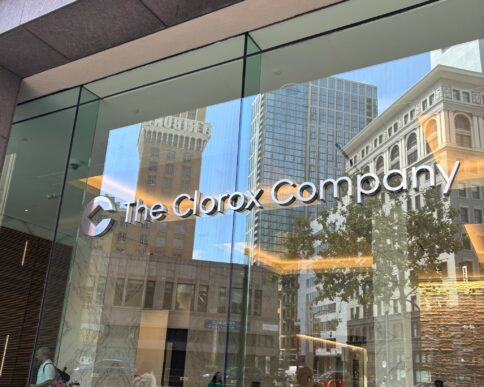

The Clorox Company headquarters building exterior reflecting city skyline during SAP S/4HANA transformation case study.
Exclusive: How Clorox Planned Its SAP S/4HANA TransformationClorox shares in an exclusive interview how it planned and executed its SAP S/4HANA transformation, from early design decisions to adoption, execution trade-offs, and post–go-live success.
Cell and Gene Therapy Manufacturing: Why Digital Orchestration Must Start EarlyCell and gene therapy manufacturing is exposing the limits of manual coordination. As programs scale, digital orchestration becomes essential to ensure traceability, reduce risk, and support execution across SAP and connected systems.
Code displayed on screen representing SAP continuous threat detection and cybersecurity monitoring.
Why SAP Security Is Shifting to Continuous Threat DetectionSAP security is evolving as state-sponsored attacks and zero-day vulnerabilities expose gaps in traditional controls. Organizations are shifting toward continuous threat detection inside SAP environments to manage risk.
TCS and SAP Deepen Alliance to Accelerate Enterprise GenAI and Cloud Adoption
The Deutschland Stack: Bridging the Gap Between AI Compute and SAP Business ValueDeutsche Telekom and SAP’s Industrial AI Cloud is more than a sovereign cloud pitch. Discover how the Deutschland Stack positions SAP as the operational control plane for digital twins, quality inspection, and sustainable industrial AI.
How Generative UI Is Shifting Enterprise Software from Application to ExecutionEnterprise software is evolving towards generative UI systems that dynamically assemble data and actions at runtime, addressing fragmentation across multiple environments and shifting the focus from static interface design to the reliability of underlying data architecture and governance.
Sovereign AI and the Deutschland Stack: Deutsche Telekom’s SOOFI and SAPExplore how Deutsche Telekom’s SOOFI initiative and SAP BTP are shifting the European cloud narrative from data residency to sovereign AI capability and industrial LLMs.
Haleon Chooses SAP Solutions to Replace LegacyHaleon has selected SAP Business Suite to replace its legacy ERP system, establishing an AI-ready enterprise aligned with its growth strategy and exemplifying a new approach to cloud ERP migrations that prioritizes data harmonization and AI capabilities.
Microsoft Signals Agent-First Shift as Enterprise Apps Move to Human-Agent CollaborationMicrosoft is transitioning enterprise applications towards an agent-first era, emphasizing a collaborative approach in software design that incorporates process experts and AI, while ensuring governance, trust, and security are embedded from the outset.
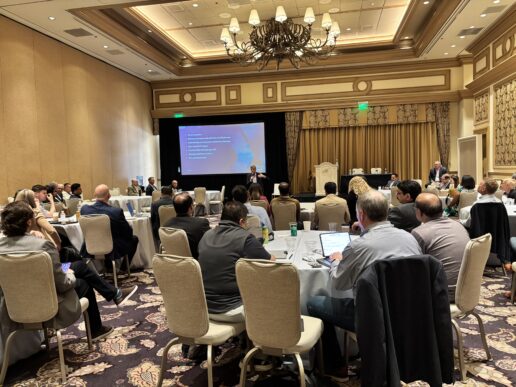
CIOs attend SAPinsider Las Vegas 2026 session on AI adoption and SAP strategy
SAP CIOs Say AI Adoption Remains Early Despite Growing AttentionCIOs say AI adoption in SAP environments remains early, with organizations prioritizing efficiency, cost control, and measurable outcomes over large-scale deployment.
Bellagio Hotel in Las Vegas, host location of SAPinsider Las Vegas 2026 CIO transformation discussions
CIOs Shift SAP Transformation Focus to Long-Term Value at SAPinsider Las Vegas 2026CIOs at SAPinsider Las Vegas 2026 discuss how SAP transformation decisions are shifting toward long-term value, with a focus on migration versus modernization, cost pressures, and post-go-live accountability.


Related Vendors