Featured Content
Topics

Explore critical topics shaping today’s SAP landscape—from digital transformation and cloud migration to cybersecurity and business intelligence. Each topic is curated to provide in-depth insights, best practices, and the latest trends that help SAP professionals lead with confidence.

Regions

Discover how SAP strategies and implementations vary across global markets. Our regional content brings localized insights, regulations, and case studies to help you navigate the unique demands of your geography.

Industries

Get industry-specific insights into how SAP is transforming sectors like manufacturing, retail, energy, and healthcare. From supply chain optimization to real-time analytics, discover what’s working in your vertical.

Hot Topics

Dive into the most talked-about themes shaping the SAP ecosystem right now. From cross-industry innovations to region-spanning initiatives, explore curated collections that spotlight what’s trending and driving transformation across the SAP community.

Featured Content
Topics

Explore critical topics shaping today’s SAP landscape—from digital transformation and cloud migration to cybersecurity and business intelligence. Each topic is curated to provide in-depth insights, best practices, and the latest trends that help SAP professionals lead with confidence.

Regions

Discover how SAP strategies and implementations vary across global markets. Our regional content brings localized insights, regulations, and case studies to help you navigate the unique demands of your geography.

Hot Topics

Dive into the most talked-about themes shaping the SAP ecosystem right now. From cross-industry innovations to region-spanning initiatives, explore curated collections that spotlight what’s trending and driving transformation across the SAP community.

SAP AI

What is Artificial Intelligence?

In simple terms, Artificial Intelligence (AI) refers to systems or solutions that can replicate human decision-making capabilities. These solutions often leverage a combination of software and hardware to mimic human capabilities like problem -solving and decision making.

AI Enabled Applications in SAP Portfolio

SAP applications leverage AI and ML algorithms extensively to either embed innovative capabilities within their solutions, help end-users perform advanced analytics with minimal technical proficiency, or allow data scientists and ML engineers to build advanced ML models and solutions. SAP HANA has been designed to be easily leveraged as a scalable ML platform. A powerful in-built tool is the Predictive Analytics Library (PAL). SAP data intelligence has a rich ML content library. Like most best-of-breed analytics tools, SAP Analytics Cloud provides users the ability to leverage advanced Machine Learning (ML) algorithms. While ML algorithms have many applications, predictive analytics remains a key one.

What is Artificial Intelligence?

In simple terms, Artificial Intelligence (AI) refers to systems or solutions that can replicate human decision-making capabilities. These solutions often leverage a combination of software and hardware to mimic human capabilities like problem -solving and decision making.

AI Enabled Applications in SAP Portfolio

SAP applications leverage AI and ML algorithms extensively to either embed innovative capabilities within their solutions, help end-users perform advanced analytics with minimal technical proficiency, or allow data scientists and ML engineers to build advanced ML models and solutions. SAP HANA has been designed to be easily leveraged as a scalable ML platform. A powerful in-built tool is the Predictive Analytics Library (PAL). SAP data intelligence has a rich ML content library. Like most best-of-breed analytics tools, SAP Analytics Cloud provides users the ability to leverage advanced Machine Learning (ML) algorithms. While ML algorithms have many applications, predictive analytics remains a key one.

On the business processes side, SAP AI offering  promises to infuse transformative intelligence to all key business processes areas like lead to cash, design to operate, source to pay and recruit to retire. AI algorithms help include innovative features across all these processes.

Key Considerations for SAPinsiders

  • Develop a fundamental understanding of AI algorithms: Explore what specific algorithms are available and understand where they can be leveraged. This will help you get optimal value from these tools. As an example, you should be aware that you can use clustering algorithms for customer segmentation. Here is an example of a good overview of critical algorithms used in SAP applications.
  • Understand the limitations of underlying data infrastructure: Understanding aspects of the underlying database is also critical. This helps you build pragmatic models. As an example, HANA has a 2 billion rows limitation, and hence you may have to leverage partitioning of tables for data larger than that. This impacts your model development as well.
  • Understand the limitations of tools available: Understanding the ML tools’ limitations is another aspect that saves you a lot of pain. For example, some PAL algorithms have limits on the number of parameters. This means you will have to pay more attention to feature selection or feature engineering while building models with these algorithms. You can find several examples of these limitations on the SAP help portal and SAP blogs.
Skyscrapers in a financial district representing enterprise finance leadership and strategic decision-making.
Wolters Kluwer Survey Shows How the CFO Role Is Expanding Beyond FinanceA new Wolters Kluwer survey finds the CFO role expanding beyond traditional finance responsibilities. As organizations adopt integrated planning platforms and AI-driven analytics, finance leaders are taking on broader roles in enterprise planning, technology initiatives, and investment decisions.
Lights shone on the Merlion as it overlooks Singapore's iconic Marina Bay Sands._SAP Labs AI talent program Singapore
SAP Labs and IMDA Launch Talent Program to Train Enterprise AI Engineers in SingaporeSAP Labs East Asia Singapore is partnering with Singapore’s Infocomm Media Development Authority (IMDA) to hire and train 50 AI scientists and machine learning engineers, strengthening the region’s role in SAP’s global enterprise AI development strategy.
Building Trustworthy AI, Clean-Core Reporting, and Cross-Platform SAP AnalyticsArtisan Edge CEO Egan Bosch emphasizes that SAP IT leaders should prioritize a strong data foundation and validated reporting logic for AI integration, focusing on business value and clean-core strategies while ensuring auditability and flexibility in hybrid environments.
AI Supply Chain Analytics and SAP Core
Improving Supply Chain Resilience in 2026 with AI, SustainabilitySAP is making agentic AI and sustainability the twin pillars of its 2026 supply chain roadmap, positioning them as prerequisites for resilience rather than side projects. For technology executives, that means redesigning day-to-day procurement and supply chain work around AI-driven decisions, automated workflows and emissions-aware planning. Agentic AI Reshapes Supply Chain Operations SAP argues that […]
RoguePilot: Exploiting GitHub Copilot for a Repository TakeoverA vulnerability in GitHub Codespaces allows for passive prompt injection via GitHub issues that can lead to full repository takeover by exfiltrating the GITHUB_TOKEN secret through manipulated instructions automatically processed by GitHub Copilot.
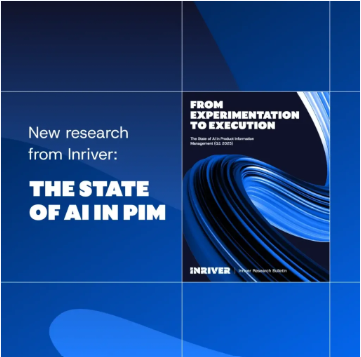
State of AI in PIM ReportA new research report highlights how brands are leveraging AI in Product Information Management to enhance trust, speed, and ROI, outlining key trends, adopter types, and the significance of human oversight amidst rising customer confidence.
Vattenfall and SAP Workflow
Distributed Energy Resources Enables Energy FlexibilitySAP is enhancing its utilities solutions with the SAP Distributed Energy Resources cloud platform, which aims to unify fragmented prosumer data into a strategic asset, facilitating new business models and communication between technical assets and commercial agreements in the evolving energy flexibility market.
Finance leader analyzing AI-driven financial data and performance dashboards on a digital interface | Wolters Kluwer
AI, Capital Allocation, and Risk Are Reshaping the CFO Role, Wolters Kluwer Report FindsA new Wolters Kluwer report finds AI adoption, capital allocation pressure, and regulatory complexity are accelerating CFO role transformation as finance teams take on broader planning, risk management, and decision-making responsibilities.
The Importance of Running SAP ReliablyRed Hat is transforming SAP operations by promoting a standardized, automated approach with its Enterprise Linux and Ansible solutions, enabling consistent, reliable performance and facilitating easier migration and modernization for SAP S/4HANA.
The Future of AI in Synthetic Test Data Management and AutomationAs we approach 2026, the success of AI-driven software automation hinges on overcoming test data bottlenecks, leading to a necessity for automated test data management that ensures continuous access to high-quality, compliant data for effective autonomous testing.


Related Vendors