1 minute read
Meet the Authors
Key Takeaways
What you need to know
SAP Sapphire Madrid 2026 confirmed that enterprise AI adoption succeeds when organizations treat it as a business operating model, prioritizing governance, verifiability, and user trust over agent quantity.
A clean core and modern data foundation are prerequisites for reliable SAP AI; companies like Ericsson and Fonterra demonstrated that S/4HANA modernization via RISE with SAP directly enables scalable, governed AI deployment across the enterprise.
Business-led AI selection is the defining factor separating successful SAP AI rollouts from stalled deployments, as seen across RWE, EssilorLuxottica, and the City of Madrid at SAP Sapphire Madrid.
At this year’s SAP Sapphire Madrid, SAP returned to its autonomous enterprise message with a sharper emphasis on what happens after AI agents are announced: how customers govern them, embed them into work, measure their outcomes, and get employees to use them consistently.
The customer keynote in Orlando framed AI value around readiness, data foundations, and standardization. Madrid moved the conversation closer to execution. SAP executives and customers focused on the practical conditions that determine whether AI becomes part of daily operations, including verified agents, human-in-the-loop controls, clean-core modernization, business-led use case selection, user adoption, and measurable operational value.
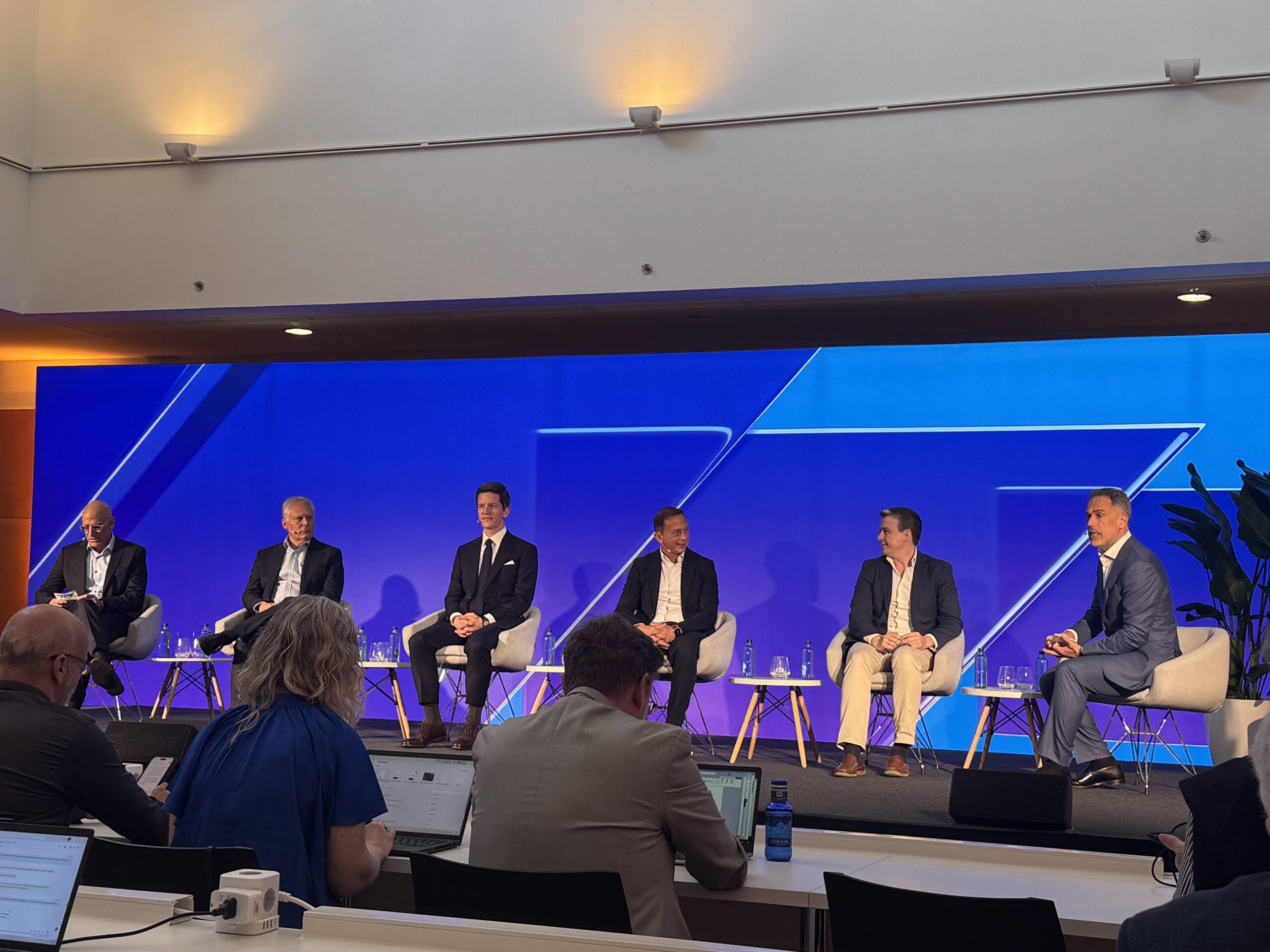
Manos Raptopoulos, SAP’s Global President for Customer Success for Europe, APAC, Middle East, and Africa, opened the Madrid keynote by returning to governance. SAP’s autonomous enterprise blueprint now depends on agents that can be observed, traced, measured, and controlled. He said customers need to understand what agents are doing, trace actions back when needed, measure the outcomes agents generate, and decide when an agent can move from human-supervised work toward greater autonomy.
Explore related questions
Ask SAPi
He also emphasized “verified agents,” including agents built under ISO-certified development controls and designed to support audit expectations when they touch sensitive business data. That set the tone for the Madrid customer stories. The message was not that SAP has more agents, but that agents need a robust business operating model.
Ericsson Brings AI from Experimentation to Scale
Ericsson showed it is moving AI beyond pilots. The company described AI as central to both its product strategy and internal operations, particularly as AI, cloud, and advanced networks converge around the next phase of digitalization.
Its approach starts with business pain points rather than technology selection: identify the problem, define measurable value, and only then determine where AI can make a meaningful difference. It also groups AI use cases by impact and feasibility so they can move from experimentation into transformation.
In terms of scale, Ericsson said it has reached 85,000 live users on unified Joule, supported by executive sponsorship, governance, and an early investment in data strategy. The company framed its data foundation as a prerequisite for trusted AI, including reusable governed data products that can support AI and application use cases across the organization.
Ericsson is now running two tracks in parallel. One is modernization through RISE with SAP while maintaining clean-core principles. The other is innovation and transformation, with a focus on moving AI use cases into operational execution. One example is an HCM-related capability developed with SAP around intelligent role recommendations, designed to help employees connect their roles to broader strategy while reducing manual effort.
EssilorLuxottica Shows AI at the Retail Edge
EssilorLuxottica brought a more customer-facing example to the Madrid stage, with SAP use cases involving wearable technologies for field technicians and store operations. One demonstration used smart glasses connected to Joule to support a retail associate during a customer interaction.
The staged scenario showed the associate scanning a customer profile, retrieving prior order history, recreating a sunglasses order, checking product availability, and adjusting the order based on an item identified through glasses—the wearable technology. SAP described the back-end work as involving Joule, AI-to-AI interaction, speech integration, SAP back-end integration, store availability, and inventory availability.
The use case was developed jointly by SAP and EssilorLuxottica in about two weeks. EssilorLuxottica also pointed to broader supply chain opportunities across a large operational footprint, including hundreds of sites and distribution centers.
Fonterra Connects AI Value to Modernization in Progress
Fonterra brought that modernization challenge into sharper focus. Toby Granwal, Chief Information Officer at Fonterra, described the New Zealand dairy cooperative as a large, complex manufacturer and exporter serving more than 100 countries. The company is moving to SAP S/4HANA through RISE with SAP, but Granwal emphasized that Fonterra does not see the work as only a technology upgrade.
Fonterra wants to move away from customized ways of working, reset to standard, simplify operations, and put more consistent processes in place across the business. At the same time, the company does not want to wait until the transformation is complete before delivering value. It is already running two manufacturing sites and one market in the new environment while continuing the broader journey.
Granwal described clean core as a deliberate choice, supported by the CEO and board. The company is trying to avoid recreating old complexity while using SAP BTP for extensions and innovation. That gives Fonterra a stronger AI foundation, because, as Granwal noted, AI is only as useful as the foundation it is built on.
The company also worked with SAP to identify practical AI opportunities by bringing business owners, process owners, SAP teams, and partners into the same room. The challenge was not a shortage of ideas, Granwal said. It was determining where the real value was and which use cases were ready to deploy. Fonterra is now live with AI-related work in areas including cash application, maintenance order recommendations, and conversational planning in transportation management.
The most telling point came around adoption. Granwal said the technology itself is not the hardest problem. The challenge is getting users to adopt and embed new ways of working day to day. He pointed to tools such as WalkMe as potentially important because they can help employees work through complex new processes and build new habits.
Industrial AI Starts with the User
The customer Q&A following the keynote made the adoption theme more concrete. Frank Scholtka, Director of Offshore Operations for the UK at RWE, explained why the company focused on offshore wind turbine troubleshooting as a use case. Offshore maintenance is operationally difficult, as technicians may need to travel by vessel for more than an hour in harsh weather conditions, and they cannot bring an entire warehouse of parts and tools with them.
For RWE, AI can help prepare maintenance teams before they travel offshore by recommending likely fault paths, required tools, equipment, software, and documentation. The goal is to help technicians fix the issue the first time, because a turbine that remains down may become inaccessible for days if weather conditions change. In that context, the business value is direct: asset availability and power generation depend on better preparation.
Scholtka also described the adoption logic. The AI supports the decisions of engineers, maintenance coordinators, and technicians; it does not replace them. Users know where the data comes from, contribute to it themselves, and get direct feedback on whether the recommendation helped them succeed. That transparency is what builds trust in safety-focused industrial environments.
Prysmian Group brought a different industrial perspective. Giovanni Cauteruccio, Group Chief Information & Digital Officer, said the company operates 109 plants, with 99 already on a single RISE system. He said Prysmian is using embedded AI rather than building every capability separately, which helps the company roll out innovation faster across a large plant network.
Prysmian is applying AI in areas including pricing, forecasting, engineering time-to-market, machine parameter setup, and routine activities such as sales order creation. Cauteruccio said AI-supported machine parameter setup has improved production output by 5% to 7% in one cable plant context, and that gains become material when scaled across a global plant network.
Public Sector AI Depends on Rules and Usability
The City of Madrid added a public-sector angle to the discussion. Juan Corro, General Manager Informática for the City of Madrid, said AI opportunities are broad across public administration, but the city has started with internal use cases before expanding toward citizen-facing services.
Corro said public administration has a strong foundation for AI because it operates through rules and regulations. That creates a defined operating environment where AI can help employees navigate procedures, wording, and administrative complexity without moving outside approved boundaries. The city has also moved income and revenue management from legacy systems to SAP Tax and Revenue Management, which Corro said has helped Madrid reach an all-time high in tax efficiency.
On the adoption front, Corro described frontline tax support work where employees may spend 11 to 13 minutes looking across systems and screens for information related to a specific citizen case. When an AI-supported prototype was shown to frontline workers, he said the reaction was immediate because the tool addressed a clear pain point. The lesson: When AI removes visible friction from work, change management becomes easier.
What This Means for SAPinsiders
AI adoption needs to be a business operating model. Madrid showed that SAP’s autonomous enterprise message depends on more than agent availability. Customers need governance, observability, traceability, outcome measurement, human-in-the-loop controls, and a clear path from supervised work to greater autonomy. SAP teams should evaluate AI programs by how they will be operated, not only by which agents are available.
Modernization and AI value run in parallel. Fonterra’s experience shows the tension many SAP customers face: They are still moving from SAP ECC to SAP S/4HANA, but the business expects AI value before the transformation is finished. That makes clean core, SAP BTP extensions, migration assistants, and embedded AI part of the same roadmap rather than separate initiatives.
Change management can be an AI bottleneck. Business ownership, user behavior, and trust will determine whether AI scales. RWE started with technicians and their maintenance decisions. Prysmian adjusted adoption based on use case complexity. The City of Madrid focused on frontline pain points. For SAP customers, the pattern is consistent: AI adoption improves when users can see how the system supports their work, where the data comes from, and what outcome it helps deliver.
More Resources
See All Related Content
Part Two: The Hidden Costs of Hybrid SAP Landscapes: The Human Toll of TransformationSupporting legacy environments while learning and operating new cloud-based SAP models creates dual responsibilities, fragmented workflows, and constant context switching for Basis and operations teams. Readers will explore how hybrid SAP strategies, while rational from an architecture and risk perspective, quietly create a heavy human and organizational toll on the teams that run them. The […]
SNP and Palantir Are Addressing the Manual Work Behind SAP ModernizationSNP and Palantir are bringing AI deeper into SAP transformation execution with a new solution designed to automate test-data selection, one of the most time-consuming activities in migration programs. The partnership highlights how AI is moving beyond copilots and analytics into the core work of SAP modernization, including testing, validation, governance, and S/4HANA migration readiness.
3 minute read
Part One: The Hidden Costs of Hybrid SAP Landscapes: The Tooling TrapRunning ECC, Cloud ERP, hyperscaler services, and custom integrations side by side often creates a fragmented operating model, forcing teams to manage multiple tools, dashboards, and workflows that were never designed to work together. Learn how hybrid SAP environments increase tooling overlap, infrastructure sprawl, and operational complexity — and why those costs rise fast without […]
1 minute read