1 minute read

Meet the Authors
Key Takeaways
-
Techwave is advising SAP ECC customers to upgrade to EHP8 as a crucial step to mitigate risks before migrating to SAP S/4HANA, ensuring they maintain support and reduce compliance exposure.
-
The impending end of SAP's support for ECC Enhancement Package 5 (EHP5) by December 31, 2025, poses significant security and operational risks, making the EHP8 upgrade essential for affected organizations to avoid a 'support cliff'.
-
Companies focused on transitioning to SAP S/4HANA must prioritize a calculated and structured upgrade process to ensure smooth transformation with reduced costs and risks, while establishing a governance-heavy, data-driven approach during the migration phase.
Techwave is urging SAP ECC customers to treat an EHP8 upgrade as a strategic “bridge” move—one that reduces near-term risk while creating a cleaner runway for S/4HANA planning and execution. In a recent blog post by Srikant Subramaniam, Vice President of Techwave, the point is not to delay modernization indefinitely, but to regain control over timing by stabilizing the platform, restoring support coverage, and reducing compliance exposure before tackling a larger transformation.
That stance is arriving as a hard deadline approaches for older ECC enhancement packages. Techwave notes that SAP’s extended support for ECC Enhancement Package 5 (EHP5) and older versions ends December 31, 2025—creating security, compliance, and operational risks for organizations that remain on unsupported releases.
The Business Case Techwave Makes
In its EHP8 readiness guidance, Techwave argues that the most immediate benefit of upgrading to EHP8 is avoiding a “support cliff” that leaves customers without patches and updates. The company highlights four risk categories for staying on EHP5 (or earlier) beyond 2025: security exposure without vendor patches, compliance exposure without tax/legal/regulatory updates, operational risk when issues fall entirely on internal teams, and escalating costs from technical debt and future maintenance premiums.
Explore related questions
TechWave also positions EHP8 as a lower-cost step than a rushed end-to-end SAP S/4HANA program, enabling enterprises to modernize in a more controlled sequence. The guidance emphasizes that the smart path is neither “panic migration” nor inaction, but a calculated upgrade that buys time to rationalize processes and custom code while maintaining business continuity.
Why EHP8 Supports SAP S/4HANA Readiness
Techwave points out that EHP8 (ECC 6.0 on NetWeaver 7.5) can reduce technical friction for later modernization, including enabling a more current platform posture and optional alignment with SAP HANA. It also argues that moving to EHP8 creates a more practical starting point for future conversion tooling and for preparatory work such as custom-code cleanup, process streamlining, and targeted innovation pilots.
On the delivery side, Techwave ties the upgrade to an operating-model checklist to reduce disruption and prevent the upgrade from becoming a purely technical exercise. The company recommends executive sponsorship, cross-functional testing discipline, careful cutover planning, and a refreshed approach to high availability and disaster recovery as part of the EHP8 program.
How Techwave Says It Executes
Techwave positions its SAP practice around end-to-end support aimed at improving ROI and operational outcomes. This support may include advisory and implementation through SAP Cloud ERP Private (RISE with SAP) services, BTP-enabled transformation, SAP Cloud ERP, and managed services. The company also lists SAP transformation “solutions & accelerators,” including Delivery eXcellence (DX) and an “S/4HANA SMART Conversion” offering, as mechanisms to standardize delivery and reduce risk.
In the EHP8 article, Techwave claims it can complete an ECC-to-EHP8 upgrade within 60–90 days using its accelerators and best practices, with an emphasis on minimizing disruption and preparing the system for eventual SAP S/4HANA conversion planning. TechWave’s broader SAP references also cite experience supporting global operations, including a “Blueprint rollout” spanning 65 countries and SAP S/4HANA Private Cloud process optimization for a consumer products company.
What This Means For SAPinsiders
Lower risk now, smoother SAP S/4HANA later. For technology executives, day-to-day work shifts toward running a time-boxed stabilization program (upgrade plus testing plus controls) while building a realistic, multi-year SAP S/4HANA roadmap driven by business timing rather than support deadlines.
The workload will become more governance-heavy and data-driven. Expect increased focus on regression testing, audit readiness (tax/legal/regulatory updates), and code and process rationalization. This is because Techwave’s message is that EHP8 is the window to clean up what would otherwise inflate SAP S/4HANA scope, cost, and cutover risk.
Provider evaluation will hinge on speed plus discipline. When choosing a services partner, prioritize proof of repeatable tooling (for upgrades and testing), explicit cutover and hypercare plans, and demonstrated SAP transformation execution at scale—such as TechWave’s cited global rollout and managed-services work—rather than “upgrade-only” staffing models.
More Resources
See All Related Content
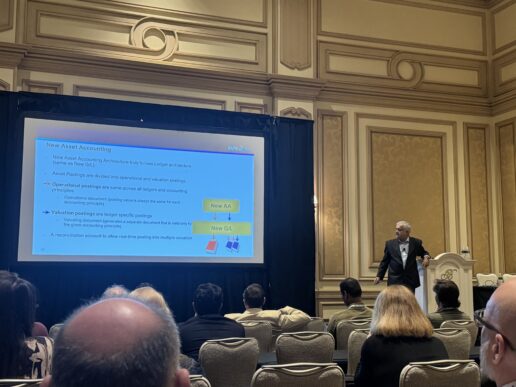
SAPinsider Pre-Con Session Urges Finance Teams to Treat SAP S/4HANA as an Architecture TransformationSAPinsider speaker Mitresh Kundalia emphasizes that successful SAP S/4HANA Finance transitions hinge on strategic architectural decisions made prior to migration, as automatic simplification is a misconception and legacy complexities may persist unless deliberately restructured.
4 minute read