

6 minute read

Meet the Authors
Key Takeaways
What you need to know
cbs and Lemongrass used Selective Data Transition to separate the SAP ECC data Propelis needed for independent operations across more than 30 countries.
A dedicated project environment supported repeated transformation, testing, and validation before the stabilized SAP landscape moved into SAP ECS for cutover.
Targeted modernization moved integrations to SAP BTP Integration Suite and analytics to Azure without turning the eight-month carve-out into a full ERP replacement.
Ownership changes, corporate restructuring, and regulatory separation can force a business to become operationally independent before its SAP landscape is ready.
Shared systems complicate that deadline. That was the challenge facing Propelis, which had to establish an independent SAP landscape supporting operations in more than 30 countries. After evaluating Reply and SAP, Propelis selected Lemongrass to lead the SAP carve-out, partly due to its relationship with cbs, which provided the Selective Data Transition expertise and ET Enterprise Transformer toolset needed for the project.
cbs and Lemongrass had eight months to extract Propelis-relevant data from a legacy SAP ECC system and establish an independent landscape. The project hinged on three priorities: defining the data boundary, creating room for repeated transformation and testing, and modernizing the architecture needed for independent operations.
Explore related questions
Ask SAPi
Define the Data Boundary Before the Carve-Out
The Propelis carve-out began with cbs Selective Data Transition. Using the cbs ET Enterprise Transformer, the project team extracted the business data Propelis needed while leaving the legacy company’s information behind. This gave Propelis the records required for independent operations without copying the entire ECC landscape.
The technical extraction depended on decisions made before data began to move. Early workshops aligned the teams on architecture, data scope, and governance, creating an agreed boundary between what belonged in Propelis’s new landscape and what had to remain in the legacy company’s SAP environment.
cbs’s Selective Data Transition methodology gave the Propelis team greater control over what entered the new landscape. Clear ownership and exclusion rules gave the ET Enterprise Transformer a consistent basis for execution, while validation confirmed that the selected data worked correctly in the independent environment.
Create Room for Repeated Transformation and Testing
Lemongrass used a dedicated cloud-based project environment for shell creation and iterative testing, while cbs applied its Selective Data Transition expertise and tooling. Once the system had stabilized, the team moved it into SAP Enterprise Cloud Services (SAP ECS) through SAP HANA Tenant Copy for final testing and production cutover.
This decoupled build strategy kept early transformation work from depending on the final managed environment. The project team could repeat processing and testing cycles with fewer infrastructure constraints, then bring a more stable system into SAP ECS.
The decoupled approach shortened rebuild cycles and kept the cutover within its scheduled window. It also reflected the testing discipline built into cbs’s Selective Data Transition methodology: a dedicated project environment, repeated transition cycles, and validation of transferred data and dependent business processes before go-live.
Modernize the Architecture Needed for Independence
After defining the data boundary and stabilizing the new SAP landscape, cbs and Lemongrass modernized the parts of the shared architecture that Propelis needed to operate independently. They moved integrations from SAP Process Orchestration to SAP BTP Integration Suite, placed analytics in Azure, and built an isolated network linking SAP to Microsoft Fabric, Microsoft SQL Server, OneSource, and other systems.
The scope remained selective. Instead of adding a full ERP replacement to the eight-month deadline, cbs and Lemongrass concentrated on the components that could otherwise leave Propelis dependent on shared systems or infrastructure. That sequencing reflects cbs’s Selective Data Transition methodology: retain what the business needs for continuity while redesigning the parts required for independent operations.
The carve-out delivered a stable foundation for further modernization. Propelis has since continued with managed services, SAP BTP optimization, and additional transformation initiatives, building on the independent landscape established by cbs and Lemongrass.
The case shows how companies can separate urgent change from longer-term improvement. A carve-out must first establish control over the data, integrations, and infrastructure required to operate independently. Broader optimization can continue once that foundation is in place.
What This Means for SAPinsiders
- Data scope must be business-owned. Selective Data Transition works best when legal, finance, and operations define what moves before technical rules are built. Shared ownership reduces ambiguity and makes later validation more defensible.
- Rehearsal capacity is part of migration design. Dedicated environments and repeated full-cycle tests let teams refine selection logic without risking production. They also reveal process dependencies that simple data-volume checks can miss.
- Modernization should follow the target operating model. Selective Data Transition creates room to redesign only the architecture required for independence. That discipline preserves continuity while avoiding unnecessary change during a time-constrained separation.
More Resources
See All Related Content
The Enterprise AI transformation Reality: Why Data Governance in SAP Matters More Than AlgorithmsThe article argues that enterprise AI in SAP only scales when organizations establish strong data governance, trusted master data, and cross-functional operating models that ensure data quality and consistency across complex landscapes, and it positions SimpleMDG as a SAP-native platform that helps turn governance into AI readiness.
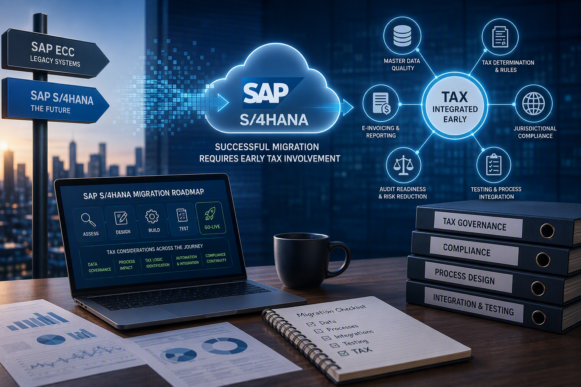
The Costly Mistake: Leaving Tax Out of SAP S/4HANA Migration PlanningSAP S/4HANA migrations often push tax into a late-stage compliance review, but hidden risks around tax determination, master data, and audit exposure demand earlier involvement. This article explains why leading organizations bring tax into governance from day one to protect timelines and Clean Core goals.
4 minute read

What Six Months of Patch Days Show About SAP SecuritySAP’s H1 2026 Patch Days reveal five priorities for CISOs heading into the rest of the year: map exposure across the SAP estate, govern trusted pathways, extend oversight into the software supply chain, assign remediation ownership, and define the evidence required to close risk.
3 minute read
Lenovo Brings Cloud Consumption to Customer-Controlled SAP S/4HANA InfrastructureLenovo gives SAP S/4HANA customers five ways to separate infrastructure ownership, financing, management, and location. Its portfolio combines certified servers, managed services, Microsoft Azure hybrid cloud, TruScale pay-per-use infrastructure, and an SAP-managed private cloud option deployed inside the customer’s data center.
3 minute read