4 minute read

Meet the Authors
Key Takeaways
-
The 2027 deadline for SAP Cloud ERP migration is quickly approaching, with a 155% increase in organizations recognizing that their transition will extend beyond this date, highlighting the urgent need for expert resources and solutions.
-
Adoption of SAP's cloud offerings has more than doubled in 2025, as organizations pivot towards standardized cloud environments rather than complex Infrastructure as a Service (IaaS) and hybrid models, facilitating a clearer path to value.
-
Choosing the right migration approach is crucial; rapid transitions can introduce hidden risks, and partnering with experienced consultants like Forgestik can help navigate this complexity, ensuring a strategic and effective migration plan.
The latest SAPinsider research on deployment approaches to the Cloud reveals that the migration landscape for SAP Cloud ERP has shifted significantly in 2025. Two data points, particularly, highlight the extent of this shift.
A Significant Change
The first data point indicates that the 2027 deadline is approaching, and the number of organizations realizing that their SAP Cloud ERP transition will extend beyond this deadline has increased by 155% this year. The figure emphasizes a market-wide reality check that is forcing organizations to scramble for viable solutions and expert resources.
SAPinsider research’s second data point highlights the fact that organizations are making a decisive pivot to the Cloud. The Adoption of SAP’s flagship cloud offerings, such as SAP Cloud ERP Public (formerly GROW with SAP), and SAP Cloud ERP Private (formerly RISE with SAP), has more than doubled this year. This statistic highlights that companies are diving headfirst into SAP’s standardized cloud environments, moving away from complex Infrastructure as a Service (IaaS) and hybrid models, and choosing a clearer and faster path to value.
Explore related questions
Navigating the New Reality
As organizations grapple with this new terrain of shattered timelines and rapid cloud adoption, it becomes imperative to have an expert implementation partner that can provide a clear and actionable strategy. This is where organizations turn to SAP partners like Forgestik. The company’s experienced consultants provide pragmatic roadmap assessments that transform timeline anxiety into a realistic and achievable plan.
Moreover, as companies rush towards cloud solutions provided by SAP, a partner’s role as a cloud navigator becomes critical as it helps cut through the complexity to choose the right edition, align it with business goals, and manage a seamless transition.
Finally, the market for SAP Cloud ERP has changed, and navigating it requires partnerships that can provide certainty in these uncertain times.
What This Means for SAPinsiders
The 2027 deadline is a mirage for those who are unprepared. The market sentiment has shifted. SAPinsider research shows that the reality is setting in, and for many organizations that haven’t started their migration, the deadline looks unrealistic. The most experienced SAP Cloud ERP consultants are already engaged, and the market for expertise is incredibly tight. For SAPinsiders, this means waiting to find resources is a high-risk strategy given the reality of resource scarcity. This could lead to delays and budget overruns. It is time to partner with SAP Cloud ERP deployment experts such as Forgestik that not only provides a realistic roadmap assessment but also the people and experience to help organizations implement SAP Cloud ERP Public successfully.
Accelerating to the Cloud is the new normal. With a quarter of organizations expecting their deployment to take over two years, according to SAPinsider, companies can’t afford to bet on the wrong platform. Today, all future innovation in SAP, from AI to sustainability, is happening in the Cloud. Thus, delaying your move to a SAP Cloud ERP means opting out of the future of SAP. Moreover, the question is no longer if you should move to the Cloud, but how and which one. For SAPinsiders, this means understanding the tangible benefits, mapping their processes to cloud-native capabilities, and building a business case that resonates with all stakeholders for successful business transformation.
Choose your migration path wisely. While a rapid technical migration may seem tempting, it comes with hidden risks, including paving over decades of unnecessary custom code, outdated processes, and redundant data into the new system. This would make cleanup work, such as remediating code, re-engineering processes, and cleansing data, more complex and expensive after go-live. Find a partner like Forgestik that can help your organization make this strategic choice more effectively through in-depth discovery workshops and business process analysis.
More Resources
See All Related Content
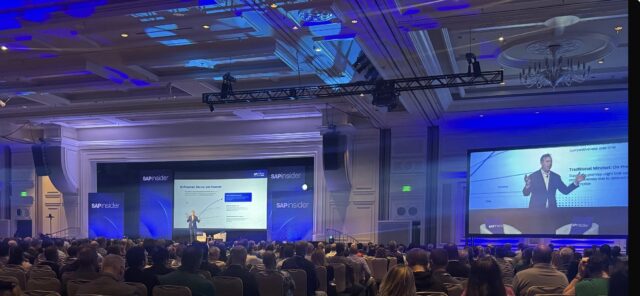
SAPinsider Las Vegas Opening Keynote: David Robinson Says SAP Customers Must Rethink IT Operating Models, Not Just Modernize ERPDavid Robinson, President of SAP North America, highlighted at SAPinsider Las Vegas that business transformation is no longer a linear process, as enterprises face an exponential convergence of AI, cloud, and automation.
4 minute read