
3 minute read
Meet the Authors
Key Takeaways
What you need to know
Moen transformed a 20-year-old SAP ECC system to improve supply chain performance.
Moving from spreadsheets to SAP-based planning improved schedule reliability and efficiency.
Better capacity visibility and inventory control helped avoid a warehouse expansion.
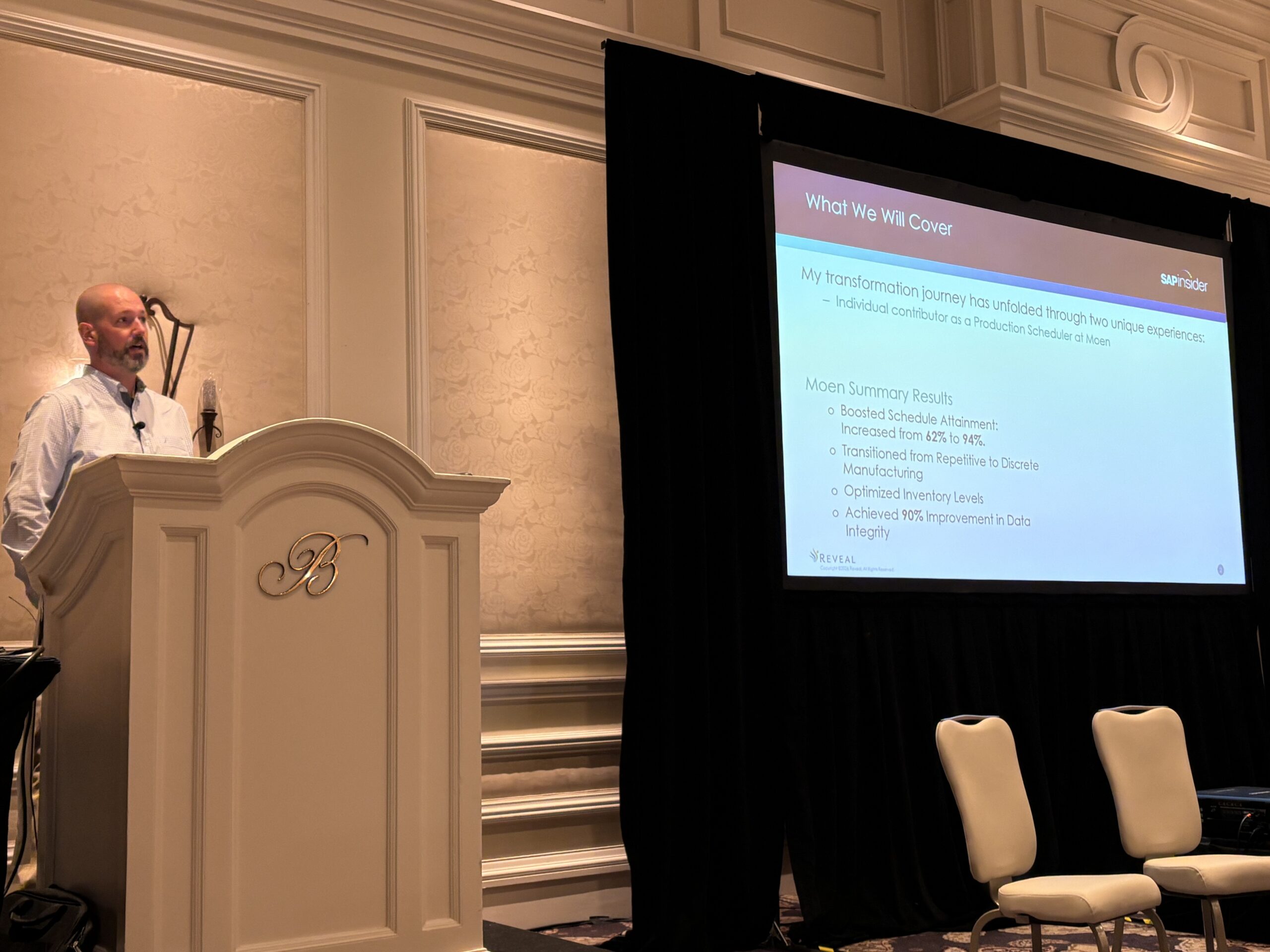
At SAPinsider Las Vegas, Andy Tylke described his prior experience at Moen, where he helped transform a decades-old SAP ECC environment from a largely underutilized system into a core driver of supply chain efficiency, inventory optimization, and operational performance.
The plumbing manufacturer, known for its faucets and shower products, had been running SAP ECC for over 20 years. However, despite the long-standing investment, the system was not being used effectively to support planning and execution.
A Mature SAP System, But Manual Processes Persisted
At the time of the transformation, Moen’s supply chain operations relied heavily on manual processes that operated outside of SAP.
Explore related questions
Ask SAPi
Schedulers would extract data from SAP into spreadsheets, spend the day building production schedules manually, and then pass those schedules to the shop floor.
This disconnect between planning and execution led to significant inefficiencies.
“We would produce a schedule every single day, and operations would only execute about half of it,” said Andy Tylke, speaking at SAPinsider about his earlier role at Moen.
The result was a repetitive cycle of rework, with teams rebuilding schedules daily without improving outcomes.
Inventory management was similarly constrained. The organization relied primarily on basic safety stock settings, without leveraging SAP’s broader planning capabilities. This led to a visibly bloated warehouse and excess work-in-progress on the shop floor.
At the same time, Moen lacked a clear understanding of machine capacity, particularly at bottleneck work centers, making it difficult to align production plans with actual throughput.
Shifting from Workarounds to System-Driven Planning
To address these challenges, Moen focused on changing how it used SAP rather than replacing or heavily reconfiguring the system. Tylke partnered with Reveal to improve how Moen used SAP and drive more effective planning and operational outcomes.
A key step in the transformation was transitioning select work centers from repetitive to discrete manufacturing. This shift enabled the organization to better understand production capacity and expected throughput for different materials.
With improved visibility into capacity, the supply chain team was able to align schedules more closely with actual production capabilities.
As a result, schedule attainment improved and, importantly, became sustainable over time.
Unlocking Inventory and Operational Efficiency
Improved planning discipline also had a direct impact on inventory.
By better aligning production with demand and capacity, Moen was able to reduce excess inventory levels and improve material flow across its operations.
One of the most tangible outcomes was the ability to avoid a planned warehouse expansion. Instead of increasing physical capacity, the company optimized its existing footprint and even freed up space on the shop floor.
This additional capacity enabled Moen to introduce new work centers and expand production without additional infrastructure investment.
Redefining Roles and Building Internal Capability
The transformation also reshaped how the supply chain team operated.
Previously, a large number of schedulers were required to manage inefficient, manual processes. As SAP usage improved and planning became more system-driven, those roles evolved.
Team members moved into more value-added positions or were promoted, reflecting a shift from transactional work to more strategic contributions.
To sustain these improvements, Moen developed an internal training program focused on SAP capabilities, expectations, and performance metrics.
This ensured that new hires, managers, and executives understood how to use SAP effectively and reinforced its role as the single source of truth for operational decision-making.
What This Means for SAPinsiders
Legacy ERP systems can still deliver modern performance.
Even long-standing SAP ECC environments can drive strong outcomes if organizations stop relying on workarounds and fully utilize system capabilities for planning and execution.
System-driven planning improves both efficiency and output.
Moving from spreadsheets to SAP-based scheduling enables more reliable production plans, better inventory control, and more consistent operational performance across the shop floor.
Understanding capacity is critical to supply chain performance.
Aligning production plans with real machine throughput, especially at bottleneck work centers, is key to improving schedule attainment and avoiding downstream disruptions.
Transformation does not always require new technology.
Significant gains can come from using existing SAP systems more effectively, supported by process discipline, training, and better alignment between operations and system capabilities.
More Resources
See All Related Content
SAP S/4HANA Migration Raises a New Question: Where Should Process Logic Live?anasonic Europe is separating workflow logic from its underlying SAP systems as it moves toward S/4HANA. Its Camunda architecture shows how process orchestration can reduce migration rework while leaving SAP responsible for core transactions and data.

Suse SAP S/4HANA VideoSUSE provides a future-ready foundation for SAP S/4HANA through five key pillars: automation, resilience, security, insight, and standardization, helping organizations reduce risk, simplify operations, and lower total cost of ownership. By automating deployments, ensuring high availability, strengthening security, delivering centralized visibility with Trento, and managing mixed Linux environments through SUSE Multi-Linux Manager, SUSE enables operational excellence and accelerates time to value for IT leaders navigating their S/4HANA journey.
1 minute read


Beyond Detection: Managing Access Risk in SAP S/4HANASAP S/4HANA access risk can become difficult to interpret as permissions accumulate across roles, applications, services, and authorizations. Layer Seven Security explains how organizations can move beyond detecting excessive access and Segregation of Duties conflicts by adding root-cause analysis, remediation guidance, and auditable exception management.
3 minute read