

3 minute read

Meet the Authors
Key Takeaways
What you need to know
Sustainable data systems are essential for transforming how SAP and ERP leaders manage finance, planning and analytics, reducing reliance on fragmented spreadsheet processes and enabling operational discipline.
The shift towards sustainable data practices enables finance and IT teams to work collaboratively, enhancing trust and reliability in data management, which is crucial as business models evolve and new analytics use cases are introduced.
Investing in proven, SAP-native frameworks like SimpleFi's PlaniFi can accelerate the transition to sustainable data solutions, ensuring flexibility, longevity and faster time to value while maintaining governance and integration across multiple ERP platforms.
Sustainable data systems are quickly becoming the backbone of how SAP and ERP leaders run finance, planning and analytics, and SimpleFi Solutions is positioning its SAP-focused portfolio as a blueprint for that shift. For CIOs, CFOs and enterprise architects, the firm’s message is clear: sustainable data is not only about storage and governance, it’s about building repeatable, adaptable structures that keep analytics, planning and consolidation aligned as business models evolve.
Making Sustainable Data a Daily Operating Model
SimpleFi’s work around SAP Business Data Cloud, SAP Analytics Cloud and SAP Datasphere centers on giving finance and analytics teams governed access to consistent data with less reliance on brittle spreadsheet processes. Instead of manually stitching together numbers from multiple ERPs and offline models, leaders work from shared data products that feed planning, reporting and consolidation, turning data management from a one-off project into an operational discipline. In day-to-day terms, that means technology executives spend more time shaping reusable models, security policies and integration patterns and less time firefighting broken extracts or ad hoc reconciliations.
At SAPinsider Las Vegas 2026, SimpleFi’s Ingo Hilgefort underscored modern data strategies must balance trust, agility and innovation by aligning business and IT around shared ownership for data outcomes. Moving data to cloud platforms such as SAP Business Data Cloud only creates value when governance, lineage and cost controls are embedded into the operating model rather than bolted on after migration. For SAP leaders, sustainable data systems therefore become a way to de-risk innovation: teams can introduce new planning or analytics use cases confident that core definitions and controls will hold as scope expands.
Explore related questions
Ask SAPi
Customer examples illustrate the impact on daily work. A SimpleFi case study on a global manufacturer using SAP Analytics Cloud for end-to-end planning highlights how centralizing planning data, accounts receivable projections and fixed asset information into a single model reduced forecast and planning cycle times by more than 25%. Finance teams shifted from collecting data to scenario modeling, while IT focused on maintaining the underlying data structures and integrations instead of managing one-off requests.
Evaluation Criteria and Challenges for SAP Data Sustainability
For SAP and ERP executives evaluating partners, SimpleFi’s offerings highlight several criteria that distinguish sustainable data solutions from short-term fixes. Leaders should look for providers that design around SAP Business Data Cloud and SAP Analytics Cloud as strategic platforms, not point tools, and that understand how to integrate multiple ERPs into consolidated reporting and planning without losing traceability.
Prebuilt frameworks such as SimpleFi’s PlaniFi for consolidations, which leverages SAP Analytics Cloud as a standalone enterprise performance management platform instead of burying logic inside S/4HANA, illustrate an approach that separates business rules from transactional systems for greater flexibility and longevity.
Common challenges include fragmented ownership between IT and finance, overlapping tools and resistance to changing spreadsheet-centric processes. SimpleFi’s customer work and events emphasize practical steps such as defining business-aligned data domains, standardizing integration patterns across SAP Datasphere and SAP Analytics Cloud, and establishing repeatable governance forums where finance and IT jointly prioritize data investments.
For day-to-day SAP professionals, that translates into more predictable data pipelines, clearer ownership when issues arise and a more stable foundation for AI and advanced analytics initiatives.
What This Means for SAPinsiders
Sustainable data becomes a core operating principle. SAP and ERP leaders should frame data platforms like SAP Business Data Cloud and SAP Analytics Cloud as long-term operating foundations, aligning architecture, governance and funding decisions around durability and reuse rather than isolated projects.
Finance-IT collaboration defines data success. Enterprise architects and CFOs must formalize joint ownership of data models, integration patterns and governance forums so sustainable systems consistently deliver trusted information to planning, consolidation and analytics teams across SAP estates.
Prebuilt frameworks accelerate sustainable outcomes. Transformation leaders should prioritize partners with proven, SAP-native frameworks such as SimpleFi’s PlaniFi and planning content that shorten time to value while enforcing reusable standards and controls for multi-ERP, multi-cloud environments.
More Resources
See All Related Content
AI Ambitions Are Running Into Frontline Data ProblemsRFgen connects frontline work with SAP and other ERP systems through mobile data collection, offline sync, and guided workflows. Its platform helps SAP teams capture cleaner point-of-work data for analytics, automation, and supply chain AI.

TCS Moves Global Payroll to SAP Cloud ERP Private, Cuts Processing Time 30–40%TCS completed a multi-country payroll migration to SAP Cloud ERP Private on AWS, consolidating operations across 56 countries with 30–40% faster processing, zero disruption, and full data integrity across 20-plus interfaces.
3 minute read

SAP Sapphire Madrid Frames the Autonomous Enterprise Around Sovereignty and TrustSAP is repositioning its Autonomous Enterprise vision for Europe by coupling ERP agents with sovereign cloud, local model and workflow partnerships, and stronger governance so regulated customers can adopt trustworthy, controllable AI that respects data residency, geopolitical risks, and mission-critical accountability.
6 minute read
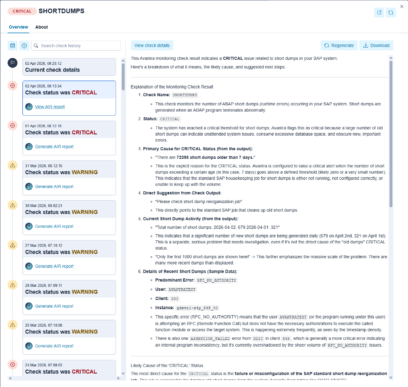
Stop Guessing, Start Fixing: AI Root Cause AnalysisAvantra 26 and Avantra AIR use AI grounded in SAP operations expertise and a proprietary knowledge graph to continuously detect issues, explain root causes in human-readable reports, reduce alert noise, and recommend next-best actions that speed resolution, prevent outages, and lessen reliance on SAP experts.
3 minute read