

3 minute read
Meet the Authors
Key Takeaways
What you need to know
The shift toward agentic AI presents significant security risks for SAP environments, requiring strict guardrails to prevent autonomous agents from unauthorized read and write access to core financial data.
Introduced at Boomi World 2026, Boomi Connect and its Model Context Protocol (MCP) strategy establish a governed, policy-driven control plane, effectively turning the integration layer into an intelligent firewall for SAP data access.
Global SAP customers must prioritize centralized AI governance, auditability, and data sovereignty, leveraging tools like Boomi's dedicated European platform to manage autonomous ERP workflows securely.
The enterprise AI conversation has moved well beyond chatbots. Organizations are now embracing agentic AI: autonomous agents capable of executing complex tasks and triggering workflows across multiple systems without human intervention. For SAP Basis administrators and enterprise security architects, that shift carries the unsettling implication of granting an autonomous AI agent read and write access to core financial data in SAP S/4HANA.
The Security Gap in Autonomous ERP Workflows
In a traditional IT environment, system integration is highly predictable. Workflows follow strict rules, and users are bound by rigorous role-based access controls. Agentic AI breaks that paradigm. An intelligent agent designed to optimize procurement might autonomously alter a purchase order or approve a vendor payment within SAP, all in the name of accelerating a supply chain process.
Without strict guardrails, the compliance and security risks are significant. IT leaders cannot hand third-party AI models a blank check to interact with the SAP digital core. They need a way to filter, monitor, and restrict exactly what these intelligent systems are allowed to do, and equally important, what they are not.
Explore related questions
Ask SAPi
Boomi Connect and the MCP Firewall
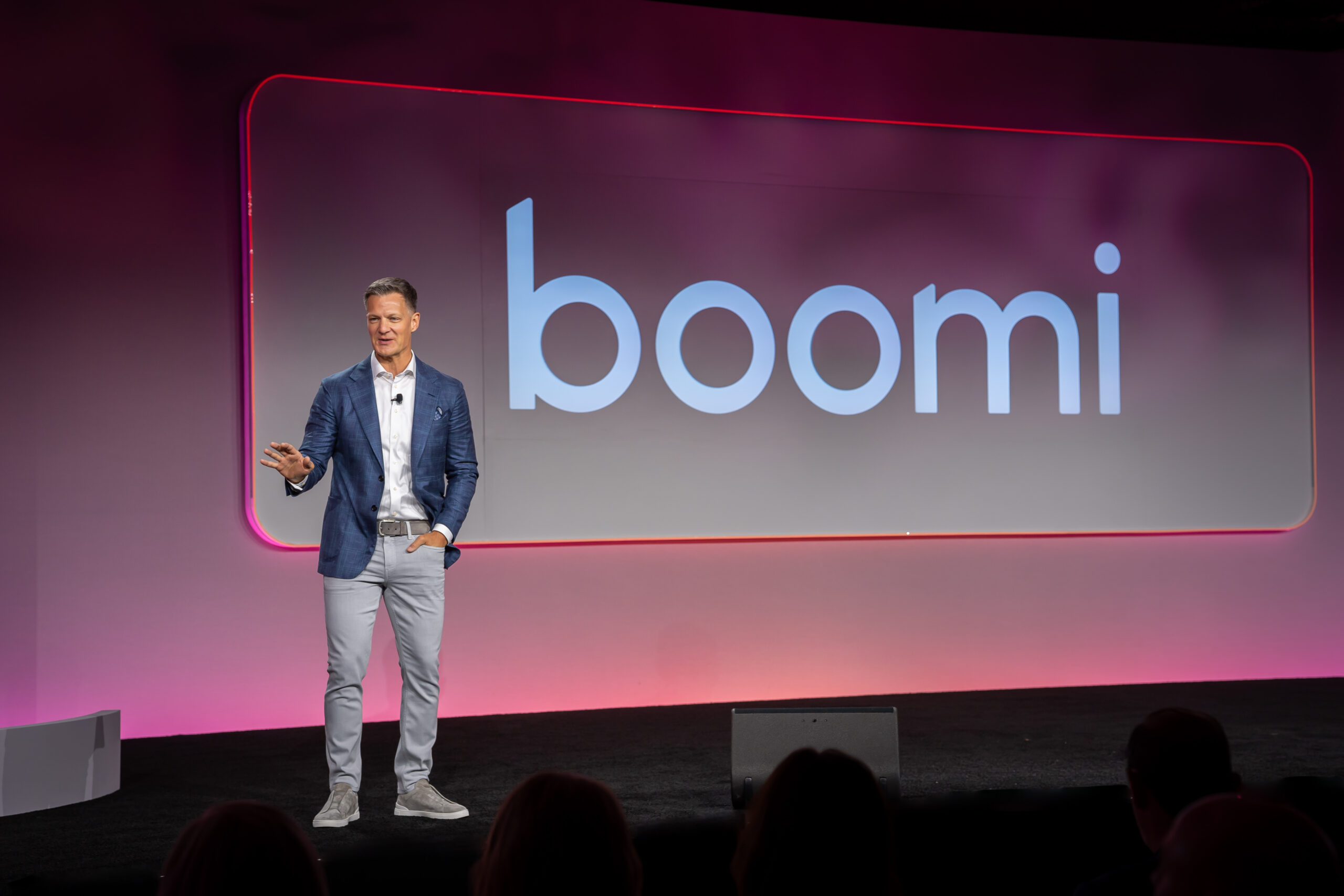
At Boomi World 2026, Boomi positioned its platform as the definitive control plane for agentic AI. The cornerstone of that strategy is Boomi Connect, a managed connector service that provides governed, policy-driven connectivity between frontier AI tools (Claude, Google Gemini) and enterprise systems like SAP.
Boomi Connect leverages the open-source Model Context Protocol (MCP) to standardize how AI agents retrieve data and execute actions. The addition of the Boomi MCP Registry provides organizations with a central hub for discovering and managing MCP servers. Together, these capabilities wrap heavy governance around what an AI model is permitted to see and do inside the SAP environment, effectively turning the integration layer into an intelligent firewall that protects the ERP from rogue automation.
European Data Sovereignty and Local Control
Boomi also introduced broader governance tooling for agentic workflows: comprehensive audit trails and a dedicated European platform instance designed for localized data control. For SAP professionals, this signals an architectural inflection point. Integration is no longer just about moving data between applications on a schedule. It is about establishing a secure, auditable gateway for AI agents to interact with the ERP core, one that can also satisfy regional data sovereignty requirements.
What This Means for SAPinsiders
Three near-term priorities stand out for SAP teams evaluating agentic AI deployments. Organizations must enforce strict guardrails before enabling agentic access. Governed MCP connectivity ensures that AI assistants can only access the SAP data they are explicitly authorized to access. Without it, agents risk inadvertently altering financial records or surfacing restricted HR information, outcomes no audit committee wants to explain.
Prepare for European data sovereignty requirements. For global SAP customers, Boomi’s EU instance keeps agentic workflows and data processing strictly localized. This directly addresses GDPR and data residency obligations common in regulated industries and removes a key barrier for European rollouts.
Build audit discipline into the AI workflow lifecycle. Agentic AI demands a different kind of IT oversight; one built around centralized registries and continuous auditability. SAP security teams need full visibility into how, when, and under what authority AI agents interact with SAP records, before something unexpected prompts that review.
More Resources
See All Related Content
NVIDIA Launches New Security Platform for AI Agents as SAP Builds OpenShell Into Joule StudioNVIDIA's Open Agent Safety Platform places enforceable runtime boundaries around AI agents. SAP is embedding the platform's OpenShell runtime in Joule Studio, and deeper links to enterprise authorization, IAM, and audit controls are still under development.

From an empty tenant to your first table, step by stepThis article outlines the step-by-step process for administrators and key users to set up NextTables on a freshly provisioned tenant, detailing essential actions from accepting the administrator invitation to creating the first table, including optional steps and relevant guides for each phase.
8 minute read


SAP OVERPASS Update: New Attack Route and Public Exploit Code Raise Patching StakesResearchers have found a new route to the SAP OVERPASS vulnerability through WebSocket-based RFC, and proof-of-concept exploit code has surfaced in a public SAP toolkit. SAP teams need to know which communication paths still reach vulnerable systems while patches are deployed.
3 minute read