

2 minute read
Meet the Authors
Key Takeaways
What you need to know
Use the readiness window deliberately: with 74% of organizations still pre-production on AI-enabled SAP use cases, ERP program managers should spend the next two to three years unifying data across SAP and non-SAP sources.
Build the governance stack before scale-up: with 63% concerned about output accuracy and 59% about data leakage, CIOs who operationalize AI governance now will scale the Autonomous Enterprise faster and more safely.
Extend SAP authorizations to agents from day one: 49% rank role-based access control aligned with SAP authorizations as the top AI security control, so agents should inherit the same access rules as human users across hybrid environments.
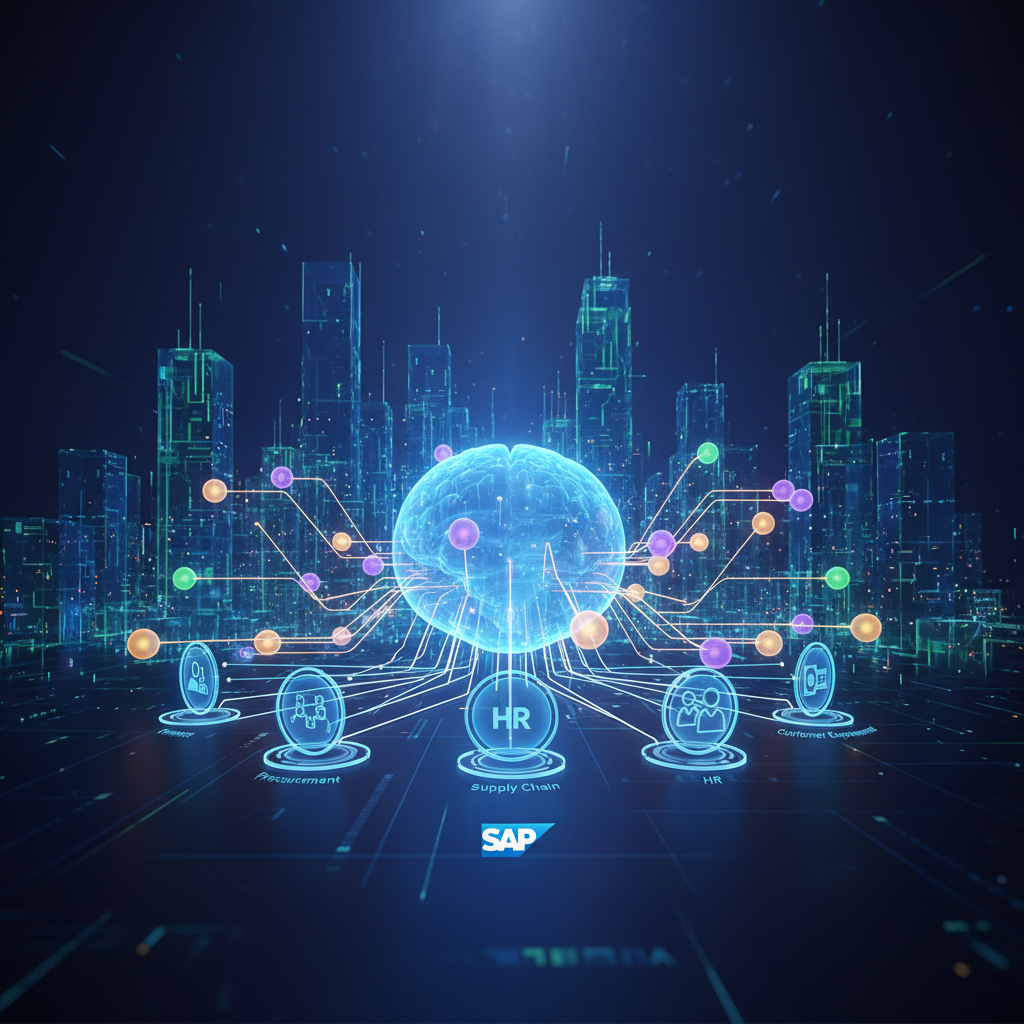
At SAP Sapphire, SAP unveiled its vision of the Autonomous Enterprise, anchored by the new SAP Business AI Platform, the SAP Autonomous Suite, and Joule Work, with more than 50 domain-specific Joule Assistants orchestrating over 200 specialized agents across finance, supply chain, procurement, HR, and customer experience. The message was unmistakable: enterprise AI is moving from answering questions and generating content to taking action.
That shift is significant. Agentic AI systems understand context, make decisions, orchestrate workflows, and execute tasks across applications with limited human intervention. A supply chain risk agent, for example, can recommend sourcing alternatives, create procurement requests, trigger approvals, and refine its own future recommendations, all within a connected SAP landscape.
Yet while many enterprises are experimenting with copilots and intelligent assistants, far fewer have established the data foundations, governance frameworks, security controls, and infrastructure required to scale autonomous execution. Realizing SAP’s vision requires far more than deploying another model. The harder question is whether SAP customers are truly ready for what comes next.
Explore related questions
Ask SAPi
The Readiness Gap Starts with Data
SAPinsider’s June 2026 research on orchestrating AI-driven process transformation puts hard numbers on the gap. Nearly three-quarters of SAP customers (74%) report that AI-enabled SAP use cases remain in the identification, experimentation, or no-plans phase, and 43% are not yet using AI in SAP-related processes at all. The Autonomous Suite may dominate keynotes, but the production timeline sits two to three years out for most organizations, which makes this the window to get foundations right.
The problem is rarely a lack of AI innovation. It is the fragmented reality of enterprise data, distributed across SAP ERP systems, legacy applications, manufacturing environments, edge locations, and multiple clouds. Without trusted, governed, accessible data, agents cannot make reliable decisions. Ultimately, poor data quality at scale becomes poor business decisions at scale.
Autonomy Demands New Levels of Trust
Unlike traditional applications that execute predefined processes, agents introduce dynamic decision-making. That shift forces uncomfortable questions such as: Can the organization explain AI-driven decisions?; Can actions be audited?; or Can compliance hold as autonomy increases?
Here’s a reframe worth sitting with: agents are effectively becoming digital workers, complete with their own memory, credentials, access rights, and the ability to take action, yet few organizations onboard them with anything close to the rigor applied to a new hire. That mismatch, more than any model limitation, is what will separate the SAP customers who scale agentic AI safely from those who don’t.
SAPinsider research is unambiguous about what gates the path to production. Nearly two-thirds of respondents (63%) cite accuracy and reliability of AI outputs in critical processes as their top concern, with data leakage through AI services (59%) and data privacy and regulatory compliance (59%) close behind. When asked about security controls for AI operating on SAP data, 49% named role-based access control aligned with SAP authorizations as the single most important requirement.
The message is clear: agents act on the same operational data as humans, so the same rules must apply. Governance is the blocker, not the AI itself. In fact, industry technologists predict governance will be the defining enterprise AI investment of 2026, both inside organizations and at the national level.
The Infrastructure Question SAP Left Open
Here is the uncomfortable part of the readiness conversation. SAP’s initial AI strategy was built almost entirely around hyperscalers, effectively giving customers one choice: pursue AI, but pursue it in the public cloud. However, the reality on the ground looks different. Enterprises are running AI workloads in their own data centers, at the edge, and across hybrid estates, and the knowledge layers that agents depend on, including vector and graph databases, increasingly live close to where data is created rather than centralized on the other side of the planet.
Agentic workloads bring new operational demands: greater data movement, real-time analytics, low-latency processing, and scalable, secure compute. For most SAP customers, hybrid architectures are emerging as the practical path, giving enterprise architects control over where data resides, where agents execute, and how compliance is maintained. The organizations that balance innovation with control will gain the advantage.
Security cannot be an afterthought either. Agents are only as trustworthy as the environments they operate in, and as more processes and data sources connect, the attack surface expands, making cyber resilience, including protected backups and validated recovery of critical SAP environments, a fundamental pillar of AI readiness.
This is precisely the gap Dell is built to close. The Dell AI Factory with NVIDIA has scaled past 5,000 customers, and Dell’s portfolio now spans the exact layers SAP customers are missing: the Dell AI Data Platform with NVIDIA to unify and govern data across ERP, edge, and multicloud estates; Dell PowerRack for rack-scale, purpose-built AI compute; and NVIDIA OpenShell, a secure runtime that lets organizations build, deploy, and govern autonomous agents with the privacy and access controls SAPinsider’s research shows customers are demanding. For SAP shops that need agentic workloads to run outside the public cloud, on their own terms, Dell’s hybrid-by-design infrastructure is the most direct answer on the market to the readiness gap this data exposes.
What This Means for SAPinsiders
Use the readiness window deliberately. With 74% of organizations still pre-production on AI-enabled SAP use cases, ERP program managers should spend the next two to three years unifying data across SAP and non-SAP sources rather than rushing pilots into production.
Build the governance stack before scale-up, not after. With 63% of respondents concerned about output accuracy and 59% about data leakage, CIOs who operationalize AI governance now will scale the Autonomous Enterprise faster and more safely than competitors.
Extend SAP authorizations to agents from day one. Since 49% rank role-based access control aligned with SAP authorizations as the most important AI security control, per SAPinsider research, enterprise architects should ensure agents inherit the same access rules as human users across hybrid environments.
Finally, agentic AI represents the most significant enterprise technology shift since the move to cloud. For SAP customers, the long-term vision is autonomous business execution at scale. However, before organizations ask what AI agents can do, they should ask a harder question: are they truly ready to trust those agents?
More Resources
See All Related Content
Which Software Projects AI Makes Cheaper to BuildCoding agents are lowering the cost of writing software, but review, testing, and requirement definition now carry a larger share of build effort. The largest savings go to SAP projects with clear requirements, testable outputs, and documented interfaces.


The Industry Context Behind Enterprise AIIndustry AI is defined by the sector knowledge it carries, from terminology and process rules to the systems where work takes place. Three kinds of industry context, meaning, rules, and place, offer a consistent way to evaluate what an Industry AI product actually includes.
3 minute read