



Mar 16-19, 2026Las Vegas, Nevada, NV
Healthcare
Featured Insiders
Upcoming Events
SAPinsider Las Vegas 2026
Related Vendors
Healthcare is a vital industry that is constantly transforming through research and science, but at the same time maintains many of the core processes to ensure the best patient outcomes. While many processes around patient care and treatment are similar across countries, regulations and billing and authorization processes may vary. This means that the technology supporting healthcare providers also must support those differences.
SAP and Partner Solutions for Food and Beverage
There are many solutions in the SAP ecosystem that are relevant to the Healthcare sector:
Healthcare is a vital industry that is constantly transforming through research and science, but at the same time maintains many of the core processes to ensure the best patient outcomes. While many processes around patient care and treatment are similar across countries, regulations and billing and authorization processes may vary. This means that the technology supporting healthcare providers also must support those differences.
SAP and Partner Solutions for Food and Beverage
There are many solutions in the SAP ecosystem that are relevant to the Healthcare sector:
- Health Engagement and Experience helps with Patient Engagement using marketing and customer experience tools, while provider engagement helps maintain the caregiver experience with core ERP and experience solutions.
- Patient Diagnosis to Recovery solutions aim to streamline surgeries and medical intervention processes, and support successful care delivery using solutions unique to the healthcare industry.
- Healthcare Provider Admission to Cash ensures drug safety and compliance through tracking and tracing. They also help with patient management through patient administration and billing tools.
- Data and analytics provide data insights to help inform medical decisions. Data integration ensures healthcare organizations are capitalizing on the data available to them to provide the best care.
- Integration with electronic medical records software to help provide greater context to patient data.
- HCM and HXM solutions help organizations with recruiting, onboarding, talent management, and more.
- Supply Chain Management to help pharmaceutical companies and medical equipment manufacturers from material to distribution.
- Security tools to ensure protection of sensitive medical information and pharmaceutical research.
Many hospitals and other healthcare sites are commonly at or close to capacity, so the need for efficient and effective care is important. Timely access to patient data, insights on the best care, streamlined payment and care authorization, and delivery of medical equipment and medicines are essential.
Key Considerations for SAPinsiders
Organizations in the healthcare industry are utilizing SAP and partner solutions as part of their transformation programs.
- American Red Cross deploys self-service business intelligence (BI). Read this case study to learn how the American Red Cross overcame architectural data challenges to enable deployment of self-service BI to 6,000 users.
- Varian’s journey to SAP S/4HANA. Discover lessons learned in this case study from Varian on their journey from Oracle to SAP Business Suite on HANA, then to SAP S/4HANA.
- Sanofi overhauled its SAP Security infrastructure. In the face of increasing attacks, pharmaceutical company Sanofi revamped its SAP cybersecurity processes and technology to bring in event-based monitoring and patch management. Read this case study to learn more.
119 results

IDEXX Laboratories Tames Troublesome ReportingJul 20, 2017 —
IDEXX Laboratories, an animal health diagnostics and veterinary software innovator, prides itself on the quick turnaround of diagnostic test results for its customers. Internally, the business planning team was not seeing the same fast results. With complex reports taking over 30 minutes to complete (or time out), IDEXX knew it was time to improve query runtimes, speed up reporting, and enhance overall performance of SAP Business Planning and Consolidation (SAP BPC). Read about how IDEXX migrated SAP BPC data from a non-SAP database to SAP HANA and upgraded the application to reduce reporting wait time from 20 minutes down to 10 seconds or less and increase adoption with single sign-on capabilities — all without downtime or disruption to the business.
8 minute read
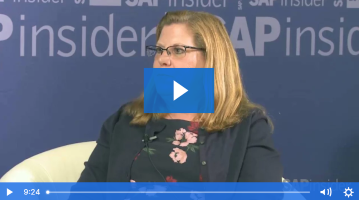
Live from SAPinsider Studio: Finding the Right Platforms for SAP Data Services and SAP BusinessObjectsMay 31, 2017 — Nancy Ochs, Senior Application Developer at CSL Plasma, shares why her company is separating SAP Data Services and SAP BusinessObjects onto two separate platforms and how it’s creating value from the project. Topics covered include: CSL Plasma’s strategy for separating the two systems The timing and change management considerations CSL Plasma has to make for this […]
1 minute read
How Can Manufacturers Use Machine Learning Today?May 22, 2017 —
Machine learning has had a tremendous impact on manufacturing today. Whether its service parts demand forecasting, new product introduction, or service parts pricing, companies can leverage artificial intelligence to optimize processes and see immediate benefits.
3 minute read

How AdminaHealth Helps Companies Transition to and Manage Self-Funded Healthcare Plans with SAP Business All-in-OneMar 30, 2017 —
For many organizations, creating a self-funded healthcare plan for employees is an attractive option for managing or even reversing rising healthcare costs and insurance premiums. With these savings come new complexities, however, as many of the administrative tasks once held by the insurance companies now fall on the organization. Enter AdminaHealth – a company primed to help other organizations take those complexities out of the equation. Learn how AdminaHealth deployed SAP Business All-in-One to help its customers transition to a self-funded healthcare plan and opened lines of communication among all parties, generated automated reports for better visibility, lessened the administrative burden, and reduced healthcare costs for the companies and their employees.
6 minute read

Tools for Making Machine Learning Easier and SmootherMar 29, 2017 — Understand the concept of blockchain and explore the services released by SAP Cloud Platform Blockchain service that allow users to develop blockchain scenarios.
Learn how to connect a manufacturing execution system (MES) to SAP ERP Central Component (SAP ECC). Understand common use cases and best practices during the implementation. Learn integration options, avoid common pitfalls, and get help planning a multi-plant system rollout. View corresponding SAP transactions that allow you to review and troubleshoot MES data
See some examples of integration solutions based on SAP-provided replication tools that you can use to integrate SAP and non-SAP applications. The tools support a wide variety of data types (structured and unstructured) and formats (including data streams).
See how to use Customizing Scout, which is part of SAP Solution Manager’s Customizing Synchronization suite. This functionality enables you to compare functional IMG configuration between two systems. These systems must be connected in Solution Manager and should be configured with the necessary authorizations. It is useful especially when manual activity is involved in a comparison of the synchronization, distribution of configuration, and master data differences between two systems.
With the exponential growth of data from multiple sources, using conventional methods for extracting it is time-consuming, costly, and resource intensive. SAP has simplified Multi-Source Universes in SAP BusinessObjects 4.0 as an answer to this issue. Created with the Information Design Tool (IDT), a Multi-Source Universe can combine data from SAP Business Warehouse (SAP BW) with other relational databases, such as Oracle and SQL Server. See how to create a Multi-Source Universe in this step-by-step guide.
SAP BusinessObjects Cloud offers data connectivity to many on-premise and cloud data sources. You can either acquire data into SAP BusinessObjects Cloud or connect to the data source in real time without any replication. Learn how you can use each of the data sources available in SAP BusinessObjects Cloud, then review the use cases and the configuration required for them.
Discover how to apply two extensibility options to modify SAP S/4HANA business functionality.
Two paths lead the way to the use of artificial intelligence (AI). One is the more likely direction.
Understand the impact blockchain can have on your supply chain.
This alphabetical guide to key artificial intelligence (AI) terminology can help you put AI technology to work.
Learn about four layers behind artificial intelligence: data collection, data storage, data processing and analytics, and reporting and output.
Blockchain is the next evolution of recordkeeping, perhaps the most significant since the eighth millennium BC.
Learn about several ways to incorporate machine learning into your core functions to streamline your overall business.
See why machine learning is becoming a game changer across all sports and how it can even address the luck factor.
The blockchain has made a big impact on financial industries, but it can also have a positive effect on data and transactions across smart cities.
Artificial intelligence can help your sales efforts in seven ways.
Machine learning capability within an artificial intelligence (AI) platform is where AI is headed.
Emerging technologies, such as machine learning and artificial intelligence, have had a tremendous impact on the healthcare industry. With greater and more intelligent analytics, diagnostic and predictive healthcare options are improving the quality of life for patients around the world.
Emerging technologies such as the Internet of Things (IoT) and artificial intelligence (AI) are changing the emphasis to consumers.
Would you let an AI robot run your business? Deep Knowledge Ventures, a Hong Kong-based life science venture capital company, has already appointed an AI robot to its board of directors. Many companies are already weighing the benefits of leveraging AI-powered robots for more informed business decisions.
Some of the world's most troubling issues — climate change, the energy crisis, healthcare, and overall safety — are being addressed with emerging technology such as artificial intelligence and big data. Analysts are gleaning more and more insights everyday to help make the world a better and safer place.
With IT working in silos, visibility into operations can be greatly limited. New technology such as machine learning can allow for cross-silo information transfer, enabling IT Operations Analytics (ITOA) to gain a broader view of data.
Review these considerations for using a global template for implementing SAP SuccessFactors Employee Central Payroll. Various decisions may positively or negatively affect your payroll implementation.
Why, for right now, deep learning is the best universal algorithm.
Many people are familiar with artificial intelligence, but what happens when the line between machine and biology begins to blur? Biomimicry, machines imitating biological systems, has many implications in the healthcare industry. As the Internet of Things continues to grow, so will the evolution of machine learning capabilities.
As artificial intelligence becomes more prominent in our day-to-day lives — think Siri, Alexa, and self-driving cars — we need to consider how it can be applied to any industry to increase efficiency and accuracy of business processes. In the end, however, business still requires a human touch to connect with customers and provide the best service possible.
Keep an eye on the gaming industry to see what artificial intelligence innovation is coming next.
Learn how to leverage a new technique using beacon technology to enhance a customer's overall app experience. Discover new ways to influence how people interact with their surroundings.
Read about three trends that Kevin Gidney of Seal Software expects to emerge in 2017.
While a data lake provides an economical storage option for information, it is not without its set backs. As data volumes continue to grow, it becomes more and more difficult to decipher the insights hidden within. Organizations must perform data discovery and exploratory analysis, in conjunction with analytic applications, to glean true value from their data.
Machine learning has had a tremendous impact on manufacturing today. Whether its service parts demand forecasting, new product introduction, or service parts pricing, companies can leverage artificial intelligence to optimize processes and see immediate benefits.
Millions of data points gathered from artificial intelligence are going to help fight world hunger in many ways, from improved seeds, to better application of herbicides, to analysis of plant diseases.
To be successful, companies must operate with complete transparency and gain the trust of employees and customers alike. But with fake news running rampant, it can be difficult to sift through the noise and get to the facts.
Artificial intelligence has greatly improved business processes and while many experts see its benefits, some are concerned about potential risks it could create. Around the world, business experts are beginning to discuss the considerations around regulating artificial intelligence.
Although generating high-quality, realistic synthetic data for machine learning training applications has become easier, it will never replace human-annotated training data collected in the real world. Find out why humans are still needed.
As consumers continue to show a preference for online shopping, e-commerce businesses benefit from increased revenues. Consequently, traditional brick-and-mortar retail businesses are turning to digital technologies to keep pace with the online retailers. Learn four benefits that predictive analytics can provide for a retail business.
See how the growth of Internet of Things (IoT) devices has created a need for a more robust infrastructure to handle these devices.
10 minute read
How Machine Learning Is Transforming HealthcareMar 8, 2017 —
Emerging technologies, such as machine learning and artificial intelligence, have had a tremendous impact on the healthcare industry. With greater and more intelligent analytics, diagnostic and predictive healthcare options are improving the quality of life for patients around the world.
2 minute read
Lannett Company, Inc. Prescribes Automated Business Process TestingAug 2, 2016 —
Lannett Company, Inc. is a growing pharmaceutical firm – in fact, Fortune named Lannett Company, Inc. the fastest-growing company of 2015. This rapid growth made the company’s manual-based testing processes untenable. With its new acquisitions and intricate business processes, Lannett could no longer afford the time and resources needed to perform regression testing the old-fashioned way. Learn how Lannett used Worksoft Certify to automate 90% of its SAP business process testing, reduce production defects by 60%, and achieve a 40% reduction in testing time per project - freeing up resources for greater innovation in the growing company.
1 minute read
Edesia Expands Its Reach with SAP Business OneApr 5, 2016 —
Edesia Nutrition, a small nonprofit committed to treating and preventing global childhood malnutrition, manufactures ready-to-use food products that do not require water or refrigeration. Read this article to learn about Edesia’s journey to simplify its business processes with SAP Business One. The cloud solution for small and medium-size (SME) organizations gave Edesia the ability to trace raw materials from start to finish and enhanced visibility into its entire production process, which ultimately will allow it to provide more lifesaving foods to more children in need.
5 minute read