
3 minute read
Key Takeaways
What you need to know
Intelligent Warehouse Management is replacing traditional warehouse storage and rule-based WMS with AI-powered, real-time optimization that uses machine learning, robotics, IoT sensors, and ERP integration to predict demand, improve slotting, and dynamically adjust picking and replenishment.
AI warehouse optimization matters because it improves inventory accuracy, speeds up fulfillment, lowers labor and logistics costs, and gives enterprises real-time visibility across locations, helping executives control costs while meeting same-day delivery and customer service expectations.
This shift impacts enterprise leaders, supply chain teams, warehouse operators, and operations managers most, because successful implementation depends on clean data, scalable system integration, and change management to improve resilience, productivity, safety, and response to supply chain volatility.
Warehouses were once designed for storage. Today, they are designed for speed.
E-commerce growth, multi-channel distribution, and global supply volatility have changed expectations. Customers want same-day fulfillment. Executives want cost control. Operations teams want visibility. Traditional systems struggle to deliver all three.
This is where Intelligent Warehouse Management becomes a business priority, not just an IT upgrade.
Explore related questions
Ask SAPi
When AI, automation, and real-time analytics converge inside warehouse operations, the result is not incremental improvement. It is operational reinvention.
What Is Intelligent Warehouse Management?
Intelligent Warehouse Management goes beyond basic inventory tracking. It connects AI models, robotics, IoT devices, and enterprise systems to create a self-optimizing warehouse environment.
Traditional WMS platforms operate on fixed rules. Intelligent systems learn from data.
They analyze order trends, predict replenishment cycles, optimize storage locations, and adjust picking logic dynamically. Instead of responding to problems after they occur, the system anticipates them.
This predictive capability is what separates intelligent platforms from conventional smart warehouse management systems that rely primarily on workflow automation.
The difference is not automation. The difference is intelligence.
The Technologies Powering AI Warehouse Optimization
AI warehouse optimization is built on a connected stack of technologies:
Artificial Intelligence and Machine Learning: Algorithms analyze demand patterns, supplier variability, and seasonal fluctuations. Over time, the system refines slotting strategies and inventory allocation decisions.
Robotics and Autonomous Mobile Systems: Robots reduce travel time across large facilities. Autonomous systems handle repetitive movement tasks, allowing human workers to focus on higher-value decisions.
IoT and Sensor Networks: Sensors track location, temperature, and equipment performance in real time. This reduces shrinkage and prevents operational breakdowns.
Enterprise Integration: Warehouse automation solutions must connect to ERP, procurement, and transportation systems. Without integration, visibility remains fragmented.
When these components work together, warehouses shift from manual coordination to coordinated intelligence.
5 Business Benefits of AI-Powered Warehouse Management
1. Improved Inventory Accuracy
Inventory inaccuracies create ripple effects across the supply chain.
Stockouts damage customer trust. Overstock ties up working capital. Manual reconciliation consumes time.
AI-powered Intelligent Warehouse Management improves accuracy through:
- Continuous cycle count validation
- Anomaly detection for shrinkage or misplaced goods
- Real-time stock reconciliation across locations
Instead of periodic audits, inventory becomes continuously verified. For enterprise leaders, this improves financial reporting confidence and reduces compliance exposure.
2. Faster Fulfillment Through Dynamic Optimization
In high-volume environments, minutes matter.
AI warehouse optimization dynamically recalculates picking paths based on order flow. It adjusts wave planning in real time. It prioritizes urgent shipments automatically.
This leads to:
- Reduced travel distance inside facilities
- Shorter picking cycles
- Faster dispatch times
Unlike static systems, intelligent platforms adapt during peak demand. That agility becomes critical during seasonal surges or supply disruptions. Speed is no longer achieved by adding labor. It is achieved through smarter orchestration.
3. Lower Operational Costs Through Predictive Intelligence
Warehouse expenses are often driven by inefficiencies that remain invisible.
AI surfaces those inefficiencies.
Demand forecasting improves replenishment accuracy. Predictive analytics reduce excess stock. IoT-driven maintenance prevents equipment downtime.
These improvements translate into measurable cost reductions across:
- Labor utilization
- Inventory carrying costs
- Emergency logistics expenses
- Downtime recovery
Over time, Intelligent Warehouse Management transforms cost structures from reactive spending to predictive control.
4. Real-Time Visibility Across the Enterprise
Decision-makers cannot manage what they cannot see.
Disconnected systems create blind spots between warehouse operations and enterprise planning. AI-enabled warehouse automation solutions eliminate those silos.
Executives gain:
- Live inventory dashboards
- Location-based stock tracking
- Automated alerts for exceptions
- Cross-warehouse performance insights
When connected to enterprise platforms, this visibility supports better demand planning and procurement alignment.
Resilience starts with transparency. Intelligent systems deliver it continuously.
5. Workforce Productivity and Safety Gains
Automation is often misunderstood as workforce replacement. In reality, it is workforce enhancement.
AI-powered systems reduce repetitive walking, manual scanning, and physical strain. Task allocation becomes data-driven instead of supervisor-dependent.
Workers receive digital instructions optimized for efficiency. Robotic assistance reduces fatigue. Real-time monitoring improves safety oversight.
This leads to:
- Higher throughput per employee
- Lower injury risk
- Better employee retention
In tight labor markets, productivity gains are not optional. They are strategic.
Implementation Considerations for Enterprise Leaders
AI adoption requires structured planning.
Organizations evaluating Intelligent Warehouse Management should assess:
Data Maturity: AI depends on clean, structured data. Poor master data limits optimization value.
System Architecture: Warehouse automation solutions must integrate seamlessly with ERP and supply chain platforms. Siloed tools create fragmentation.
Scalability: Multi-location enterprises need centralized visibility with localized flexibility.
Change Management: Operational teams require training and adoption frameworks to maximize ROI.
The Strategic Role of AI in Warehouse Resilience
Recent global disruptions have exposed vulnerabilities in supply chains.
Static warehouses struggle when demand shifts rapidly. Intelligent systems respond with predictive adjustment.
AI warehouse optimization enables:
- Faster recovery from disruptions
- Data-backed scenario planning
- Adaptive allocation of inventory
- Improved service-level consistency
For leaders focused on resilience, this capability delivers measurable advantage.
Why This Matters Now
AI adoption is accelerating across industries. Warehouses represent one of the highest-impact operational areas for intelligent transformation.
Unlike front-end innovation, warehouse optimization directly improves cost structures, fulfillment speed, and visibility. The business case is immediate.
Organizations that invest early in Intelligent Warehouse Management position themselves to scale confidently, manage volatility, and deliver consistent customer experience.
Those that delay risk falling behind more agile competitors.
The Future of Warehouse Performance Starts Here
The next phase of supply chain leadership begins inside the warehouse. Technology alone does not drive impact. Integration, architecture alignment, and measurable outcomes do.
When intelligent systems are deployed within a connected enterprise ecosystem, warehouses evolve from cost centers to strategic enablers.
The shift is not about automation.
It is about intelligence, visibility, and control.
And that shift defines the future of warehouse performance.
More Resources
See All Related Content
Navigating SAP Modernization: Pitfalls and Best Practices for Retail Supply Chain TransformationsPart two of this series examines the pitfalls that most often derail SAP S/4HANA retail supply chain transformations, and the practices, from digital twin simulation to unified governance, that keep programs on track.
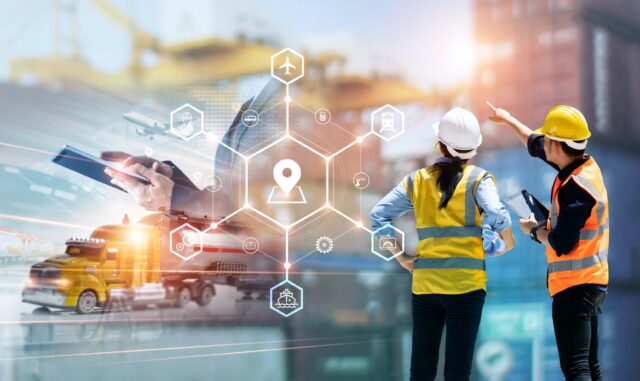
How KAMAX Leverages SAP S/4HANA and SAP EWM to Optimize Logistics and Boost PerformanceKAMAX, a German automotive supplier, enhanced its supply chain and sustainability by implementing SAP solutions to streamline logistics through real-time data and process automation, demonstrating measurable improvements in efficiency and carbon neutrality goals.
2 minute read

Democratizing SAP Process Mining: Process HQ Brings Supply Chain X-Rays to Business UsersAppian's latest updates to its Process HQ module integrate real-time process intelligence into daily workflows for SAP users, enabling logistics managers and service agents to address workflow issues directly from their interfaces.
3 minute read
Benefits of Implementing SAP Extended Warehouse Management (EWM)SAP Extended Warehouse Management (EWM) enhances warehouse operations for wholesale distributors by providing real-time visibility, optimizing space utilization, automating processes, ensuring seamless integration, offering scalability, managing compliance, and improving customer service, thereby driving operational efficiency and excellence.
3 minute read