
6 minute read

Meet the Experts
Key Takeaways
What you need to know
SAP sees the switch from traditional solution-based to AI development as an opportunity to reset pricing which could significantly change what customers pay for SAP software.
SAP Business AI Platform will be delivered in the third quarter, combining SAP BTP, SAP Business Data Cloud, and business transformation tools like Signavio, LeanIX, SAP Cloud ALM, and WalkMe into a more integrated AI platform.
SAP is reorganizing its workforce and development strategy around AI-first hiring, ontology development, and AI agents, while slowing traditional headcount growth and increasing AI-related investment.
The Q2 2026 earnings call from SAP focused, as always, on financial performance. However, questions asked by financial analysts during the latter part of the call yielded interesting responses from SAP leaders, particularly CEO Christian Klein who sees the switch from application-pricing to outcome-based pricing as a unique opportunity for the company to reset the way its solutions are priced.
Second Quarter Numbers
From SAP’s perspective, the big positive was the 27% increase in Current Cloud Backlog (CCB) as compared to the same period in 2025. With an increase to €22.929 billion this is the strongest growth in the cloud-based revenue that SAP expects to recognize in the next year since the beginning of 2025. While CCB has continued to grow, it was not by much more than 20% in several quarters. With Cloud Revenue increasing by 22% this quarter to €6.281 billion, of which Cloud ERP Suite revenue represents €5.525 billion, SAP is on track to exceed €25 billion in cloud revenue for the year.
Despite the continued growth in CCB and Cloud Revenue, many questions were asked about the company’s Operating Profit. While CFO Dominik Asam reiterated that the company was on track for their initial non-IFRS operating profit outlook, this seems to be caused by the “dilutive impact of recent acquisitions” (Prior Labs, Dremio, and Reltio), as well as “lower cloud and total revenue growth” in the quarter.
Explore related questions
Ask SAPi
Delivering SAP Business AI Platform
Although it was only a single remark made by Klein during the earnings call, a notable announcement was that the “new Business AI Platform is being delivered this quarter”. Part of SAP’s major announcements made at Sapphire, the SAP Business AI Platform brings together SAP Business Technology Platform (BTP), SAP Business Data Cloud (BDC), and Business Transformation Management capabilities including SAP Signavio, SAP LeanIX, SAP Cloud ALM, and WalkMe. While all these solutions exist today, significant engineering work is required to start making them function as a single platform. Therefore, it is positive that SAP plans to start delivering the architectural integration in the next few months.
Still, much work still needs to be done by SAP from a commercial perspective. Each of the three pillars of the SAP Business AI Platform, Build, Contextualize and Reason, and Govern, have completely different pricing models and there is little to suggest that anything is changing in the short term. This will make it challenging for customers that are in the process of negotiating new deals or whose contracts for products like SAP BTP are up for renewal in the coming months.
Structuring SAP for AI
Like every company that is embracing AI, SAP is also reshaping its workforce to better support future needs. During the call Klein stated, “We are transforming our operating model from software development to building AI at scale. We are doubling down on ontology development with our best domain experts working on knowledge groups for every industry and line of business.” He also said that, by using AI, the company is seeing developer productivity increase of up to 30%.
To better meet these needs, SAP has significantly changed its hiring plans over the next 12 to 18 months, focusing on recruiting for an AI-centric future. For example, SAP is slowing down the hiring of other profiles because of the productivity gains yielded by AI. This means, as Klein stated during the call, there is no longer a need to hire additional people. However, as in many companies, this has not stopped the research and development budget increasing faster than the headcount budget as the company consumes more AI tokens. This has forced the company to balance AI token-consumption and headcount to continue to meet their planned expense to revenue ratio.
Overall, this is driving four main changes at SAP:
- Selective, AI-first hiring that focuses on ontology development with data scientists and data engineers.
- The need to grow headcount is reduced with the focus on AI-first hiring.
- SAP aims to have more than 90% of its employees complete some form of AI training; for example, more than 3,000 consultants are already focused on AI adoption for customers.
- A shift from a more traditional product backlog that would add features to existing solutions to AI agents and AI-driven capabilities.
Future Pricing Changes or Resets
As SAP starts to switch development from a more traditional feature backlog to agentic AI development, it is already starting to see that the share of that agentic AI development in the backlog has increased significantly. However, there will be an impact on pricing just as development is shifting to agents and assistants to meet SAP’s vision of the Autonomous Enterprise. One of the most important questions asked by many members of the SAPinsider community is around how much the Autonomous Enterprise will cost and how they will be required to pay for it.
In discussing this topic, Klein talked about how over the years SAP has sold systems of record first in on-premise environments and then in the cloud during which customers have come to expect certain discount levels. With the development of AI, SAP now sees that it can completely reset the price level. An example of this is talking to the customer about how it’s no longer the end user or the financial accounting team that is performing the financial close but SAP agents working autonomously. This supports a shift from user-based or solution-based pricing to outcome-based pricing.
Klein sees this as a “unique chance for SAP to reset and really price a value-based outcome”. This will allow sales teams at SAP to move away from the traditional SaaS world or the standard pricing levels that they have been given and introduce a new way of selling and pricing solutions. While Klein did not provide any more details on what might change, he said that in the next 12 months he expects an acceleration of AI cloud revenue which will result in “very healthy cost margins going forward”.
What This Means for SAPinsiders
As these remarks took place in an earnings call there is currently minimal detail on how these comments or announcements might play out. However, there are some things that SAPinsiders can do to prepare.
- Ensure you understand your existing SAP landscape and contracts before any changes arrive. Whether you’re looking at SAP BTP, SAP BDC, one of the business transformation products like SAP Signavio or SAP LeanIX, or your RISE with SAP, Cloud ERP, or SAP SuccessFactors contract, the more that you can do to inventory and review existing contracts the better you will be prepared coming into any negotiation. This won’t change anything that SAP is offering but knowing exactly what you need and how much you are using today will only benefit you in the coming negotiations.
- Focus on the most flexible pricing models you can negotiate. One of the few truly consumption-based offerings that SAP has had is that for SAP BTP. With the SAP BTP Enterprise Agreement (BTPEA), customers had something that they could purchase and then consume based on their usage needs. So, if a new project was developed one month that might consume more, but the next month the consumption would decrease as development wound down and the application was deployed. SAP BDC recently switched to Capacity Units which provide month-to-month reallocation across the applications making up the platform, even if it isn’t the same as the BTPEA. Moving forward, focus on negotiating consumption-based pricing wherever possible to provide the most usage flexibility.
- Pay close attention to SAP announcements and events that provide insight on preparing for SAP Business AI Platform and the Autonomous Enterprise. Over the next year or more there will be multiple webinars, events, sessions, and announcements that cover the SAP Business AI Platform and preparing for the Autonomous Enterprise. While it is not possible to attend all of them, it is crucial to pay attention to announcements around pricing and preparations. The more that can be done to be ready for upcoming changes the better position SAPinsiders will be in when it comes to negotiation and usage.
More Resources
See All Related Content
From Data Warehouses to Data Fabric: What SAP Business Data Cloud Really Means for Your EnterpriseThe article discusses the modern challenges of enterprise data management in large organizations, emphasizing the transition from traditional data warehouses to a more integrated, AI-ready data fabric framework facilitated by SAP Business Data Cloud, while addressing common issues such as technical debt, data extraction strategies, and the necessity for alignment between IT and business perspectives.

Codan’s Digital Transformation: A Global Technology Overhaul with SAP CloudCodan enlisted DyFlex Solutions to implement SAP SuccessFactors, RISE with SAP S/4HANA, and SAP IBP, integrating its global operations into a unified cloud platform to enhance scalability, compliance, and operational efficiency amidst a rapid growth strategy.
3 minute read
Five Key Takeaways from SAP Connect 2026SAP Connect 2026 emphasized the ongoing strategic importance of the Autonomous Enterprise and governance in SAP's vision, despite low adoption among customers, highlighting that successful users have laid a strong foundational groundwork for leveraging AI technologies.
4 minute read
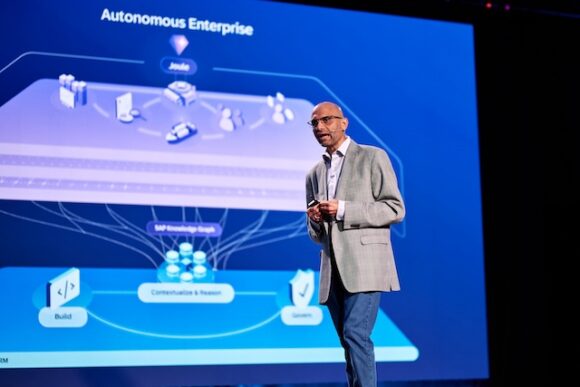
SAP Pushes the Autonomous Enterprise from Vision to Reality, But Adoption Still in InfancyAt SAP Connect 2026, the company presented its Autonomous Enterprise vision, showcasing advancements in AI-driven business processes while acknowledging that widespread adoption remains limited and emphasizing the need for foundational data readiness and robust governance frameworks for successful implementation.
6 minute read