4 minute read
Key Takeaways
What you need to know
SAP Business AI Platform is changing architecturally by bundling SAP BTP, SAP Business Data Cloud, SAP Signavio, SAP LeanIX, and SAP AI Agent Hub into one offering, but the commercial model is still fragmented.
SAP Business Data Cloud is moving to Capacity Units, while SAP Business AI is shifting toward AI Units and consumption-based pricing.
SAP Signavio, SAP LeanIX, and SAP AI Agent Hub each use different transformation and governance pricing approaches, and SAP has not yet announced a unified SAP Business AI Platform price list.
Announced at Sapphire 2026, the SAP Business AI Platform brings together the SAP Business Technology Platform (BTP), SAP Business Data Cloud (BDC), and Business Transformation Management tools including SAP Signavio and SAP LeanIX into a single offering. However, architectural consolidation and commercial consolidation are two very different things. For customers evaluating the platform, the pricing landscape remains a patchwork of multiple distinct models that are yet to be unified.
Three Pillars Drive the Bundle
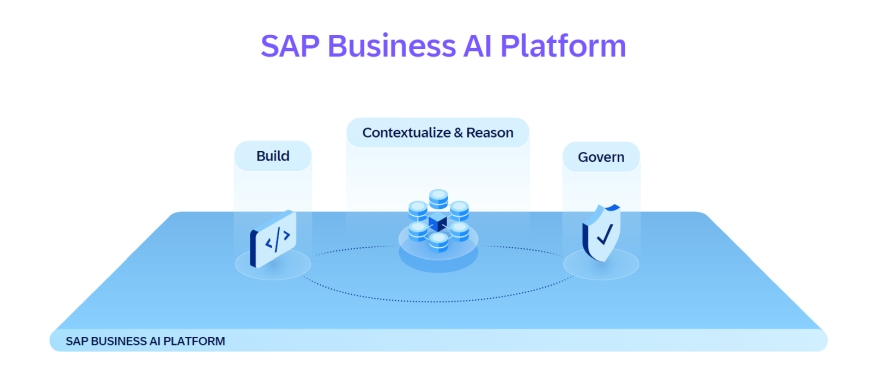
SAP structured the Business AI Platform around three functional layers or pillars. Contextualization consists of some SAP BTP services plus SAP BDC and which is intended to unify SAP and non-SAP data. Build is anchored by the updated Joule Studio which is in the process of becoming more generally available, and Governance which utilizes SAP AI Agent Hub built on SAP LeanIX as well as other business transformation management tools including SAP Signavio. The challenge for SAPinsiders is that each of these pillars currently inherits pricing from the originating product line, and SAP is yet to announce a unified commercial model that spans all three.
Existing Pricing Models
The complicating factor for customers is that the pricing for the services and solutions making up these pillars varies significantly. Between SAP BTP, SAP BDC, SAP Business AI, and the Business Transformation Management offerings, the picture is complex.
Explore related questions
Ask SAPi
For example, SAP BTP pricing is consumption-based and is offered through two primary commercial models. The most popular is the BTP Enterprise Agreement (BTPEA) which constitutes prepaid cloud credits that are consumed as services are activated. This used to be called the Cloud Platform Enterprise Agreement (CPEA) and, although some customers may still have older contracts under this name, no new contracts BTPEA has been the standard way SAP BTP has been sold for more than two years. SAP BTP also offers a pay-as-you-go (PAYG) offering with no upfront commitment or minimum usage. However, the PAYG offering is at list price and offers no discounts making it more suitable for pilots and proofs of concept than for major projects.
SAP BDC Moves to Capacity Units
SAP BDC, on the other hand, has recently moved to a commercial model that focuses on the concept of Capacity Units (CUs). This significantly simplified the existing commercial models for SAP BDC which had multiple cost models depending on whether customers were using services like SAP Databricks, SAP Datasphere or SAP Analytics Cloud, or the Insight Applications. CU’s, rolled out in April 2026, create a flexible pool of usage spanning SAP Datasphere, SAP Analytics Cloud, SAP Databricks, SAP BDC Connect, and SAP Business Warehouse Cloud.
The rollout of the CU model allows organizations to much better utilize their operational expenditure by allowing for month-to-month reallocation. For example, if a project that is utilizing one component of SAP BDC is completed early then those units can be switched to support usage in another area without the requirement of a new purchase order.
While this is significantly more straightforward, SAP BDC continues to use intelligent packages that use the same metric as their application source. This metric varies depending on the intelligent package. For example, the Cloud ERP intelligence Private package uses SAP Cloud ERP Private as the source and the aligned metric for consumption is Full User Equivalent just. However, the Retail Intelligence package, based on SAP S/4HANA Cloud foundation for retail and fashion, uses documents such as demand forecasts, order plan items, and supply network nodes as the source. While this at first seems confusing, the cost is being tied to the volume of data generated by the business process not the number of users accessing the system.
SAP Business AI
Used by both SAP BDC and SAP BTP, SAP Business AI has two different commercial models depending on usage. Base AI is included at now additional cost as part of the underlying SAP contract and does not require a purchase of additional AI Units. Premium AI is either billed per-user/per-month or using AI Units for those who prefer a consumption-based model.
This consumption-based pricing makes it easier for customers to deploy and use Business AI, but it also adds another layer of complexity to the overall pricing for SAP Business AI Platform when considering the existing services covered by the BTPEA and CU’s that are in use via SAP BDC.
Business Transformation Management Tools
Recently organized into a new business unit within the Product & Engineering organization, SAP Signavio, SAP LeanIX, SAP Cloud ALM, and WalkMe all contribute to the Business Transformation Management Suite and SAP’s Integrated Toolchain for Innovation. However, the commercial models for these tools is notably opaque in some instances.
For example, SAP Signavio is currently sold in professional versus collaboration user tiers with significant price difference between the tiers. This makes correct user classification crucial to avoid overpaying. In addition, the Process Intelligence module has a secondary pricing dimension based on event log data volume with an uplift charge should initial allocations be exceeded. Some features of SAP Signavio may also require customers to already own SAP BTP.
On the other hand, SAP LeanIX uses a commercial model that focuses on price per application managed not per user. Customers can then purchase usage in Blocks of 100 applications but can potentially have unlimited users accessing the platform at no additional cost. Last, while part of the overall BTM set of tools, WalkMe follows yet another pricing approach that is unique to the solution and is distinct from both SAP Signavio and SAP LeanIX.
Statements About Bundled Pricing
To date, SAP has provided little information about how these different commercial models will map into the SAP Business AI Platform. Conversations have indicated that the focus on either Capacity Units or AI Units is likely to continue as the company looks to focus on consumption-based pricing that is tied to AI. However, there is little information on how Business AI and the Business Transformation Management tools will fit into this model.
If anything, information on the Business Transformation Management page is quite candid about the lack of unity. For example, the BTM landing page says that: “Pricing varies by solution. SAP LeanIX and SAP Signavio are bundled with certain SAP Cloud ERP Private packages, while SAP LeanIX uses a pricing model based on the number of applications managed rather than per-user seats. Other business transformation management solutions follow their own licensing approaches.” This, at least, acknowledges that no single commercial model exists for the Business Transformation Management offerings.
Moving forward, since the SAP AI Agent Hub is a large part of the governance pillar within SAP Business AI Platform and that is part of SAP LeanIX, this does suggest that the per-application pricing model used by SAP LeanIX may become the commercial chassis for at least part of the AI Agent governance once it reaches general availability in Q3 2026.
Key Pricing Considerations
| Component | Pricing Metric | Model Type | Status |
| SAP BTP | Cloud credits | BTPEA or PAYG | Established |
| SAP BDC | Capacity Units | Subscription + Consumption | Still Evolving |
| Business AI | AI Units | Per-user/month + consumption | Shifting towards consumption |
| SAP Signavio | User Type + Data Volume | Tiered license + usage uplift | Established |
| SAP LeanIX | Per application managed | Tiered, unlimited users | Established, unique model |
| SAP AI Agent Hub | TBD | TBD – GA Q3 2026 | Not yet finalized |
What This Means for SAPinsiders
The central takeaway today is that the current branding for SAP Business AI Platform is architectural and not commercial. Customers using components of the SAP Business AI Platform will still need to negotiate and reconcile multiple separate pricing constructs. This includes cloud credits, capacity units, AI units, per-user/month and data-volume hybrid pricing, and per-application counts. Until SAP creates a unified commercial model, this will remain a complex scenario for those navigating the end of existing contracts while seeking to use new capabilities. Procurement teams should prioritize contract flexibility where possible, for example favoring BTPEA-style credit pools over rigid subscriptions given how SAP is still reshaping AI consumption pricing in response to agentic automation trends. However, this is likely to be a work in progress as SAP streamlines the commercial model for different parts of the platform.
Based on the today’s pricing landscape, SAPinsiders should take the following steps in order to ensure that they are prepared for the future.
- Inventory current contracts against the three pillars before renewal or expansion. Because SAP BTP, SAP BDC, SAP Business AI, and the Business Transformation Management tools each carry a distinct pricing metric (cloud credits, Capacity Units, AI Units, per-user/data-volume, and per-application), customers should map every existing contract to its pillar well before renewal. This is critical for organizations on legacy CPEA-named SAP BTP contracts. BTPEA has been the standard for over two years, and mapping old contract terms to current models prevents surprises when negotiating the next agreement. The same applies to SAP Signavio’s professional versus collaboration user tiers, where misclassification causes overpayment.
- Favor flexible, consumption-based commitments over rigid subscriptions wherever a choice exists. SAP BDC’s shift to Capacity Units permits month-to-month reallocation across SAP Datasphere, SAP Analytics Cloud, SAP Databricks, SAP BDC Connect, and SAP BW/4HANA. Furthermore, Business AI is transitioning toward AI Units and consumption-based pricing. SAPinsiders should structure new purchases to preserve flexibility instead of locking in fixed per-user subscriptions. This strategy is vital while the commercial model for the platform undergoes reshaping. A credit-pool or capacity-unit structure absorbs pricing changes better than a rigid multi-year seat license.
- Monitor the SAP AI Agent Hub rollout, since SAP LeanIX’s per-application model may become the template for AI governance pricing. With the SAP AI Agent Hub built on SAP LeanIX and targeting general availability in Q3 2026, customers using or evaluating SAP LeanIX or planning to adopt agentic governance capabilities should treat the Hub’s pricing announcement as an early signal of how SAP intends to commercialize AI governance. Customers should engage their account teams to understand how per-application pricing logic might extend into agent governance. It is crucial that possibility is factored into near-term BTM or SAP Signavio purchasing decisions instead of assuming current SAP Signavio and SAP LeanIX pricing will remain unchanged once the hub reaches general availability.
More Resources
See All Related Content
SAP Industry AI Explained: How SAP Is Moving Beyond AI AssistanceSAP Industry AI combines vertical process knowledge, enterprise data, and AI agents to tackle complex operational problems. The portfolio also introduces forward-deployed engineering as SAP works toward more autonomous execution across industry-specific business processes.

How to Modernize SAP Without Rebuilding the BusinessSAP S/4HANA modernization does not have to mean rebuilding the business. cbs positions Brownfield+ as a selective migration approach that preserves proven processes while addressing technical debt, data, and future architecture requirements.
4 minute read

Changing Your Mindset About Board InteractionsFormer CIO Martin Menard has sat on both sides of the boardroom table, and he argues most technology leaders squander their most leveraged conversation. His three lessons cover mindset, advisory committee structure, and why the winning pitch is the cost of standing still, not ROI.
7 minute read

SAP’s Autonomous HCM Explained: How Agents, Data and HR Applications Work TogetherSAP Autonomous HCM connects SuccessFactors, People Intelligence, workforce planning and Joule Agents so AI can move beyond answering HR questions toward coordinating multi-step processes across payroll, recruiting and workforce decisions.
5 minute read