
3 minute read
Meet the Authors
Key Takeaways
What you need to know
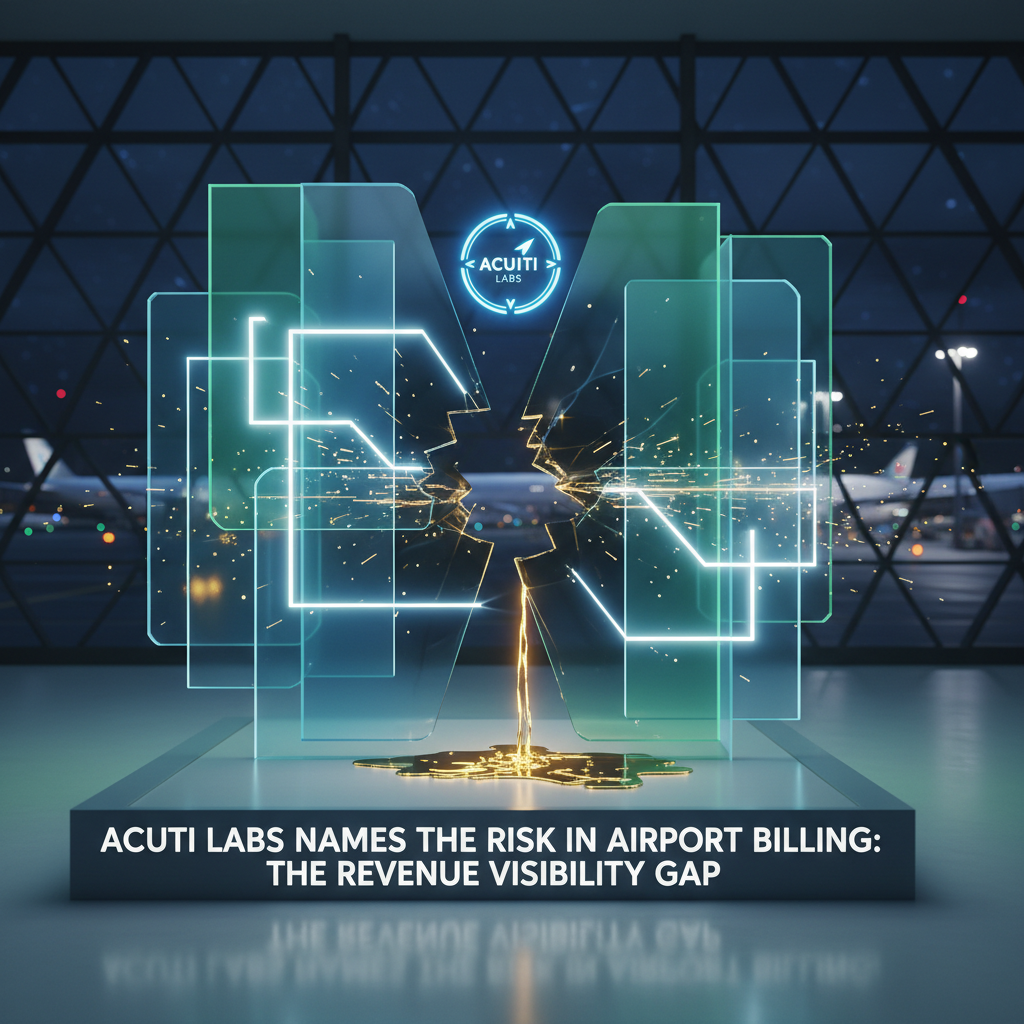
Acuiti Labs CTO Souvik Majumdar names the Revenue Visibility Gap: the widening distance between what an airport's operational systems capture and what finance can see, trust, and defend under audit.
A delivered engagement at a major European hub airport unifies aeronautical charges, retail concessions, property leases, and cargo billing on SAP S/4HANA Public Cloud, SAP Subscription Billing, and SAP CLM.
With 26% of organizations already on SAP S/4HANA Cloud editions per SAPinsider's 2026 benchmark, billing traceability is becoming a migration design decision rather than a post-go-live fix.
Acuiti Labs, the London-based consulting firm specializing in SAP Billing and Revenue Innovation Management (SAP BRIM) and quote-to-cash transformation, has spent mid-2026 making an argument that will resonate with SAP finance teams well beyond aviation: revenue does not leak inside systems; it leaks in the handoffs between them. In a recent blog post, CTO Souvik Majumdar gives that problem a name, the Revenue Visibility Gap, defined as the widening distance between what an airport’s operational systems capture and what its finance function can see, trust, and defend under audit.
Why Airports Are the Extreme Case
Majumdar details why airports concentrate this risk. A single hub can simultaneously run aeronautical charges priced on maximum takeoff weight, ICAO code, and flight type, retail concessions on Minimum Annual Guarantee structures with variable fee components, long-term property leases with indexation clauses, and parking, cargo, and IT services billing, each governed by different teams and historically sitting in different systems. He identifies five specific failure modes, including contract management disconnected from finance and the absence of airline self-service. He argues that none of them individually triggers an alarm, which is exactly what makes the collective risk a boardroom issue.
The post is grounded in a delivered engagement at a major European hub airport, which Acuiti Labs does not name in line with its standard practice. The architecture there treats quote-to-cash as one governed process on SAP S/4HANA Public Cloud, SAP Subscription Billing, and SAP CLM. Aircraft movement events flow from the airport’s charge database into SAP Subscription Billing via SAP BTP, SAP CLM integrates directly with SAP S/4HANA so lease amendments and in;exation events reach finance without manual reconciliation, SAP Convergent Invoicing consolidates every charge type into a single customer invoice, and SAP FI-CA manages subledger accounting, collections, and disputes with traceability from the general ledger back to the individual event. The airport also implemented e-invoicing to meet Belgian regulatory requirements, positioning it ahead of the broader EU electronic invoicing mandate.
Explore related questions
Ask SAPi
The Self-Service Layer and the Data Groundwork
The customer-facing element of that architecture is a product Acuiti Labs detailed in Q2C Customer Portal for SAP S/4HANA: One Interface for Invoices, Payments, and Subscriptions. The portal is delivered as SaaS on SAP BTP. It integrates directly with SAP S/4HANA, SAP BRIM, SAP FI-CA, and SAP Subscription Billing without requiring data migration or modifications to core SAP systems. Customers manage invoices, payments, disputes, and subscription lifecycles through one interface, with payment integrations spanning Stripe, ACI Speedpay, GoCardless, and the SAP Digital Payments add-on. In the airport context, that self-service layer turns invoice questions and charge disputes from email threads into issues airlines resolve themselves.
Acuiti Labs has also been publishing on the groundwork these programs depend on. Its SAP S/4HANA Data Migration Tools: A Practical Guide to Choosing the Right Approach walks through tool selection, data assessment, and cutover execution, and serves as a reminder that unified billing architectures inherit the quality of the data moved into them.
The Wider SAP Context
The timing matters. SAPinsider’s ERP Migration and Transformation 2026 benchmark report found that 55% of organizations have deployed a version of SAP S/4HANA. Still, only 34% have completed the transition, and 26% of respondents are now running SAP S/4HANA Cloud editions. As more industry-specific workloads land on public cloud ERP, the question Acuiti Labs raises, whether finance can trace every revenue event from source to settlement, becomes a design decision made during migration rather than a fix applied afterward. SAPinsider’s Technology Leaders’ Strategic Agenda for 2026 adds the commercial pressure: 70% of technology leaders name operational efficiency and cost reduction as their top priority, and manual reconciliation across disconnected billing systems is exactly the kind of cost that unified quote-to-cash architecture removes.
What This Means for SAPinsiders
Audit the handoffs, not the systems. Acuiti Labs’ core finding is that each system works, while revenue leaks between them. Finance and enterprise architects should map how a revenue event travels from the operational source to the general ledger posting and identify every manual bridge along that path.
Treat billing architecture as part of the S/4HANA migration design. With 26% of organizations already on SAP S/4HANA Cloud editions per SSAPinsider’s 2026 benchmark, complex revenue models should be unified during the move, since retrofitting traceability later is more costly.
Use regulatory mandates as the forcing function. The EU electronic invoicing mandate rewards organizations that build a unified, auditable billing foundation now, making compliance a byproduct of good architecture rather than a separate scramble.
More Resources
See All Related Content
SAP Puts AI Token Spending Under Finance ControlSAP is incorporating AI token spending into its finance processes after identifying a triple-digit-million-dollar financial risk. Its internal framework combines cost allocation, token caps, model routing, tool rationalization, and forecasts tied to business value.

Why SAP BRIM Still Matters as SAP Broadens Revenue ManagementSAP now gives BRIM customers more flexibility in how they combine subscription, billing, and finance capabilities. Acuiti Labs' portfolio shows how companies can modernize specific revenue processes while BRIM continues to handle high-volume, complex billing.
3 minute read

Cloud ALM + Avantra | Observability meets actionMost SAP environments are complex, hybrid, and built across multiple vendors. In the second session of the Avantra Summer Innovation Series, discover how SAP Cloud ALM and Avantra work together to provide broader operational visibility, deterministic automation, and consistent execution across the SAP landscape. See the integration in action and learn how this combined approach […]
1 minute read
SAP EPPM-Plus Turns Capital Governance Into an Operating ProcessData center programs force projects to compete for the same capital, engineering talent, and delivery capacity. Platinum DB Consulting's SAP EPPM-Plus turns capital governance into a repeatable process that links project intake, stage-gate approvals, FP&A planning, and SAP Project System execution.
3 minute read