
1 minute read
Meet the Authors
Key Takeaways
What you need to know
Unilever is partnering with Accenture to build more than 40 AI-enabled digital twins across its global manufacturing network in 18 months, all running on a consolidated SAP digital core.
The program reflects the broader SAP Accenture digital twin partnership, where SAP supplies the foundation through SAP Digital Manufacturing and BTP and Accenture scales it into production.
For SAP professionals, the lesson is that clean-core SAP S/4HANA and shop-floor AI are one initiative, not two, and twins only deliver value when their predictions flow back into ERP.
When Unilever announced on June 16 that it would scale AI-enabled digital twins across its global manufacturing network with Accenture, the headline number was easy to spot: more than 40 new twins in 18 months, on top of factories already running them. The more interesting story for SAP professionals sits one level down. This is a consumer goods giant that has spent more than a decade consolidating onto a four-instance SAP backbone and is now pushing intelligence to the shop floor. The twins are the visible part. The data plumbing underneath is where the SAP relevance lives.
What Unilever Is Actually Doing
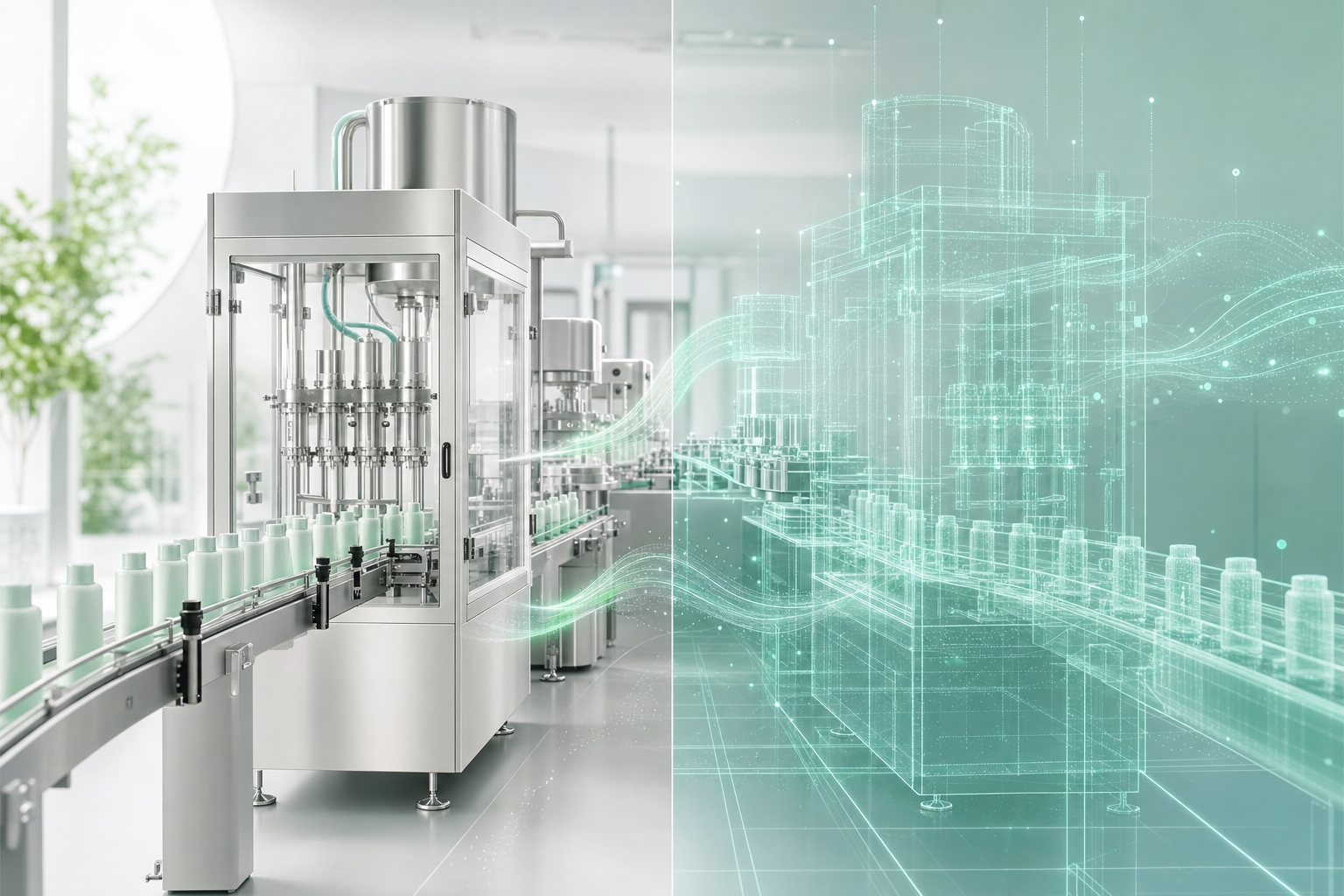
Digital twins are virtual models of equipment and production lines that pull live data from physical systems to predict how machines and processes behave. Unilever is pairing those models with AI-driven insights and agentic capabilities so teams can spot issues sooner, simulate faster, and make better calls across the production cycle. The multi-year program builds toward a repeatable blueprint for global rollout.
The early results are concrete, not aspirational. In Raeford, North Carolina, a twin powering Dove, Degree, and Axe deodorant production predicts 95% of process-flow restrictions, cutting waste by 20% and increasing capacity by 10%. In Poznan, Poland, home to Knorr and Hellmann’s, a twin stabilizes mayonnaise viscosity, reduces minor stoppages by up to 20%, and cuts waste by nearly 30%. At Gandhidham, India, the twin-cut Dove soap quality defect rate was 30% over four years. In Cu Chi, Vietnam, an AI-powered mixer delivers 1-2% savings on premium ingredients for OMO detergent.
Explore related questions
Ask SAPi
“Scaling AI across our operations isn’t just a technological shift; it’s a commitment to superior products, sustainability and empowering our teams across our factories,” said Adam Raeburn-James, Global VP for Digital Business Operations at Unilever. Accenture’s Nicole van Det, who leads the Unilever account globally, framed it as setting “the benchmark for how industrial AI creates long-lasting value in the consumer goods sector.”
Why The SAP-Accenture Digital Twin Partnership Matters
Unilever is not a casual SAP user. It collapsed roughly 200 local ERP systems into four regional SAP landscapes, runs SAP S/4HANA Cloud under RISE with SAP, decommissioned a large share of custom code in a clean-core move, and relocated innovation onto SAP Business Technology Platform (BTP). That is precisely the foundation a digital twin program needs, because a twin is only as good as the operational data feeding it.
This is where the broader SAP-Accenture relationship becomes the subtext. The two have co-innovated on industrial digital twins for years, building simulation experiences on SAP BTP contextualized with SAP business data, and SAP’s own Digital Manufacturing offering treats the twin as the bridge between cloud execution and the physical machine. More recently, SAP, Accenture, and Vodafone piloted humanoid robots trained on digital twins and integrated with SAP Extended Warehouse Management in Duisburg, Germany. The Unilever program is the consumer-goods expression of that same thesis: twins are most valuable when their predictions feed back into the ERP and supply chain systems that run the business.
Accenture is the systems integrator stitching the industrial AI layer into Unilever’s environment, deploying analytics and AI agents that predict maintenance needs and progressively make adjustments automatically, with human oversight. For SAP customers watching, the pattern is the partnership in miniature: SAP supplies the digital core and twin foundation, Accenture supplies the scaling muscle, and the client supplies the disciplined process design.
What This Means for SAPinsiders
Clean-core investment is the precondition for shop-floor AI. Unilever could scale twins quickly because it had already simplified to SAP S/4HANA Cloud and moved extensions to SAP BTP. Twin predictions are worthless if they cannot be reconciled against live operational data. Therefore, enterprise architects should treat a clean-core SAP S/4HANA roadmap and a digital twin ambition as one initiative, sequencing the data foundation before the twin pilots rather than after.
Treat digital twins as a closed loop with the ERP, not a standalone dashboard. The Unilever results, 95% flow-restriction prediction, and 30% waste reduction in mayonnaise came from twins acting on production. Thus, value shows up only when insights feed back into planning and execution. ERP program managers should map where twin outputs will write into SAP Digital Manufacturing, SAP IBP, or asset management, and define the human-oversight thresholds before agents take any autonomous action.
Anchor twin programs to outcomes that a CFO and a sustainability lead both recognize. Unilever tied its twins to capacity, waste, premium-ingredient savings, and scope 1 and 2 emissions, the exact metrics that justify spend. Twins that report only uptime struggle to secure the next funding round. AI and line-of-business leaders should pick two or three financially legible KPIs per site, instrument them in the twin from day one, and build the global rollout case on proven, repeatable numbers rather than a technology narrative.
More Resources
See All Related Content
Linfox Warehouse Management, Transportation Management and Event Management SolutionsLinfox Pty Ltd is enhancing its warehouse management and transportation services across Asia-Pacific by implementing SAP Extended Warehouse Management, resulting in improved capabilities, system reliability, cost savings, and support.
FourPL Cario Partnership AnnouncementFourPL and Cario have formed a strategic partnership to enhance freight visibility and cost efficiency for enterprises by integrating FourPL's advisory expertise with Cario's Freight Control Tower platform, aiming particularly at mid-to-large businesses in complex supply chains.
1 minute read

S/4HANA navigation path: Standard project support during and post go-liveMigrating to SAP S/4HANA is a complex, ongoing process that requires careful dual maintenance and robust support for both legacy and new systems, with variations in support models depending on whether a cloud or on-premises approach is taken.
7 minute read

Beyond Greenfield and Brownfield: Rethinking SAP ModernizationIn a recent Lemongrass Live discussion, experts emphasized that SAP organizations should prioritize creating immediate business value through AI innovations rather than solely focusing on the Greenfield or Brownfield migration paths to S/4HANA.
3 minute read