
3 minute read
Meet the Authors
Key Takeaways
What you need to know
HCLTech has expanded its collaboration with Google Cloud and ServiceNow to deploy AI agents in field services, customer experience, and the factory shop floor, all running on Google's Gemini Enterprise platform.
For SAP practitioners, the issue is whether this Gemini-plus-ServiceNow layer can coexist with SAP Business AI without splitting data ownership, governance, and ROI accountability across too many control points.
The deal ships with ServiceNow's AI Control Tower claiming the visibility-and-governance role, sharpening the question of whether SAP Business AI should be the authoritative governance spine.
HCLTech has expanded its collaboration with Google Cloud and ServiceNow to put AI agents inside operational workflows, from field services to customer experience to the factory shop floor, all running on Google’s Gemini Enterprise platform. For SAP practitioners, the issue is whether that layer can coexist with SAP Business AI without splitting data ownership, governance, and ROI accountability across too many control points.
This is a three-party story, and that matters. Gemini Enterprise supplies the foundational AI, ServiceNow supplies the workflow orchestration and its Blueprint for Agentic Business, and HCLTech supplies implementation, integration, and industry context. “The future of enterprise AI lies in orchestrating intelligent agents across the business as a connected system of action,” said Michael Park, ServiceNow’s Senior Vice President of Global Partnerships and Channels. The phrase to sit with is a connected system of action, because connection across systems is precisely where SAP governance gets complicated.
What The Partnership Delivers
Per HCLTech, the initial solutions span two high-impact domains plus a manufacturing assistant. In Field Services, Gemini Live, integrated with ServiceNow Field Service Management, provides technicians with real-time audio and visual intelligence to enable faster issue resolution. In Customer Experience, the goal is to preserve customer intent across channels. A next-generation Factory Shop Floor Assistant delivers real-time operational intelligence to manufacturing environments. There is also an ITOps ServiceNow Agent available on Google Cloud Marketplace for Gemini Enterprise for incident management and remediation. The useful detail is the placement of AI inside the process flow, not only in a separate assistant interface.
Explore related questions
Ask SAPi
In a manufacturing scenario, that could mean an assistant flags a quality deviation, initiates a service workflow, or supports a downstream operational decision. In an SAP environment, the underlying data, material, production, maintenance, or order records may live in ERP, while the agent acting on it operates in a different layer. That pattern works when integration and controls are explicit. It also raises a governance question many SAP shops have not settled: which platform is accountable when an AI-assisted action is wrong, and which audit trail is authoritative?
The Control Plane Question
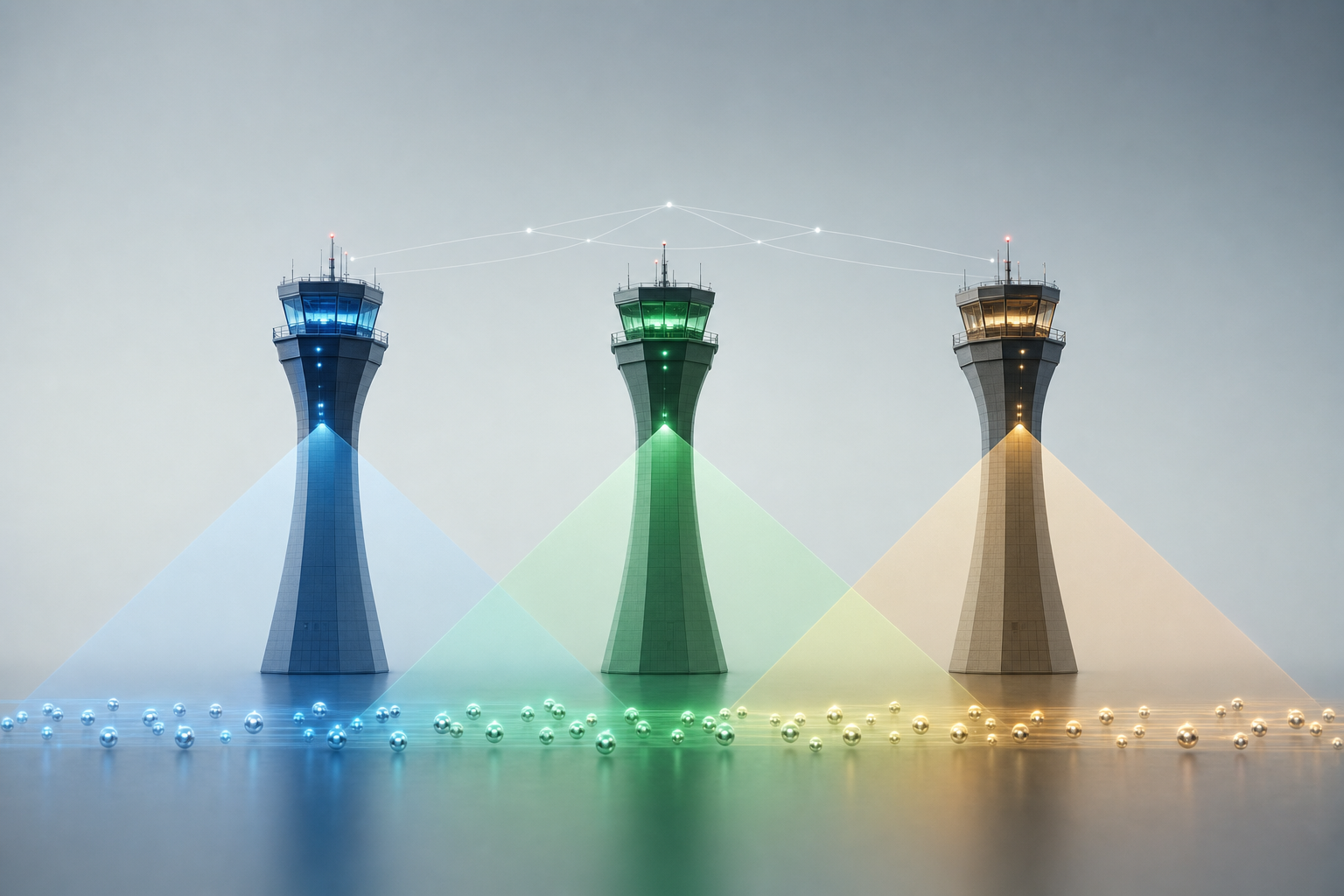
SAP customers are increasingly asked to run multiple AI execution and governance layers at once: SAP Business AI inside ERP and line-of-business suites, Google’s Gemini Enterprise as the foundational model layer, and ServiceNow as the cross-system workflow orchestrator. Each brings its own data ingestion pattern, policy model, and definition of an agent. Tellingly, the announcement itself leans on ServiceNow’s AI Control Tower for “visibility and governance of AI agents” inside Gemini Enterprise, which is the same control-plane question, just answered in ServiceNow’s favor rather than SAP’s.
SAPinsider’s 2025 AI Adoption research shows AI Leaders use a wider portfolio of partners and platforms than Adopters or Beginners. That is a maturity correlation, not a deployment instruction. AI agents do not become governed because the architecture diagram has more arrows. Without clear ownership, the result is agent sprawl, committee work with better branding. The Leaders reporting roughly 13% cost savings and 25% productivity gains from AI generally achieved these gains after resolving data readiness, ownership, and repeatable deployment models, not before. Those fundamentals get harder, not easier, when execution moves outside the primary system of record.
Governance, Not Novelty, Is The Friction
The announcement by HCLTech, Google Cloud, and ServiceNow uses the language of responsible AI and scalable deployment. The harder work is operational: clarifying how policy ownership is allocated when an agent touches both SAP Business AI and a Gemini-plus-ServiceNow stack, and where ROI is actually measured.
This is where systems integrator accountability matters. HCLTech is positioning its role around implementation, integration, and industry-specific acceleration, and its own CTO, Vijay Guntur, frames the work as moving clients “beyond pilots to sustained, enterprise-wide impact.” For SAP customers evaluating this kind of offering, the deployment questions are concrete: which platform’s governance model applies when policies conflict, how SAP-originated data is logged when an external workflow agent acts on it, and how the ROI baseline is set before the deployment is assessed.
What This Means for SAPinsiders
Map every agent to the SAP object it touches before approving the stack. The Field Services and Factory Shop Floor assistants will read, update, or trigger SAP material, production, maintenance, and order data while executing in a Gemini-and-ServiceNow layer. Document, for each agent, the SAP object it reads or writes and the authoritative audit trail. If an enterprise architect cannot name the system of record and the log of authority per agent, they are approving an architecture that they cannot audit, which is the integration debt SAP teams have spent years trying to retire.
Decide now whether SAP Business AI is the governance spine or just one layer among several. This collaboration ships with ServiceNow’s AI Control Tower, already claiming the visibility-and-governance role. If an organization intends SAP Business AI to hold that role, it must say so explicitly and require the ServiceNow and Gemini layers to operate inside it, not in parallel. SAPinsiders should assign one accountable owner for AI-assisted actions across platforms before deployment, because unclear ownership is the failure mode. SAP Insider’s 2025 AI Adoption research ties to organizations that report no significant AI outcomes.
Treat integration as governance reconciliation rather than connectivity. The real scope is harmonizing policy enforcement, auditability, and exception handling across SAP, Gemini Enterprise, and ServiceNow, then tying workflow-embedded AI to pre-defined baselines for productivity, customer experience, and cost. Systems integrators must scope their engagements around traceable, owned, measured outcomes across all three stacks rather than platform enablement alone. That is the difference between AI that an SAP customer can defend at audit and AI that simply adds arrows to the diagram.
More Resources
See All Related Content
NVIDIA Launches New Security Platform for AI Agents as SAP Builds OpenShell Into Joule StudioNVIDIA's Open Agent Safety Platform places enforceable runtime boundaries around AI agents. SAP is embedding the platform's OpenShell runtime in Joule Studio, and deeper links to enterprise authorization, IAM, and audit controls are still under development.


Why Moving to SAP Cloud ERP Is A Security Decision — Not Just An IT UpgradeWith SAP ECC mainstream maintenance ending in 2027, KPMG professionals warn that lift-and-shift migrations leave security for later. SAPinsider research shows why that gap is widening, and what a dedicated security workstream should cover.
4 minute read