
1 minute read
Meet the Experts
Key Takeaways
What you need to know
SAP Sapphire 2026 unifies SAP Business Technology Platform, SAP Business Data Cloud, and SAP Business AI into the SAP Business AI Platform, which changes enterprise AI from separate tools into a governed, end-to-end AI stack. This matters because SAP customers can now build and deploy AI agents on trusted business data, and it impacts enterprises, CIOs, and SAP platform teams planning their ERP and AI roadmap.
SAP launched the SAP Autonomous Suite and redefined Joule as the primary enterprise interface for running business processes, not just answering questions. This matters because AI agents can now execute financial close, supply chain, procurement, HR, and customer experience workflows at scale, impacting SAP customers that want faster automation, especially organizations moving from ECC to S/4HANA Cloud.
SAP-connected vendors and system integrators must adapt to an AI-driven supply chain where clean data, API-first integration, and agent orchestration determine success. This matters because manual processes and weak data quality will create friction or exclusion from automated workflows, impacting suppliers, partners, and SAP consultants that need to modernize integrations, governance, and AI delivery capabilities.
For decades, enterprise software was defined by systems of record. ERP centralized data, standardized processes, and gave organizations control. But execution still depended on people navigating systems, coordinating workflows, and making decisions across fragmented environments.
At SAP Sapphire 2026, that model changed.
SAP introduced the Autonomous Enterprise a shift from systems that document work to systems that execute it. AI agents are no longer assistants on the sidelines. They are becoming operators embedded directly into business processes, capable of running finance, supply chain, HR, and procurement workflows end to end.
Explore related questions
Ask SAPi
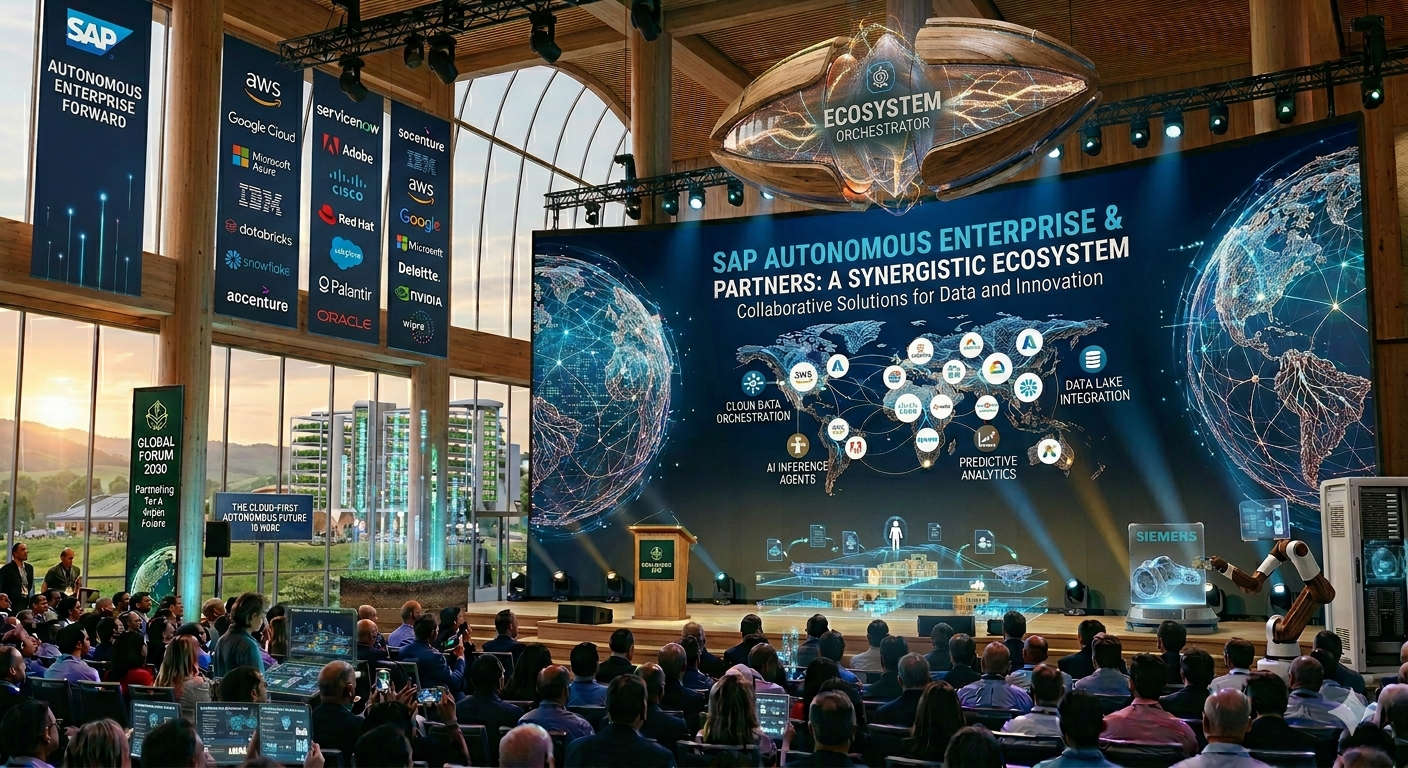
But the real story is not just autonomy. It is the ecosystem SAP has assembled to make it possible.
This is where the future gets interesting.
From Platform to Ecosystem: Why Partnerships Are the Strategy
- SAP’s announcement made one thing clear: no single company will own enterprise AI.
- Instead, SAP is positioning itself as the orchestration layer bringing together models, clouds, data platforms, and execution engines into a unified environment.
- The partnerships announced at Sapphire are not incremental integrations. They are foundational to how the Autonomous Enterprise operates.
Anthropic brings advanced reasoning through Claude, which will power decision-making and agent behavior across business processes.
AWS enables zero-copy data integration, reducing the latency and complexity of moving enterprise data into AI workflows.
Google Cloud and Microsoft enable agent-to-agent interoperability, allowing SAP’s Joule agents to coordinate with external AI systems.
NVIDIA provides the secure runtime environment for executing agents with governance and control.
Additional partners such as Palantir, Mistral AI, and Cohere expand capabilities in data, sovereign AI, and model diversity.
This is not a closed ecosystem. It is an open, governed AI network where SAP controls context and execution, while partners contribute intelligence, scale, and innovation.
The Strategic Shift: SAP as the Control Layer
The deeper implication of these partnerships is strategic.
In the AI era, value is shifting away from standalone applications toward control layers that orchestrate data, models, and workflows.
SAP is positioning itself as that control layer.
While hyperscalers compete on compute and AI labs compete on model performance, SAP is competing on process authority.
AI agents powered by Anthropic’s Claude may reason. AWS may provide infrastructure. Microsoft and Google may enable interoperability. But SAP owns the business context—how a purchase order connects to a supplier, how a journal entry impacts financial close, how payroll connects to compliance.
That combination reasoning, context, and execution is what makes the Autonomous Enterprise viable at scale.
What This Means for Customers
For enterprise customers, these partnerships fundamentally reshape technology roadmaps.
First, multi-cloud is no longer optional. SAP’s strategy assumes customers will operate across AWS, Microsoft, and Google Cloud simultaneously. The Autonomous Enterprise is designed for interoperability, not lock-in.
Second, AI adoption becomes faster and less risky. By embedding leading models like Claude directly into SAP workflows, customers do not need to build AI capabilities from scratch. They inherit them—governed, contextualized, and aligned to business processes.
Third, data architecture becomes the critical foundation. Zero-copy integration and real-time data access mean that data quality, structure, and governance will directly determine how effective AI agents become.
Finally, the roadmap shifts from implementation to orchestration. The question is no longer how to deploy SAP. It becomes how to orchestrate AI across SAP and non-SAP systems to drive outcomes.
Customers who recognize this early will redesign their roadmaps around data, integration, and AI governance—not just application upgrades.
What This Means for Vendors
For vendors operating in SAP-connected ecosystems, the implications are immediate.
The Autonomous Enterprise runs on structured, accessible, real-time data. Vendors that cannot integrate cleanly into SAP workflows through APIs and standardized data models will be excluded from automated processes.
AI agents will increasingly make procurement and supply chain decisions. Vendor performance, pricing consistency, compliance, and delivery reliability will be evaluated continuously, not periodically.
In this model, data quality becomes a competitive advantage.
Vendors that invest in API-first architecture and clean data pipelines will be preferred by AI-driven procurement systems. Those that rely on manual processes or fragmented systems will face increasing friction.
The shift is simple but profound: you are no longer just selling to a company. You are interfacing with its AI.
What This Means for Partners and System Integrators
For system integrators, the partnership ecosystem creates both disruption and opportunity.
The traditional ERP implementation model is evolving. Configuration and deployment are no longer the primary sources of value.
Value now shifts to:
Designing AI agents and workflows aligned to outcomes
Orchestrating multi-cloud and multi-model environments
Managing AI operations, governance, and continuous optimization
Building industry-specific accelerators on top of SAP’s platform
SAP’s partnerships accelerate this shift. With access to leading AI models, cloud infrastructure, and development frameworks, partners can move faster—but they must also evolve faster.
The winners will be those who shift from implementers to orchestrators.
The Future of These Partnerships
Looking ahead, these partnerships will deepen in three ways.
First, tighter integration between models and processes. AI models like Claude will become more embedded in SAP workflows, moving from general reasoning to domain-specific decision-making.
Second, expansion of agent-to-agent ecosystems. SAP agents will increasingly coordinate with external agents, creating distributed AI networks across enterprises and vendors.
Third, increased competition within the ecosystem. SAP’s openness means multiple models and clouds will coexist. Customers will have more choice—but also more responsibility in designing architecture.
This is not a static partnership model. It is a dynamic ecosystem that will continuously evolve.
The Bottom Line
SAP Sapphire 2026 marked more than the launch of the Autonomous Enterprise. It marked the emergence of a new enterprise architecture built on partnerships.
AI is no longer delivered as a standalone capability. It is assembled across models, clouds, data platforms, and applications into a unified system of execution.
SAP’s role is clear. It is not trying to own every layer. It is trying to orchestrate them.
For customers, vendors, and partners, the implication is the same.
The future is not about choosing one platform. It is about operating across an ecosystem.
And in that ecosystem, the organizations that learn how to connect, orchestrate, and govern these partnerships will define the next generation of competitive advantage
More Resources
See All Related Content
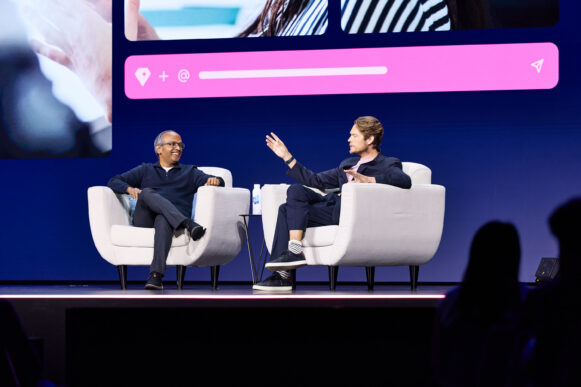
SAP’s CX Keynote Puts B2B Selling in FocusSAP Connect 2026 put ERP integration at the center of SAP's Customer Experience AI strategy. New B2B commerce capabilities, quoting assistants and marketing agents aim to connect customer-facing work with operational data, while Ericsson's quoting project shows how companies are beginning to put that approach into practice.
4 minute read
Vena vs. SAP Analytics Cloud: Comparing Features, Integrations, Reviews and MoreThe article compares Vena and SAP Analytics Cloud as financial planning and analytics platforms, highlighting Vena's Excel-native interface and broader scope of functionalities like budgeting and financial consolidation, against SAP's strong integration within its ecosystem and generative AI capabilities, ultimately suggesting the choice depends on specific business needs.
10 minute read