

3 minute read
Meet the Experts
Meet the Authors
Key Takeaways
What you need to know
SAP's Autonomous Enterprise vision faces its defining test in delivery, with customers and analysts watching closely to see whether AI agents performing financial close, procurement approvals, and supply chain decisions in keynote demos can actually reliably and compliantly inside production ERP environments.
SAP's competitive differentiation in the agentic AI era rests on its Knowledge Graph—a middle layer of semantic models, authorizations, and decades of industry process knowledge across 26 verticals that generic LLM providers cannot replicate, giving SAP agents governed business context.
While SAP's Autonomous Enterprise is architected cloud-first, hybrid customers on SAP ECC and on-premise S/4HANA are not excluded; SAP is building AI enablement tools for these environments, positioning cloud migration as the path to full autonomous capability.
The post-keynote Q&A at SAP Sapphire 2026 revealed the company’s autonomous enterprise strategy will be closely watched and judged by whether customers can trust SAP’s AI agents inside production business processes.
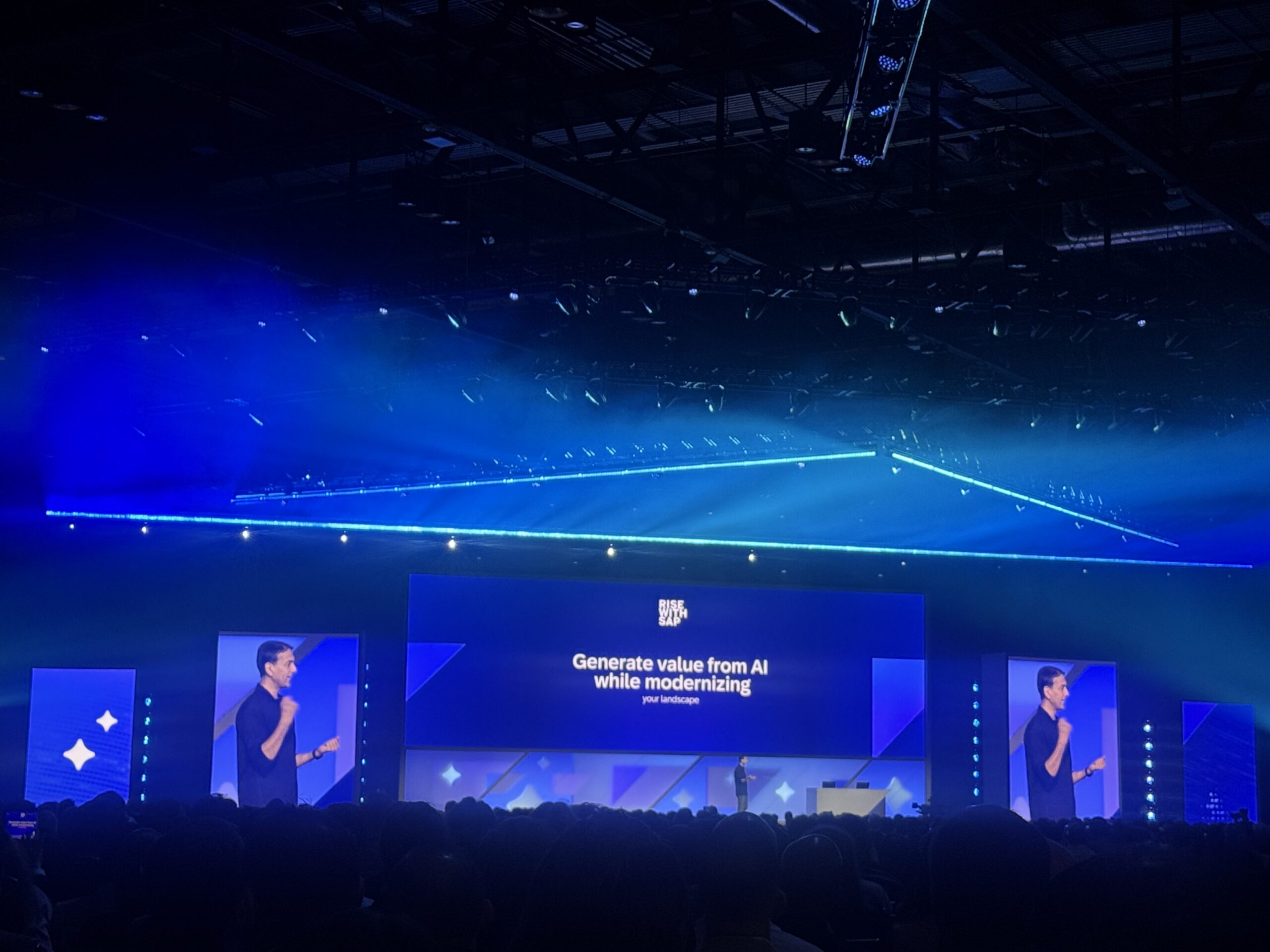
Christian Klein, SAP’s CEO and Chairman of the Executive Board, framed the keynote around what he called “the brain of every company.” SAP’s Business AI Platform, he said, is designed to give agents the context of “how to run business” and to deliver outcomes that are not only accurate but compliant. If AI cannot operate as a generic layer above ERP, then it must be grounded in SAP’s process knowledge, data models, permissions, and governance structures.
The Q&A showed the difficult part of that approach. SAP is asking customers to believe that agentic AI can direct and execute certain core processes, even as many remain cautious about data quality, change management, and the reliability of AI-generated actions.
Explore related questions
Ask SAPi
After using the May 12 opening keynote to present the SAP Business AI Platform, Joule Work, autonomous agents, and industry AI as SAP’s upcoming enterprise software roadmap, SAP executives faced a more practical set of questions:
- What is ready and usable today?
- How will those who haven’t yet transitioned to the cloud customers participate?
- Why should customers believe demos will translate into operational value?
- How much control will SAP exert over APIs, agents, and orchestration?
When Will Announced Solutions Be Available?
Many customers have seen gaps between keynote demos and the reality inside their own companies. To that point, SAP argues the products shown at Sapphire are closer to customer use than a typical future-looking roadmap, even though the Day 1 keynote is typically forward looking and aspirational.
Muhammad Alam, SAP’s Executive Board member for Product and Engineering, said SAP built the “Autonomous Suite” on the new Business AI Platform foundation and was already working with customers and partners on early releases. “The customer stories we shared aren’t stories that we made up,” Alam said, adding that they involved customers working with SAP on early product releases.
He said early access would begin in June for components of the Business AI Platform and described that phase as close to general availability (GA), with SAP seeking broader customer feedback before formally declaring GA. “There’s nothing we showed you today, unless we explicitly called it out, that isn’t ready to be in the hands of the customer,” he said.
The Autonomous Enterprise stack is moving quickly into usable form. Alam described a customer reaction that is shaping SAP’s urgency. When they discussed deploying a financial close assistant with a customer, he said that customer asked whether the assistant was actually ready, because if it was still months away, the customer would build it independently.
“That’s the sense of urgency of this new SAP,” Alam said.
Cloud-First AI Meets Hybrid Reality
SAP also sought to clarify its stance on AI for on-premise customers. The company has repeatedly positioned Joule assistants and agents around cloud environments, but many SAP customers still operate SAP ECC, SAP S/4HANA on-premise, or hybrid landscapes.
Sebastian Steinhaeuser, SAP’s COO, pushed back on the idea that SAP had changed its strategy. “There’s no confusion at all,” he said. “Our Joule assistants and agents are designed for the cloud. That’s the destination, and the destination [has not] changed.”
At the same time, he said SAP wants to “meet our customers where they are on their transformation journey.” SAP is enabling tools for on-premise and SAP ECC environments so customers that have made a commitment to modernization can benefit from AI while moving toward cloud.
This AI-readiness strategy creates a migration incentive without fully excluding hybrid customers. The cloud remains the target architecture, but SAP appears to be trying to avoid a message that customers must complete the move before extracting value from AI.
Context Becomes the Competitive Layer
The Q&A also sharpened SAP’s answer to a central AI question: What does SAP control that LLM providers do not?
Alam described the stack as three layers: public models, SAP context, and customer-specific context. Public models continue to improve, but SAP’s differentiation sits in the middle layer: Knowledge Graph, semantic models, authorizations, process knowledge, predictive models, and eventually company memory. He said SAP is working to ensure that Knowledge Graph can understand not only SAP’s canonical product model but also customer extensions and partner solutions.
Philipp Herzig, SAP CTO, expanded that point from the data side. He said SAP is investing in AI-assisted harmonization across SAP and non-SAP data, as well as a federated lakehouse architecture intended to keep data where it is while making it more usable through SAP Business Data Cloud.
That architecture is critical to the autonomous enterprise message. Agents need a governed business context to act reliably. Without that, customers may get AI assistants that are easier to demo than to trust.
API Policy Raises the Governance Question
Asked whether the new API policy restricts access and pushes customers into SAP-controlled integration or AI paths, Herzig argued that API controls are a standard software practice.
“In its essence, it’s what everybody does,” Herzig said, pointing to rate limits and the need to protect systems from rising agent-driven workloads. He said some APIs were never designed for current uses and that every organization evolves APIs over time deprecating those that are no longer relevant and introducing newer protocols and governed channels.
Alam added the business-process rationale. SAP applications carry regulatory, statutory, compliance, and liability complexity, he said, and the original purpose of some APIs was data connection and integration, not building “systems of reasoning” on top of business logic that external developers may not fully understand.
The preferred answer is orchestration. Alam said customers should access business logic through safer, certified, compliant paths that preserve auditability and governance. “You can’t have three errors on your financial report,” he said. “You have to be accurate when you go to your close.”
That captures the broader takeaway: AI agents may create new productivity models, but they also increase the consequences of uncontrolled access, weak data lineage, or poorly governed execution.
What This Means for SAPinsiders
SAP is facing AI accountability. Like any forward-looking announcements, SAP needs to demonstrate that the autonomous enterprise strategy is more than just marchitecture or spin. For SAP customers and partners, the practical test will be whether early access, customer co-development, and governed deployment models can close the gap between event demos and production business outcomes.
Hybrid customers are part of the AI story, but cloud remains the destination. SAP’s clarification about on-premise and SAP ECC support suggests an evolution rather than a change of course. For transformation leaders, this reinforces the need to evaluate AI adoption and cloud migration together, especially where Joule, agents, and orchestration depend on SAP-managed cloud capabilities.
Governance is crucial to the success of the Autonomous Enterprise. The API discussion showed SAP wants to frame control, rate limits, orchestration, and Knowledge Graph not as restrictions but as prerequisites for enterprise-grade AI. The key issue is whether SAP can preserve openness for partners and customers while also enforcing the controls needed for agents to operate inside finance, supply chain, HR, and regulated processes.
Deep industry and business process knowledge is SAP’s differentiating factor. The Autonomous Enterprise and the Autonomous Suite are built on decades of SAP’s experience in 26 industries that roll into the five pillars that make up the suite—finance, spend, supply chain, customer engagement, and HCM. This is SAP’s unique differentiator, as no other organization has that level of industry experience combined with the depth of ERP and business process knowledge. How much value it brings remains to be seen.
More Resources
See All Related Content

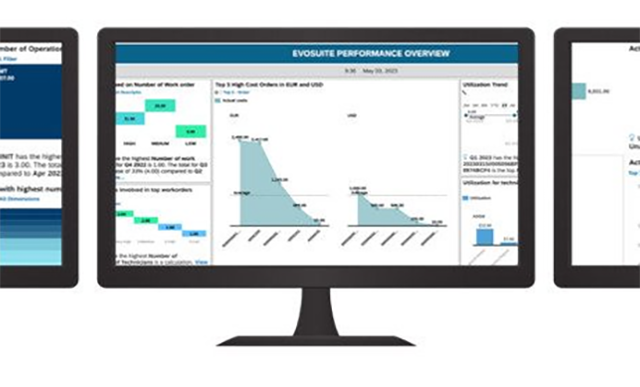
SAP Analytics CloudEvoSuite - Performance Overview demonstrates how organizations can unlock the value of maintenance data by combining SAP EAM information with AI-powered analytics in SAP Analytics Cloud. The solution delivers out-of-the-box reporting and operational insights that help improve maintenance planning, workforce utilization, equipment management, and cost control.
1 minute read