3 minute read

Meet the Authors
Key Takeaways
What you need to know
Rain is extending earned wage access into an AI-driven financial wellness model for SAP Human Capital Management environments.
The platform uses HCM, time, and payroll data to support early access to earned pay while keeping existing payroll processes in place.
Its AI Financial Health Agent adds a new layer by connecting earned-income context with employee financial data to identify cash-flow pressure before payday.
Rain is extending earned wage access (EWA) into a broader AI-driven financial wellness model for SAP Human Capital Management (HCM) environments. The company’s Financial Health Platform uses HCM and time data to calculate earned wages, support early access to earned pay, and return adjustments into existing payroll processes.
Its new AI Financial Health Agent adds another layer, combining real-time earnings data with employee-connected financial account data to identify cash-flow issues before they become financial stress. SAP customers can use the model to connect payroll operations with employee financial wellness, while evaluating its impact on engagement, retention, and workforce value.
What Rain Means for SAP HCM Customers
Rain gives SAP HCM customers a way to add EWA and financial wellness tools without rebuilding payroll. The platform uses HCM and time data to calculate how much an employee has earned during a current pay period, then lets workers access a portion of those wages before payday.
Explore related questions
Ask SAPi
Employees get more immediate control over earned income. A worker facing an unexpected expense can access pay already earned instead of waiting for the next payroll cycle. Rain also extends beyond wage access with budgeting, savings, and financial tools designed to help employees manage financial pressure and build long-term stability.
Employers can add a financial wellness benefit around the systems they already use. SAP HCM and timekeeping data provide the foundation, while Rain funds transfers and sends adjustments back into the payroll process. HR and payroll teams can offer a more flexible employee benefit while keeping the core payroll process in place.
How Rain Uses SAP HCM and Payroll Data
Rain’s SAP integration is designed to sit alongside payroll rather than replace it. The platform connects through API-based integration, using HCM and time-and-attendance data to calculate how much an employee has earned during the current pay period.
Rain then handles the early wage access transaction outside the employer’s normal payroll run. Employees can transfer a portion of current-period earnings, while Rain funds the transfer and tracks the amount that needs to be reconciled later. This structure allows employers to offer pay flexibility without changing the timing or mechanics of payroll itself.
The process comes back into payroll through adjustment files. Rain sends those adjustments into the payroll system so the EWA amount can be reflected when payroll runs as normal. In an SAP environment, that makes Rain an overlay service: it uses SAP HCM and related time data to support an employee-facing financial benefit, then returns the needed payroll information back into the existing process.
What the AI Financial Health Agent Adds
Rain’s AI Financial Health Agent moves the company beyond an EWA-first story. Launched in March 2026, the agent is designed to help employees stabilize cash flow, reduce unnecessary expenses, and improve financial outcomes over time.
The agent builds on the same data foundation that supports Rain’s wage access model. It combines real-time earnings data with employee-connected financial account data, giving the platform a view into both earned income and upcoming financial pressure.
Rain’s stated goal is to identify cash-flow issues before they turn into financial stress, rather than only responding after an employee runs short on funds.
That is where the SAP HCM connection becomes important. Rain’s agent needs current earnings information to understand how much income an employee has actually earned, while the employee-connected account data shows bills, balances, and spending patterns. Together, those inputs allow Rain to move from EWA toward financial guidance tied to a worker’s actual pay cycle.
What This Means for SAPinsiders
- Payroll data can support better employee benefits. Rain shows how employers can use SAP HCM and payroll data they already have to offer benefits to employees. Financial wellness can then become part of the same operating environment that manages pay, time, and workforce records.
- EWA can become part of workforce strategy. Early wage access is often treated as a point benefit, but Rain’s model connects it to retention, engagement, and employee financial stability. SAP customers can use those outcomes to evaluate whether financial wellness tools improve the employee experience.
- AI financial guidance can become timelier. Rain’s agent uses earned-income context to identify potential cash-flow pressure before the next payroll date, when employees still have time to act. That gives SAP customers a more practical way to connect financial wellness tools with the moments when workers may need support most.
More Resources
See All Related Content
Ansible Automation Platform 2.6 Becomes Strategic Upgrade CrossroadsRed Hat presents Ansible Automation Platform 2.6 as a pivotal, required upgrade that adds value through dashboards, Lightspeed AI assistance, self-service automation and improved event-driven operations while also forcing organizations to plan carefully for OS, container and migration changes—especially in SAP environments—because it is the last RPM-based installer release and the gateway to all future versions.


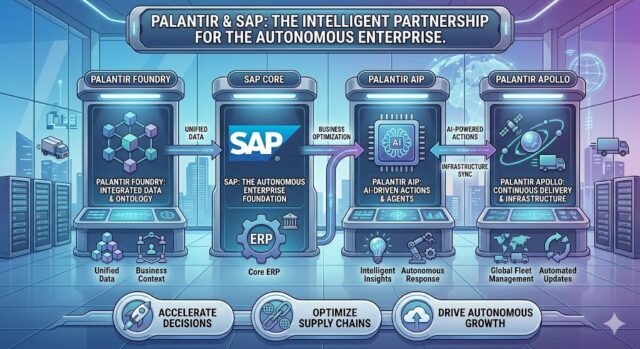
Palantir Foundry, AIP & Apollo in the SAP Enterprise: What Every CIO Needs to Know After Sapphire 2026SAP Sapphire 2026 signaled that SAP is evolving into an autonomous enterprise platform while Palantir, now SAP-endorsed and partnered with SAP, complements it as a cloud-agnostic system of action that uses Foundry, AIP, and Apollo to unify multi-system data, accelerate SAP migrations, and enable governed AI-driven operations across complex, regulated enterprise environments.
5 minute read