4 minute read
Meet the Authors
Key Takeaways
What you need to know
Garuda Indonesia is adopting RISE with SAP to modernize core enterprise systems as the airline works to restore cost discipline and operational visibility.
The deployment moves finance, procurement, supply chain, maintenance, and selected customer-related processes to SAP Cloud ERP Private in a managed cloud environment.
SAP Business Data Cloud, SAP Signavio, SAP Taulia, and OpenText extend the project beyond ERP migration into process improvement, data infrastructure, and future AI readiness.
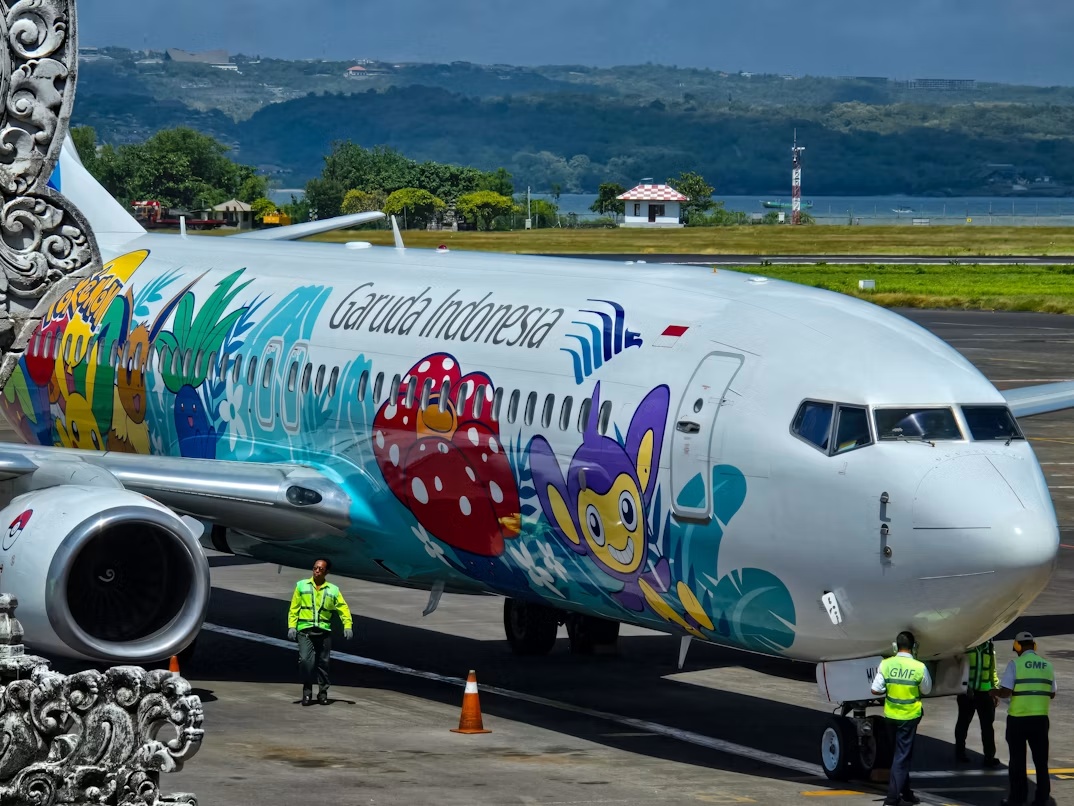
Garuda Indonesia, Indonesia’s national flag carrier, is modernizing its core enterprise systems through RISE with SAP — a move announced May 25, 2026 that comes as the airline works to reverse a $322.4 million net loss.
The deployment migrates finance, procurement, supply chain, and selected customer-related operations to SAP Cloud ERP Private in a private managed cloud environment, consolidating functions that had been fragmented across the business.
“By modernizing our enterprise core, we are building a more connected, agile, and disciplined organization, better equipped to manage costs and respond to a dynamic operating environment,” said Thomas Oentoro, Deputy CEO, Garuda Indonesia.
Explore related questions
Ask SAPi
RISE with SAP Brings Unified Processes to a Fragmented Operation
Garuda Indonesia describes the transformation as consolidating systems that had long operated in isolation. SAP Cloud ERP Private is designed to integrate finance, procurement, supply chain, and selected customer-related processes on a single platform, with record-to-report workflows among the specific back-office functions targeted for streamlining. Embedded analytics and automation capabilities are positioned to improve visibility into operational performance across the organization.
The deployment also introduces SAP Fiori-based digital experiences, which SAP describes as providing role-based access and more intuitive workflows for employees. Running in a private managed cloud environment, the infrastructure is designed to deliver scalability, resilience, and security while reducing system complexity.
Beyond the core ERP migration, Garuda Indonesia selected SAP Signavio, SAP Taulia, SAP Business Data Cloud, and OpenText alongside SAP Cloud ERP Private — a portfolio breadth that signals a platform consolidation strategy beyond a point-solution migration.
Maintenance and Fleet Visibility Inside the Transformation Scope
SAP describes the transformation as extending into maintenance and asset management — a scope that directly intersects with Garuda’s most acute operational problem.
By late 2025, maintenance costs had surged 23% to $661.36 million, according to analysts reporting on the airline’s public filings. That figure reflects the financial penalty of deferred upkeep, a dynamic that compounds quickly in commercial aviation.
Garuda’s 2026 recovery plan targets at least 68 serviceable aircraft by year-end, up from approximately 58 operational in late 2025, with digitalization named explicitly as one of three recovery pillars alongside route optimization and revenue management.
“By adopting SAP Cloud ERP Private through the RISE with SAP journey, Garuda Indonesia is building a strong foundation to streamline operations and enhance transparency,” said Sianto Wongjoyo, Managing Director, SAP Indonesia. He added that the platform positions the airline to advance toward a more autonomous enterprise, where AI-driven automation may support more efficient, adaptive operations over time.
SAP Expands Aviation Presence Across Southeast Asia
The Garuda deal adds a prominent aviation customer to SAP’s Southeast Asia footprint as large enterprises across the region review legacy ERP systems and shift core workloads to cloud-based models.
SAP SE reported that Asia Pacific and Japan cloud revenue grew 18% to €862 million in Q1 2026, with aviation, solar energy, biopharma, and government among the sectors represented in the quarter’s signings.
CFOtech Asia noted that airlines present integration complexity, requiring unified coverage across finance, supply chains, customer operations, and maintenance — a scope that mirrors Garuda’s own deployment. The airline’s decision reflects a broader pattern across Southeast Asia, where state-owned carriers and industrial enterprises are moving core ERP workloads off aging on-premises systems and onto managed cloud platforms.
The broader product selection — SAP Business Data Cloud and SAP Signavio alongside the core ERP — signals that Garuda is building toward AI-driven automation as a second-phase objective, with data infrastructure as the prerequisite.
What’s Next
- Cloud ERP migration gains urgency in asset-intensive industries. Airlines and asset-heavy operators face maintenance cost volatility that on-premises ERP systems are structurally ill-suited to address in real time. Organizations managing large asset fleets are accelerating ERP consolidation projects that link procurement, finance, and maintenance on a single platform.
- AI readiness requires data infrastructure built now. Across APAC, Q1 2026 SAP signings show companies pairing SAP Business AI with SAP Business Data Cloud and platform tools before activating automation. Practitioners in the region are treating ERP modernization as a prerequisite for AI deployment rather than a parallel or subsequent initiative.
- Southeast Asia is a front line for cloud ERP adoption. State-owned enterprises across the region are moving legacy workloads to cloud ERP as data sovereignty options and managed cloud offerings expand. Enterprise technology teams at comparable organizations are evaluating private managed cloud deployments as a path that satisfies regulatory requirements while enabling operational agility.
More Resources
See All Related Content
Redwood Case Study: Media group cuts resolution time by 83% while modernizing critical systemsNewsday Media Group centralized its fragmented circulation, billing, finance and analytics automation in Redwood’s RunMyJobs, using a people-first, operator-friendly orchestration model to improve reliability, cut MTTR and TCO, support 145+ standardized processes, and rapidly deliver 800+ migration automations while creating a scalable foundation for future growth.

How Secure Output Management Closes Enterprise Document VulnerabilitiesUnsecured print output remains one of the most overlooked compliance exposures in SAP-driven enterprises. Here is how SAP-certified secure output management closes that gap across RISE with SAP and SAP S/4HANA Cloud.
3 minute read

The RISE Bill Nobody Budgeted For: Baer’s Ten Hidden Cost Drivers, Read Through 2026The Baer Group's James Weller's CIO playbook maps ten places RISE quietly becomes a cost center, from the FUE tier cliff to the SLA that looks better than it is, and the disciplined moves that keep an ECC-to-RISE migration in control.
3 minute read
Decoding the Autonomous Enterprise: How SAP, Anthropic, and Joule Are Rewriting Enterprise ArchitectureSAP Sapphire 2026 signaled SAP’s shift from ERP vendor to business AI platform provider, unveiling an Autonomous Enterprise strategy built on a unified Business AI Platform, 224 agentic tools, Claude-powered reasoning via Anthropic, and layered governance and Clean Core requirements, while also making clear that much of the vision will roll out through 2026 amid real constraints around interoperability, licensing, and existing customer readiness.
11 minute read