
1 minute read
Meet the Authors
Key Takeaways
What you need to know
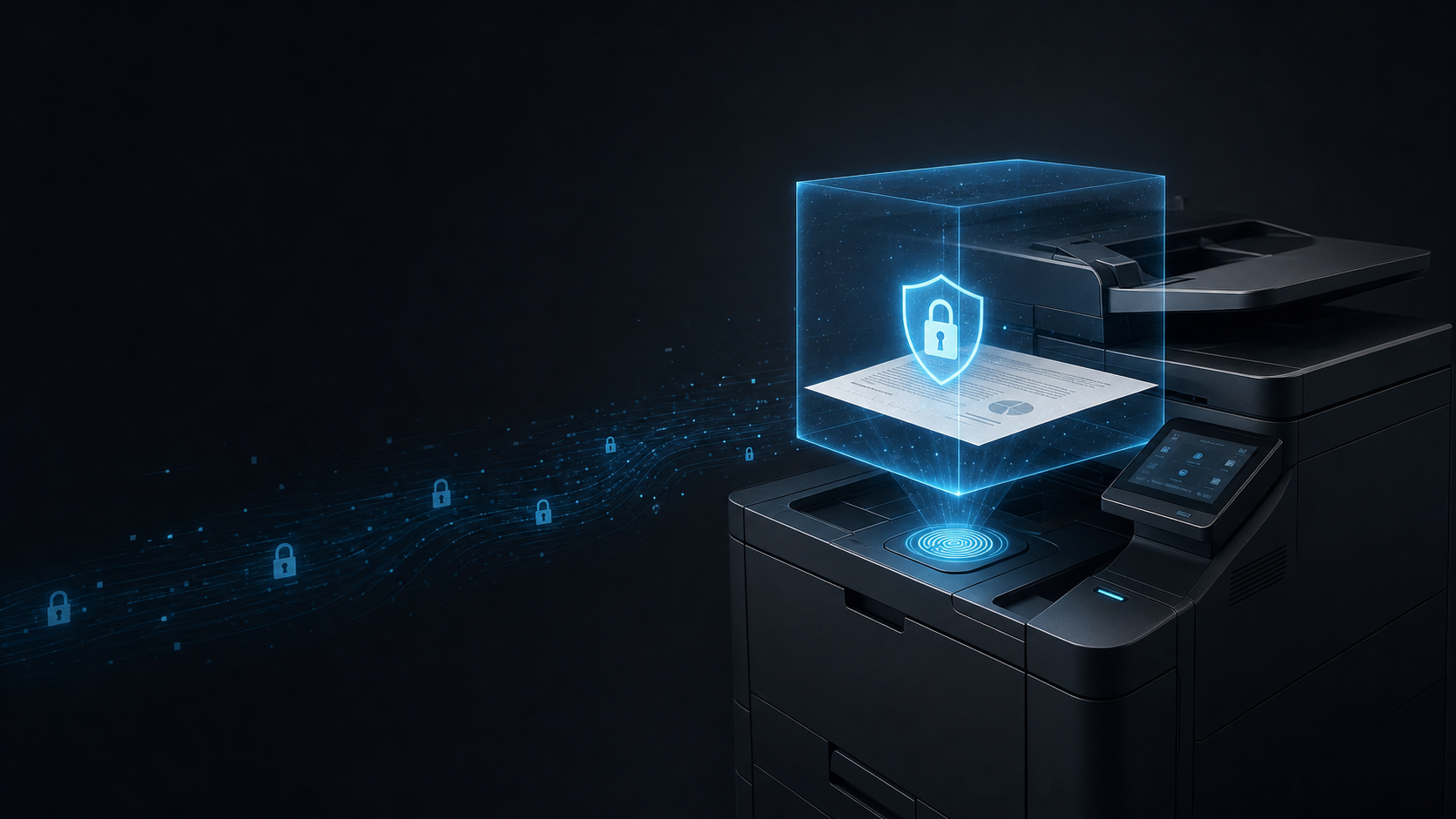
Enterprise document security has a structural gap: print jobs travel unsecured networks and sit in output trays between submission and retrieval, exactly where misrouted, intercepted, or opportunistically viewed SAP documents become compliance breaches.
LRS Output Management closes that window with an encrypted queue protocol and authenticated secure release at the device via badge, PIN, or biometrics, plus auditable records of which users accessed which pages.
Validated across RISE with SAP, SAP S/4HANA Cloud, SAP BTP, and SAP Document Management, it replaces print-server hardware with platform-independent middleware spanning public cloud, on-premise, and hybrid environments.
Enterprise document security has a well-documented gap that many IT organizations have yet to close. For SAP-driven enterprises managing high volumes of regulated documents, invoices, purchase orders, and compliance records, that exposure represents a governance risk that technology executives can no longer treat as a low-priority infrastructure concern.
The Hidden Vulnerability in Traditional Output Environments
The core problem with conventional enterprise printing is structural. A user submits a print job across an unsecured network, and the document sits in an output tray until the sender arrives to collect it. That window between print submission and physical retrieval is where data breaches occur, whether through an opportunistic colleague, a misrouted document,t or a deliberate intercept.
LRS Output Management addresses this through multiple layers of document security anchored around the proprietary LRS Queue protocol, which provides end-to-end data compression and encryption between the originating application and the LRS software platform. Documents are captured from enterprise applications and user workstations, routed through a central control point, and held securely until an authenticated user releases them at the device using a security badge, PIN code, or biometric means. Administrators retain the ability to restrict the printing of sensitive documents and require online viewing, thereby creating an auditable record of which users accessed which pages of stored content.
Explore related questions
Ask SAPi
For SAP environments in particular, this matters because SAP-generated documents, including financial records, HR files, and procurement documents, often carry compliance obligations under GDPR, Sarbanes-Oxley, or HIPAA. Security watermarks and overlays can be inserted at the platform level to prevent document tampering and detect fraudulent alterations before distribution.
LRS Mission Control: A Cloud-Native Foundation for Secure Output
The structural answer to managing secure output at scale is LRS Mission Control, a cloud-native, Azure-based Platform-as-a-Service that centralizes enterprise print and output management through a single secure portal. Mission Control supports both traditional Cloud-Enabled Enterprise Output Management products and a growing catalog of SaaS-based solutions, giving organizations a path to modernize without disrupting existing workflows or print server infrastructure.
What separates Mission Control architecturally is its combination of multi-tenant convenience and single-tenant security. Each customer environment runs as a fully isolated, single-tenant application behind a shared portal gateway, which means no data, processes, or credentials are shared across customer instances. This design protects organizations against cross-tenant data exposure, a documented vulnerability in several cloud software categories, while also supporting strict regional data residency requirements for globally distributed enterprises.
Integrating Secure Output Management with SAP Systems
LRS Output Management is validated for use across RISE with SAP, SAP S/4HANA Cloud, SAP BTP, SAP Document Management, and SAP Extended Content Management by OpenText. The solution replaces traditional print server infrastructure and specialized hardware with a platform-independent middleware layer that manages output across public cloud, on-premises,e and hybrid environments.
For IT leaders evaluating output management solutions, the integration criteria that matter most include SAP certification status, compatibility with the full SAP cloud portfolio, support for high-availability configurations, and the ability to centralize printer management across distributed SAP systems without adding IT service overhead.
Organizations running SAP in regulated industries should also confirm that any output management solution provides full audit trails, role-based access control,s and the ability to enforce document-level security policies consistently across all output channels.
What This Means for SAPinsiders
Document security is a compliance exposure. With 70% of organizations reporting print-related data breaches, SAP IT leaders must treat output management governance as a core component of enterprise security architecture and audit readiness.
Cloud-native output platforms redefine SAP print infrastructure strategy. LRS Mission Control’s Azure-based, single-tenant isolation model signals that modern output management must meet the same cloud architecture standards enterprises now apply to ERP and data platforms.
SAP certification is the baseline for selecting output management. As SAP environments migrate to RISE and SAP S/4HANA Cloud, only certified, platform-independent output solutions will sustain the compliance, integrity, and operational continuity that enterprise transformation programs demand.
More Resources
See All Related Content
Cloud ALM + Avantra | Observability meets actionMost SAP environments are complex, hybrid, and built across multiple vendors. In the second session of the Avantra Summer Innovation Series, discover how SAP Cloud ALM and Avantra work together to provide broader operational visibility, deterministic automation, and consistent execution across the SAP landscape. See the integration in action and learn how this combined approach […]
Why the SAP Cloud Business Case Keeps Coming Up ShortSAPinsider research shows cloud costs are now the top barrier to SAP S/4HANA adoption, yet most business cases omit integration, retained operations, parallel landscapes, and AI consumption. A like-for-like five-year model, including SAP's Customer Data Center option delivered on Dell APEX, is how finance leaders make the number honest.
4 minute read