6 minute read

Meet the Authors
Key Takeaways
What you need to know
Former Pacific Coast Companies CIO Martin Menard argues that a board summons is a gift, signaling a trust or awareness gap the CIO can close by listening before presenting.
A seven-member technology advisory committee with independent, non-vendor experts gives CIOs air cover, filters unready proposals, and creates board advocates beyond the IT organization.
For SAP S/4HANA, Clean Core, or AI investments, Menard advises framing the case around the downside risk of inaction rather than an ROI promise the board will hold hostage for years.
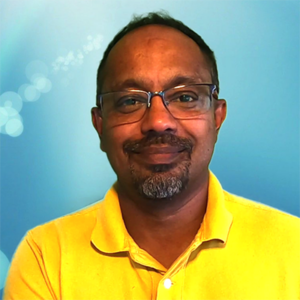
Most CIOs walk into the boardroom carrying the wrong attitude or perception about the upcoming interaction. They treat the meeting as a chore or deliverable or a report to be filed, a deck to be presented, an interrogation to be survived. Marty Menard, a former CIO who has sat on both sides of that table, thinks that is the single biggest unforced error.
“Too often, I’ve heard CIOs or other IT leaders complaining about needing to have a conversation with a board. Most often they say things like, ‘I’m being called’ or ‘I’ve got to do this.’ But the ‘woe is me’ attitude will not work and it is a missed opportunity to connect with board members.” Menard says. “In my experience “IT” tends to behave like the martyrs of the enterprise, and you can’t take that approach.”
The cost of that posture is strategic. The board is the one room in the company where a CIO can secure the support required to modernize an ERP estate, fund a cybersecurity reset, or take a credible swing at AI. Treat it as compliance, and you get compliance-grade outcomes. Treat it as an opportunity, and at the same time investment yields different results.
Explore related questions
Ask SAPi
This article distills three lessons from Menard’s career: what to change in the way you frame board engagement, the governance structure most mid-to-large enterprises are still missing, and the one pitch that will end your modernization program before it begins.

“If there’s a requested interaction or the board is calling and asking about something, there’s probably a very good reason.”—Martin Menard, former CIO, Pacific Coast Companies
The Board is Your Ally If You Stop Performing And Start Listening
The first reframe is psychological. When a CIO is summoned, Menard argues, the summons itself is a gift.
“If there’s a requested interaction or the board is calling and asking about something, there’s probably a very good reason. And that reason probably has to do with a lack of trust or board awareness,” he says. “Take the approach of seeking to understand that something in your strategy or direction is missing or lacking clarity and use that opportunity to rebuild that relationship and renewed confidence.”
The mistake most leaders make next is assuming they already know what the gap is. In his experience, Menard says that, “I’m often not in the board meeting when technology questions arise. For example, a business leader may have complained or created uncertainty or doubt in their presentation. My peer CIOs and I then prepare for the question stated in the board meeting minutes. Unfortunately, that question is usually not fully defined and is left vague on purpose. Menard’s heuristic is to contact some or all board members before the meeting; not to lobby, but to learn. The goal of the conversation is to be curious and really listen to the meaning or intent behind the question.
“What’s asked for may not necessarily be what’s really behind the request,” he says. The identity behind the request matters as much as the question itself. “In board meetings, it’s who speaks loudest or has the most influence that matters. Identifying who this is gives insight into how to respond.
The boardroom is the place where consensus is often manufactured for the sake of the agenda. A CIO who cannot read which questions are genuine and which are throat-clearing will optimize for the wrong audience.
The mechanics of the meeting follow this. Menard admits his most unsuccessful meetings were the ones where he did most of the talking. “I learned along the way that the more the board or committee or advisory team spoke and questioned one another, the more success we achieved.” His preparation discipline is built around that asymmetry. Over-prepare the content and under-deliver the airtime. Walk in with thirty slides and cover twelve. Put the glossary in the appendix so the one director who does not know what “cloud” means can save face without derailing the room.
That last move, that of building an exit ramp for the least technical person in the meeting, is the kind of small craft a briefing deck provides. It is also why Menard avoids “silly, unforced errors” such as financial numbers that do not tally correctly, inconsistent fonts, gratuitous images, or an undefined acronym in the first slide. “People latch onto those items. Why? It’s usually because board members are rarely technical, and if they don’t understand the detail of what is being discussed, they want to demonstrate their relevance. In those instances, they will try to find points to delay that have low value and will slow things down. It’s often a delay tactic by those less familiar to exercise their control over your time”
The board is not looking for a virtuoso performance. It is looking for a reason to trust you.
Build The Committee, Create Advocacy For Your Strategy
The second lesson is structural. It is also the one Menard believes is particularly missing from mid-to-large enterprises; we shouldn’t assume governance is a problem only the Fortune 500 needs to solve.
“Very few of the CIOs that I collaborate with have an advisory committee or advisory board that reports to the parent,” he says. “Having an advisory committee is extremely beneficial because it provides air cover to the CIO and the technology team around their strategy.”
The composition of the advisory board matters too. Menard’s company was a privately held family business, and the composition of his advisory board was based on that structure. That committee had seven members: the CIO, a family representative, a parent board representative, a finance representative, and three independent external members drawn from different corners of the technology world. Crucially, the three independents did not all come from technology vendors. “Having three external experts that came from technology roles, but not technology vendors, had tremendous impact on the other advisory board members. Their support of our strategy provided a very positive alignment.”
The committee performs two jobs the board cannot do. First, it is a filter. “If the committee were to say this doesn’t make any sense or is too risky or they just don’t understand, the topic would never get to a board of directors, because that means it isn’t ready. But, if it gets through the committee, then it probably is ready.” Second, it has immense value as a translator. A respected committee member speaking the board’s language can advocate for an investment far more effectively than a CIO who is selling their own department.
The strongest argument for a technology investment frequently does not come from the technology leader. It comes from a peer or businessperson whose credibility with the board is already underwritten. For companies where the CIO may only present to the board once or twice a year, building that second voice is not a nicety. It is the only way the strategy gets heard at all.
“Having an advisory committee is extremely beneficial because it provides air cover to the CIO and the technology team around their strategy.”
Do Not Sell on ROI. Sell The Cost or Impact Of Standing Still
The third lesson is where Menard becomes most pointed, and where most CIOs reading this should pause.
The temptation when presenting an ERP migration, a RISE-versus-GROW choice, or a Clean Core program is to walk into the boardroom with an ROI table showing payback in 36 months and a positive NPV. It is the language the CFO speaks, so it is generally accepted that is the language the board wants.
Menard disagrees. “Non-technology leaders immediately jump to a notion that upgrading technology needs to be treated the same way all investments are evaluated: do an ROI. I don’t believe that a ROI will always satisfy a technology decision. And the boards that I have worked with always wanted to understand the value and risk more so than the cost and time.”
Boards have a long memory; an ROI promise is a hostage to the future. A modernization program that overshoots its timeline, undershoots its benefits case, or runs into the messy reality of an ECC-to-SAP S/4HANA conversion will be remembered for years, alongside the CIO who signed the business case. The framing must change.
“What’s the downside risk of not doing it?” Menard asks. That is the question the board can answer. The pitch is not the return you will earn. The pitch is the impact of remaining on a platform whose vendor support is winding down, whose customizations are accreting technical debt, and whose data cannot feed the AI agents the business will demand by 2027.
The presentation discipline that supports this reframe is specific. Always offer three options. “If you are given one choice, it’s basically an ultimatum; you must do this. If you give somebody two choices, then it’s fight or flight. When you give the human brain three, the body and mind can calm down and evaluate the options in a more considered manner.” You will have a recommendation you prefer, but do not eliminate the alternatives. Boards will see through that.
Strip out the technology vocabulary entirely. You are not doing an ERP migration. You are modernizing the business. Eyes glaze over at “RISE versus GROW.” They sharpen at “what happens to our order-to-cash results if we stay where we are.”
What To Watch, Evaluate, And Discuss
For CIOs preparing for their next board cycle, Menard’s lessons collapse into three questions worth carrying into the room:
- Before the meeting, have you spoken to at least one board member to understand the real reason behind any requests? What is the question behind the question, and have you identified who asked it? Get curious and seek to understand.
- Regarding governance, do you have a technology advisory committee with at least one technology-independent voice, and does it sit between you and the board?
- For your next big upgrade of SAP S/4HANA, Clean Core, or AI, is the investment case framed around the cost of inaction?
Consider that a request to talk to the board is a massive opportunity to engage them in strategy, growth, and modernization. It is not about ROI or dollars and cents, and it should be the most leveraged hour on the CIO’s calendar.
More Resources
See All Related Content
From Data Warehouses to Data Fabric: What SAP Business Data Cloud Really Means for Your EnterpriseThe article discusses the modern challenges of enterprise data management in large organizations, emphasizing the transition from traditional data warehouses to a more integrated, AI-ready data fabric framework facilitated by SAP Business Data Cloud, while addressing common issues such as technical debt, data extraction strategies, and the necessity for alignment between IT and business perspectives.

One mobile platform for SAP work orders and the field forms that live alongside themThe article discusses how Obzervr integrates with SAP to streamline digital work orders and inspections for field technicians in mining and heavy industry, allowing access to all forms and workflows in one platform, thus eliminating paperwork and enhancing data management.
5 minute read

How CTOs Can Choose the Right GenAI Partners at the Right TimeOrganizations aiming to succeed in GenAI must develop a strong partner network, as evidenced by BCG and AWS's survey indicating that 75% see partners as key to ROI, with distinct partner strengths needed at various phases of the GenAI journey to achieve operational efficiency and revenue growth.
1 minute read

ERPs as Enablers Not EndpointsMany organizations treat ERP implementations as the finish line, only to discover that technology alone does not deliver transformation. This paper explores how leading organizations turn ERP investments into lasting business value through governance, process change, organizational alignment, and a relentless focus on outcomes.
1 minute read