Featured Content
Topics

Explore critical topics shaping today’s SAP landscape—from digital transformation and cloud migration to cybersecurity and business intelligence. Each topic is curated to provide in-depth insights, best practices, and the latest trends that help SAP professionals lead with confidence.

Regions

Discover how SAP strategies and implementations vary across global markets. Our regional content brings localized insights, regulations, and case studies to help you navigate the unique demands of your geography.

Industries

Get industry-specific insights into how SAP is transforming sectors like manufacturing, retail, energy, and healthcare. From supply chain optimization to real-time analytics, discover what’s working in your vertical.

Hot Topics

Dive into the most talked-about themes shaping the SAP ecosystem right now. From cross-industry innovations to region-spanning initiatives, explore curated collections that spotlight what’s trending and driving transformation across the SAP community.

Featured Content
Topics

Explore critical topics shaping today’s SAP landscape—from digital transformation and cloud migration to cybersecurity and business intelligence. Each topic is curated to provide in-depth insights, best practices, and the latest trends that help SAP professionals lead with confidence.

Regions

Discover how SAP strategies and implementations vary across global markets. Our regional content brings localized insights, regulations, and case studies to help you navigate the unique demands of your geography.

Hot Topics

Dive into the most talked-about themes shaping the SAP ecosystem right now. From cross-industry innovations to region-spanning initiatives, explore curated collections that spotlight what’s trending and driving transformation across the SAP community.

SAP FICO

SAP FICO: An Overview and Key Considerations 

What Is SAP FICO?

SAP FICO is SAP’s core functional module consisting of the tightly integrated Financial Accounting (FI) and Cost Controlling (CO) modules, designed to enable the recording of financial transactions across parent and subsidiary entities, the production of financial statements, and support both internal and external reporting, at the end of every period.

The SAP Financial Accounting (FI) module supports accurate financial accounting and financial reporting, while the SAP Cost Controlling (CO) module facilitates cost planning and cost monitoring.

Key sub-modules for SAP FICO:

  • Financial Accounting (FI)
  • Asset Accounting
  • Accounts Payables
  • Accounts Receivable
  • Bank Accounting
  • Fund Management
  • General Ledger Accounting
  • Travel Management
  • Cost Controlling (CO)
  • Activity-based Costing
  • Cost Center Accounting
  • Cost Element Accounting
  • Internal Orders
  • Product Costing
  • Profit Center Accounting
  • Profitability Analysis.

The primary objectives of SAP FICO are to provide financial transparency, improve data consistency, and enable business process integration within the organization. Organizations can leverage the inter-connected sub-modules and real-time data streaming to produce trial balances that accurately reflect most business processes from various industries. SAP FICO is an end-to-end solution that combines industry best practices with application expertise, deep-process knowledge, and technical innovation.

Key Considerations for SAPinsiders

SAP FICO: An Overview and Key Considerations 

What Is SAP FICO?

SAP FICO is SAP’s core functional module consisting of the tightly integrated Financial Accounting (FI) and Cost Controlling (CO) modules, designed to enable the recording of financial transactions across parent and subsidiary entities, the production of financial statements, and support both internal and external reporting, at the end of every period.

The SAP Financial Accounting (FI) module supports accurate financial accounting and financial reporting, while the SAP Cost Controlling (CO) module facilitates cost planning and cost monitoring.

Key sub-modules for SAP FICO:

  • Financial Accounting (FI)
  • Asset Accounting
  • Accounts Payables
  • Accounts Receivable
  • Bank Accounting
  • Fund Management
  • General Ledger Accounting
  • Travel Management
  • Cost Controlling (CO)
  • Activity-based Costing
  • Cost Center Accounting
  • Cost Element Accounting
  • Internal Orders
  • Product Costing
  • Profit Center Accounting
  • Profitability Analysis.

The primary objectives of SAP FICO are to provide financial transparency, improve data consistency, and enable business process integration within the organization. Organizations can leverage the inter-connected sub-modules and real-time data streaming to produce trial balances that accurately reflect most business processes from various industries. SAP FICO is an end-to-end solution that combines industry best practices with application expertise, deep-process knowledge, and technical innovation.

Key Considerations for SAPinsiders

Leverage SAP FICO to generate timely insights within current processes. Organizations typically modernize ERP financial landscapes in phases and not all at once. As a result, finance and accounting managers must incorporate processes across multiple technologies, including legacy or manual solutions, to deliver business benefits. The flexibility of SAP FICO supports this option, as Mark Pockl, insightsoftware’s Solution Engineer, specializing in SAP and Orace EBS reporting solutions, provides best practices for leveraging SAP FICO inside Excel.

SAP FICO automation can enable the standardization of financial processes. With SAP FICO, finance teams are equipped with standard solutions capable of supporting automation across many manual processes related to financial transactions and reporting. This helps finance teams, including the finance departments at Kellogg Company and Newell Brands, effectively manage financial data within SAP ERP systems, including generating reports that different departments require for decision-making.

Economic disruptions increase the need for financial visibility across organizations. SAP FICO is designed to support multiple views of your organization in real time, providing visibility for finance managers at the most critical junctures. In addition, by accurately and quickly managing cost planning and cost monitoring requirements consistently across the business units, organizations can generate ad-hoc reporting from costing and profitability insights.

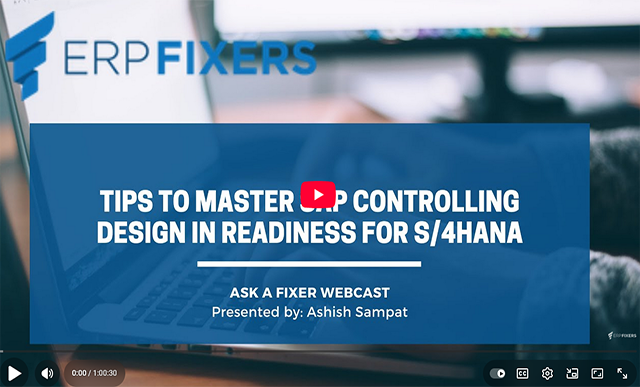
Master SAP S/4HANA Controlling Design: FICO Migration & Optimization Best PracticesEssential tips for mastering SAP Controlling in preparation for S/4HANA, covering crucial changes, optimization strategies, cost element integration with GL accounts, and guidance on financial accounting, cost analysis, and efficient SAP landscape management for professionals involved in SAP FICO.
FICO is a Flash: Live Costing and Profit Insights on the FlyThis last year has been challenging for companies across multiple industries. Managing costs and tracking revenues have been critical over this timeframe. As the market recovers, organizations need to be able to quickly and accurately assess these areas to track business performance, identify growth opportunities, and ultimately invest wisely. However, accessing the correct data in […]
Empower your finance users to streamline processes while managing risk and complianceAttend this interactive panel presentation to hear how companies streamline their everyday finance data integration processes, resulting in improved data quality and increased productivity. You’ll hear SAP Finance experts from Callaway Golf, Geller & Company, and Ogilvy discuss how Z Option solutions empower finance teams to maximize their financial uploading processes using Excel. This will be an open Q&A session, giving you the opportunity to participate and learn how to empower business users to improve the financial close process. Attend this session to learn: •How to use GLSU on an SAP S/4HANA system •How to streamline FI document posting process to shorten month-end close cycles •How to improve audit processing with increased accuracy •How to use GLSU to automate manual journal entry processes or replace a costly, in-house (custom) uploader
3 Ways to Get the Most Out of Your SAP Financial ReportingManagement teams and boards of directors often require frequent updates and analyses from their chief financial officer in order to make informed decisions. This often means requests for daily or weekly reports, on top of the typical monthly, quarterly and annual cadence – upping the pressure on finance teams. When an organization’s finance data spans across multiple SAP modules, gaining a consolidated view can become a complex process. Oftentimes the information is exported into a Microsoft Excel document, which can result in static information. This blog explains three ways that you can improve your SAP financial reporting process to get the most out of your data.

Related Vendors