



Mar 16-19, 2026Las Vegas, Nevada, NV
SAP Migration Strategy
Featured Insiders
Upcoming Events
SAPinsider Las Vegas 2026
Related Vendors


What Is SAP Migration Strategy?
With the last major release of SAP ECC, version 6.0 EHP 8, made available in 2016, the question facing SAP customers is around the move to SAP S/4HANA. While SAP has extended mainstream maintenance for the ECC 6.0 platform until the end of 2027, with an optional premium maintenance available for an additional three years, those running these solutions need to decide on the move to SAP S/4HANA. The three biggest factors around this move are when they will move, and how they will move, and where they will move.
What Is SAP Migration Strategy?
With the last major release of SAP ECC, version 6.0 EHP 8, made available in 2016, the question facing SAP customers is around the move to SAP S/4HANA. While SAP has extended mainstream maintenance for the ECC 6.0 platform until the end of 2027, with an optional premium maintenance available for an additional three years, those running these solutions need to decide on the move to SAP S/4HANA. The three biggest factors around this move are when they will move, and how they will move, and where they will move.
The when is a question that is up to each organization. However, with the majority of organizations taking between 12 and 18 months once the business case has already been made, the period before mainstream maintenance ends can approach very quickly. Once the decision has been made when to move, organizations must then determine what approach they will take to their SAP migration. Will they simply move everything as is into SAP S/4HANA? Will they start from scratch to produce as clean a system as possible? Or will they take an intermediate route? The last factor is where they will move. With most organizations moving SAP workloads to the cloud, this may be the route of choice. However, others will want hybrid environments or entirely local infrastructure.
Key Considerations for SAPinsiders
- Understand what other organizations are saying about their SAP Migration Strategy. These include: 1) the fact that the biggest challenge is often building the business case, 2) moves to a new ERP system are both resource intensive as well as expensive, 3) newer versions of SAP S/4HANA include significant business benefits, and 4) the move to SAP S/4HANA represents a major opportunity to improve business operations.
- Ensure that you have planned effectively for the migration. When migrating from your existing ERP system, there are important tips that you can follow to ensure that processes are successful. First, engage your business teams in the process. While this is an investment in resources, there will be more success with the overall project if your business teams are involved from the beginning. Second, remove unnecessary custom code. Limiting what you have to move forward will make the process much easier. And lastly, plan for a phased approach. You will want to have dry runs and even maintain both systems in parallel to ensure that they are working correctly.
78 results
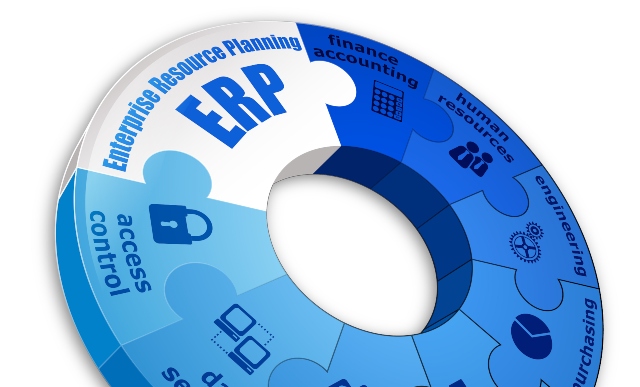
Speed Up Process Change for SAP ERPMar 25, 2022 — Businesses need to innovate faster to survive and compete, but outdated ERP systems limit their ability to be innovative. How does innovation translate into today’s business landscape? It is the ability to move fast, in an agile fashion, enabling rapid response to change.
One approach to make your existing SAP ERP system more agile and responsive is using low-code application development to create a connected system of action that can operate across siloes systems. Low-code application development tools help democratize workflow development among other roles in the organization, such as business process analysts, to create applications and automate processes quickly.
By using low-code platforms to enable citizen developers, organizations can slash app development time and boost speed and agility. And low-code allows SAP platform owners to cut technical debt by having new functionality built outside of the SAP core, creating a more manageable migration of their ERP platform to the cloud and SAP S/4HANA — tapping into more agile innovations to meet high volumes of change consistently.
5 minute read

Video: Overcoming Integration Challenges in ERP Modernization with BoomiMar 8, 2022 — Integration is a huge challenge for the hyper-connected SAP today. Boomi's iPaaS (Integration as a Service) platform AtomSphere can help in overcoming integration hurdles and accelerate ERP modernization.
1 minute read

Lessons Learned: SAP S/4HANA and Digital TransformationJan 6, 2022 — European manufacturer Eczacıbaşı Building Products needed to transform and digitize their core business processes to better support their internal distribution network and digitize sales channels by using SAP CX solutions as one single platform hence customer experience.
Starting with a thorough evaluation of their existing systems, the goal was to develop an architecture roadmap and put in place the solutions they needed for future success. Despite the challenges of working with subsidiaries across Europe and having to navigate the obstacles posed by the global pandemic, they were able to put in place systems that supported a 30% increase in the number of items they could ship each month without increasing headcount and a 75% reduction in response time to customer reactions in social media.
Attend this session to:
● Find out how Eczacıbaşı involved their business teams in the project, and what difference that made.
● Discover how they completed their evaluation process, and what that gained them from a deployment perspective.
● Learn how the deployment included SAP S/4HANA as well as other solutions to build their system landscape.
1 minute read

Your SAP Migration Just Got a Lot More ManageableJan 6, 2022 — Don’t just migrate Build on a scalable, flexible, and intelligent foundation that sets you up for a future of innovation. If your business depends on traditional SAP environments, the 2027 deadline for migration to SAP HANA or SAP S/4HANA presents a major undertaking. However, it is also a great opportunity to modernize and automate your […]
1 minute read
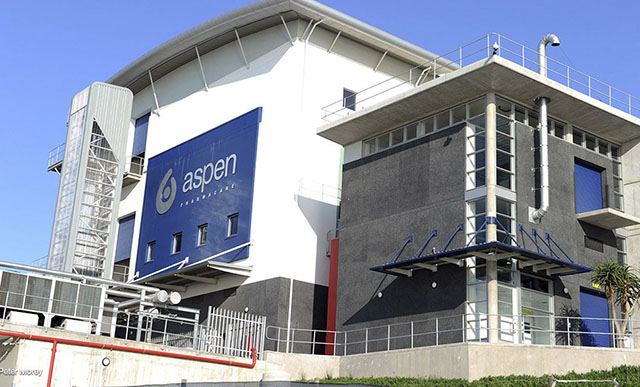
Aspen Moves to SAP S/4HANA While Protecting DataJan 6, 2022 — South Africa-based Aspen Pharmacare responded to recent global challenges by upgrading its IT infrastructure to improve productivity and regulatory compliance. The drug firm had multiple ERP systems worldwide, both SAP and non-SAP, which created inefficiencies and compliance risks.
The company decided to move to SAP S/4HANA and deploy it on SAP HANA Enterprise Cloud to address these issues. It opted to use cloud infrastructure because its on-premise infrastructure was inadequate to handle SAP S/4HANA's requirements.
Aspen Pharmacare subsequently moved from SAP HANA Enterprise Cloud to AWS. The company plans to shift everything to SAP S/4HANA over the next five years.
5 minute read
Migrating to SAP S/4HANA: How will you modernize, simplify and secure SAP Print and Digital Output?Nov 17, 2021 — Business critical documents, whether physical or virtual, need to be delivered securely, on-time and must have system feedback on delivery. As you plan your SAP S/4HANA migration this requirement is unlikely to have changed. The question now is; Can you keep the same infrastructure, same products and solutions to support SAP printing and scanning? Do […]
1 minute read
Evolution of ERP Systems in the Digital EraOct 20, 2021 — By Kumar Singh, Research Director, SAPinsider Changing the Paradigms of Enterprise Resource Planning Business environments, in most industries, have always been dynamic and susceptible to changes. These changes may be gradual or sudden, but the fact is, the world of business has continuously evolved through these changes. However, what we are increasingly experiencing now […]
9 minute read

Private Cloud Supports Global Expansion at GraceKennedy Ltd.Sep 23, 2021 — GraceKennedy Limited is an almost century-old food distribution and financial services company based in Jamaica. Historically, GraceKennedy has focused on the processing and distribution of Jamaican and other multi-cultural food products in Jamaica and overseas markets. GraceKennedy operates six manufacturing facilities in Jamaica and its foods businesses also provide food distribution services to over 40 countries.
SAPinsider’s Chief Research Officer Riz Ahmed talked with GraceKennedy’s CIO Deidre Cousins to learn about the company’s plans to evolve its SAP landscape, expand geographically and further diversify its product and service offerings.
“We need to grow at a faster pace and as we expand into other markets, we want to ensure that our SAP and backend is available and scalable to grow and provide services in those regions,” Cousins says.
“For example, we realized that having a centralized hub in the Caribbean, we were susceptible to some of the risks as it relates to natural disasters and if there was an outage, it would impact our international locations. We had to look at business continuity as a priority and how we could construct our landscape to build in more redundancy. That was the key.”
Read this Executive Insight and learn:
• Drivers that impacted GraceKennedy’s decision to move to the private cloud and how the company completed its cloud project in less than seven months;
• About how the company’s evolving strategy, including its geographic expansion and hardware upgrades, is helping GraceKennedy support its international expansion and increase its performance and reliability; and
• Lessons learned and benefits of moving to the private cloud, including 99.9% uptime and improved business continuity.
8 minute read

How a Specialty Chemical Company Handles Integration in a Hybrid SAP Landscape Amidst a Move to SAP S/4HANAJul 30, 2021 — Twenty-five acquisitions, 11 new national subsidiaries, and 44 new plants. These are the accomplishments of one Swiss-based specialty chemical company made over a six-year span. In fact the company’s Head of the SAP Development Cloud and Integration (DCI) team says that the organization has been growing at almost double-digit figures for the last several years.
A substantial part of the organization’s business is supplying components and parts to almost every major automotive company. Today, more than 50% of the cars that are manufactured worldwide contain the company’s products and technologies. With the organization selling to those in the business-to-business (B2B) and business-to-government (B2G) sectors, rather than directly to consumers, it has a large number of B2B interactions with heavy electronic data interchange (EDI) transactions.
“The automotive industry is a just-in-time business that runs primarily on EDI-based processes,” says the Head of the SAP DCI team. “When we started our SAP integration program, we focused on EDI as our main use case since a large part of our business integrations involve integrating with contractors, external partners, and large distribution businesses. With automotive customers expecting fast response times — in some cases, in as little as 30 minutes — we always have to be on our toes and monitoring systems 24/7.”
The company’s SAP landscape is continuously expanding due to organic growth and many acquisitions. In 2018, the company recognized the need for a better way to integrate smaller acquired companies with just a handful of employees and no need for a large-scale and complex ERP system, as well as newer acquisitions of larger organizations not yet on the SAP ERP system. To address this need, the DCI team began rolling smaller companies onto the cloud-based SAP Business ByDesign, and in 2019, it kicked off a project to migrate everyone else to the on-premise SAP S/4HANA system.
Read the full case study and learn how the company handles integration in a hybrid SAP landscape amidst a move to SAP S/4HANA.
8 minute read

Are Your People Ready for More?Jul 29, 2021 — The pace of business and technological change is accelerating at increasingly rapid rate. SAP business and IT teams have been through so much over the past year of disruption and yet must be ready to support key innovation projects and important migrations to SAP S/4HANA and the cloud.
How do leaders keep their staffs engaged, motivated, and performing as work conditions continue to evolve and expectations grow? Answers to these questions and more were provided as part of SAPinsider’s recent July Technology Executive Forum virtual meeting
During the meeting’s keynote session Thomas Buck, CIO of Vitesco, discussed managing a global spinoff from its parent organization Continental Corporation, one of the largest automotive suppliers in the world. Buck shares key insights on how he motivated his team and kept them focused on the big picture goals. He also shared some important advice on how he manages change and addresses those who are more reluctant to support new initiatives.
In our fireside chat with Michael Mullis, CIO of Ingevity, a specialty chemicals manufacturer, he describes his own company’s significant project migrating its twenty-year-old heavily customized version of SAP to SAP S/4HANA and the cloud over the past year, and how he was able to stimulate creativity and innovation while his teams could not gather around the whiteboard to brainstorm.
CIOs at the event panel discussion talked about change and mindset as being critical ingredients for ongoing success. Christian Niederhagemann, CIO of GEA Group, talked about how his leadership team went above and beyond to engage their teams in a personal manner. Read this article to get other tips on how to win over naysayers and motivate your teams to advocate for and drive your key projects forward.
8 minute read