

Mar 16-19, 2026Las Vegas, Nevada, NV
SAP Marketing Automation


SAP Marketing Automation Increases ROI of Marketing Budgets
Marketing automation is a modern technology that automates routine marketing processes, assists with customer data and campaign management, and helps run omni channel campaigns across multiple channels. Today’s marketing automation tools assist in data-driven decision making and execution of marketing programs, thus delivering higher return-on-investment from marketing investments.
SAP Marketing Automation Increases ROI of Marketing Budgets
Marketing automation is a modern technology that automates routine marketing processes, assists with customer data and campaign management, and helps run omni channel campaigns across multiple channels. Today’s marketing automation tools assist in data-driven decision making and execution of marketing programs, thus delivering higher return-on-investment from marketing investments.
Typically, marketing automation automates tasks such as:
- Customer data management and maintenance
- Audience targeting and segmentation
- Generating, nurturing, and scoring leads
- Ensuring GDPR and other compliance requirements
- Applying analytics to optimize content and marketing strategies
- A/B testing of content and messages to improve conversion rates
- Increased audience retention
SAP Marketing Automation
SAP provides marketing automation capabilities as part of CRM solutions that are easy-to-use, web-based, and available on a subscription basis. Marketers can analyze, plan, execute, and measure all marketing activities. Some of the features include:
- Marketing resource management
- Segment and list management
- Campaign management
- Trade promotion management
- Lead management
- Marketing analytics
mySAP CRM also supports several industry-specific processes with functionality designed to meet the individual needs of diverse industry groups.
SAP Marketing Cloud
SAP Marketing Cloud enables marketers to understand the real-time intent of individual customers to dynamically deliver contextually relevant experiences across channels, devices, and throughout the entire customer journey.
Some key features are built in to enable personalized customer experiences and lead generation, such as:
- Integrated customer engagement
- Prebuilt industry-specific analytics and use cases
- Channel-agnostic, customer-centric personalization engine
- Embedded marketer-friendly AI and predictive analytics
- Real-time cross-channel marketing automation
- Integrated customer intelligence and loyalty
222 results

Financial Analytics as a Strategic Business AssetJul 30, 2021 — A curiosity is driving finance leaders to learn how automation, artificial intelligence (AI), and machine learning can elevate the finance function and with it, the company’s entire analytics strategy. At the heart of this desire is data. This article explores how modernization and financial analytics can work together to help the finance department deliver value to the business in new ways and what’s required to unlock opportunities in this space.
Mayank Sinha, Senior Director Solutions & Value Engineering at Qlik, suggests that one of the keys to business acceleration is being able to quickly and easily access data, “and not just SAP data, but SAP data combined with data across the enterprise, such as e-commerce or other Internet of Things (IoT) devices.” By integrating data from multiple systems and sources that support the order-to-cash process, the business can gain a clear view of where to focus, whether it is booking or fulfilling orders faster or receiving customer payments sooner.
With that knowledge coming from the finance function, the company could improve on key measures like days sales outstanding and potentially unlock significant cash, which might be sitting in working capital. According to Sinha, “the best finance leaders are using financial data and analytics to drive business transformation, monetize data for growth, or provide financial governance in the new digital economy.”
Read this article and learn:
- What is shaping the finance function, how finance professionals can enable the business through data-driven insights, and the technologies that support world-class financial analytics.
- How finance leaders are using data and analytics to drive business transformation.
- The importance of employing data analytics and AI to elevate your financial department’s value.
9 minute read
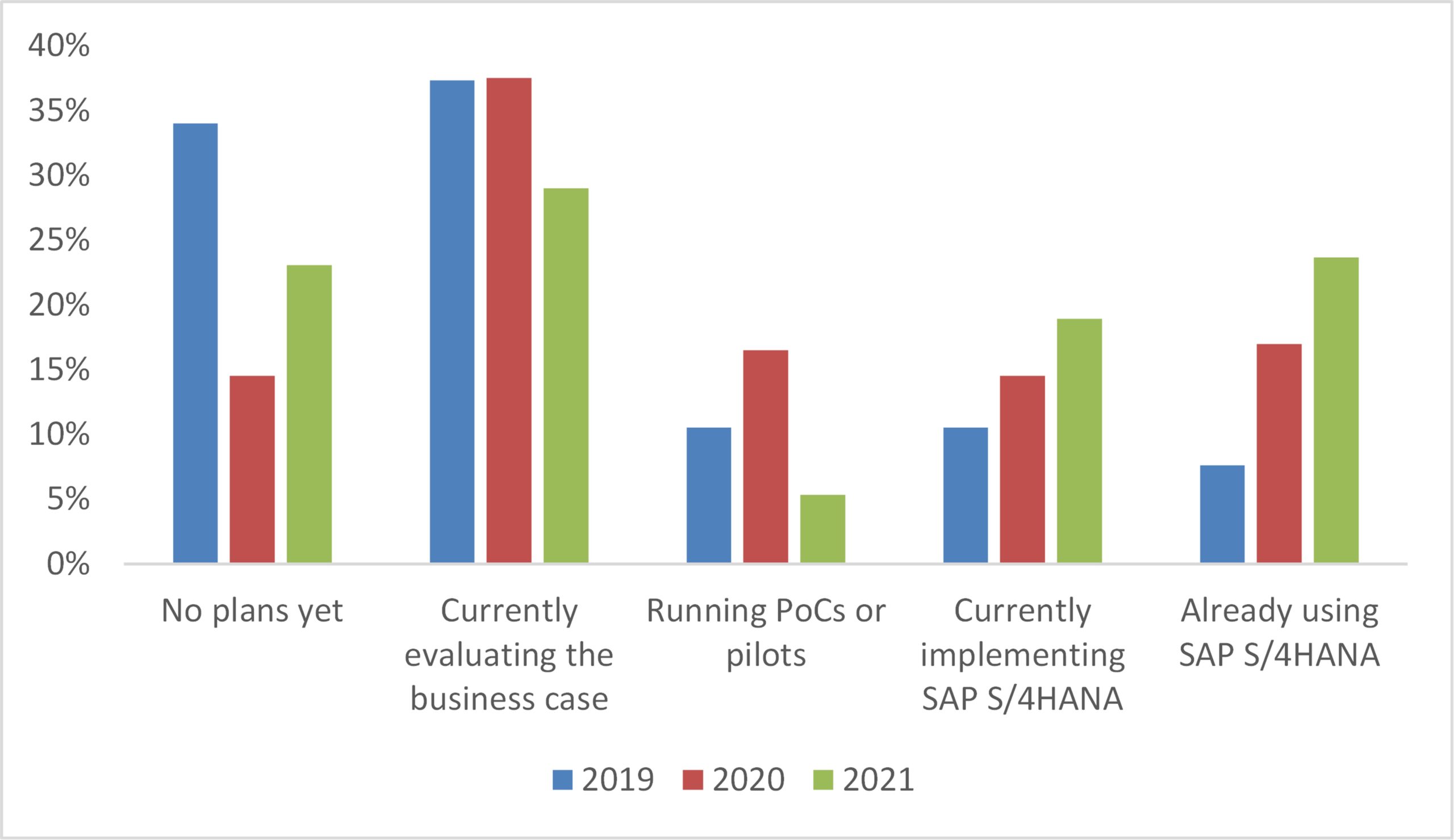
Why Did We Do This?Jul 21, 2021 — The move to SAP S/4HANA is likely the biggest technology and business investment related to SAP that your company has or will complete over the next several years. Many organizations are struggling with building the business case and understanding the full impact of this significant transition. While the traditional approach to upgrades has been technology focused, this option will not work when it comes to SAP S/4HANA justification. Many organizations are also learning that once you make the move, some of the real work begins. True ROI only comes from supporting the technology change with a related mindset change when it comes to innovation and future business impact.
This article will explore why and how leaders are making innovation a consistent priority for both business and IT. You will explore the core building blocks of an Innovative organization and learn how they are constantly pushing their business and IT employees to experiment and think differently about all aspects of their jobs and roles. These concepts go well beyond new business models and products to include a rethinking of existing business processes, reports, and user experiences.
Learn why innovation requires in many cases organizational and cultural changes and how this culture ensures that innovation is present and thriving well after the go live of SAP S/4HANA and other technologies.
8 minute read

Increasing Threats Highlight the Need for Robust Enterprise Risk ManagementMay 28, 2021 — In the face of challenging micro and macro events, companies need to be able to anticipate and better manage risks that impact their core business objectives. Additionally, legacy business models and IT landscapes don’t contain all of the capabilities necessary to manage risk across the entire enterprise. For example, intelligent technologies like robotic process automation are not available in older ERP systems. As a result, there is an urgent need for a new approach to risk and compliance by incorporating governance, risk, and compliance (GRC) and security in digital transformation initiatives.
2 minute read

A Holistic Approach to Managing Cybersecurity & Protecting Your DataMay 5, 2021 — The COVID-19 pandemic has ushered in a new paradigm in which legacy security tools and practices have left gaping holes in corporate data protection. To plug these gaps and counter increasing threats, organizations should employ a holistic approach to cybersecurity, privacy, and data protection. Scott Margolis, Managing Director for the Data Privacy and Protection Practice at Ernst & Young, advises companies to “take an integrated approach to considering multiple perspectives by coordinating data privacy and protection, governance, and information security.”
To minimize security risks from third-party vendors, organizations should automate access to resources and monitor digital assets through application programming interfaces (APIs). Margolis advises companies to adopt industry standards and embed controls into the design process to protect data and privacy, especially when it involves third parties. These controls include multifactor authentication, data encryption, and secure data disposal.
According to SAP Cybersecurity Solution Advisor Anne Marie Colombo, organizations should also minimize user access to data by segregating and protecting it. A data privacy program should manage data privacy impact assessments, data subject rights requests, and distribution of related privacy policies to ensure compliance with data protection regulations, Colombo explains. Ultimately, a holistic approach to cybersecurity and data protection involves proactively anticipating and thwarting threats, following cyber hygiene best practices, securing and protecting applications and data, and planning how to respond to a cyber incident.
Read this article and learn:
- How to develop and implement a holistic approach to cybersecurity and data protection;
- The importance of securing data and protecting privacy to comply with data protection regulations in your region;
- How to ensure that your organization is secure from data protection lapses at third-party vendors;
- What data security best practices will help secure your organization in a global pandemic and remote working environment.
8 minute read
How to Manage Enterprise Risk in Remote and Digital EnvironmentsMay 5, 2021 — As organizations migrate to SAP S/4HANA as part of their digital transformation effort, they should prioritize governance, risk, and compliance (GRC). The Institute of Internal Auditors (IIA) has developed a Three Lines Model to help with that journey. First-line roles include operation and support functions; second-line roles encompass corporate risk, compliance, and quality assurance functions; and third-line roles cover internal audit and independent assurance functions.
GRC strategies need to be employed across all three lines to establish a more effective risk management program. The model necessitates role alignment, communication, coordination, and collaboration, with all the roles operating simultaneously. This becomes even more important for organizations with the move to remote work in response to the global pandemic.
Integrating GRC and SAP S/4HANA is a critical component in bridging the gap between the three lines. “Transforming organizations shouldn’t think of SAP S/4HANA and GRC systems as separate items; they should be thinking that they need an SAP S/4HANA system with embedded GRC capabilities,” says Michael Heckner, Senior Director of GRC Solution Marketing at SAP. Ultimately, organizations should embed GRC in their core business platforms for digital transformation success.
Read this article and learn:
- What the IIA’s Three Lines Model is and how it can ensure that GRC is a priority in your organization’s digital transformation;
- How you can bridge the gaps between the three lines, particularly in a remote work environment;
- The importance of embedding GRC in your organization’s SAP S/4HANA migration;
- The seven steps to take to ensure risk protection for your intelligent enterprise.
12 minute read
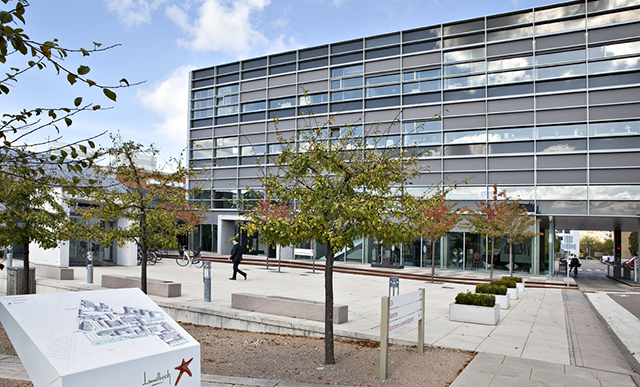
New Security Platform at Lundbeck Helps Ensure Business Continuity and Eliminate Risk of FraudMay 3, 2021 — As one of the most highly regulated industries, the pharmaceutical industry takes an aggressive approach to supply chain risk management. Employing a global security system that supports access governance and authorization areas is critical in preventing fraud and maintaining business continuity.
A case study on Lundbeck, a biopharmaceutical company based in Copenhagen, details how it chose a new security platform to not only digitize but automate its segregation of duties (SoD) and privileged access management processes. As an SAP customer, Lundbeck utilizes a hybrid SAP landscape with one instance of SAP ERP and implementations of SAP Ariba, SAP Concur and SAP SuccessFactors.
Kirsten Kjerkegaard, Solutions Architect for Access and Security at Lundbeck, explains that her primary mission is to ensure smooth audits and identify and minimize security issues for the company. Prior to implementing its new security platform, she says “the company’s access provisioning process was digitized, but the SoD and privileged access management processes were managed manually through spreadsheets, which created some challenges and cumbersome reporting.” Those challenges included conducting repetitive tasks and analyzing historic data rather than performing exact analysis.
How did Lundbeck overcome its challenges? With top management support, the company implemented a solution that provides a holistic and transparent view into SoD conflicts throughout the company’s landscape, while streamlining its automated privileged access by replacing the manual review of audit logs for discrepancies. It was also critical to invest in a ruleset that focused on business processes on the SAP Ariba side of the enterprise, allowing for control implementations that mitigated risks specific to the business.
Read this article and learn:
- How Lundbeck pursued an automated security platform that met its security needs while integrating with the company’s hybrid SAP landscape;
- Why the investment in SoD rulesets is critical to meeting the SoD needs of your business processes and avoiding process inefficiencies;
- How Lundbeck now automates audit log review for discrepancies and streamlines the review task.
10 minute read

Why Tax Departments Need to Build Technology RoadmapsJan 6, 2021 — As governments continue to introduce legislation that gives them visibility into companies’ data, systems, and processes, tax leaders are pressured to create their own digital transformation and respond with system changes that improve compliance, planning, and audit work. However, tax departments have historically competed for technology dollars. Developing a technology roadmap can help the tax department prioritize its projects based on regulatory work rather than approaching improvement in an ad hoc manner, which may increase the likelihood of receiving funding from leadership.
In this article, a tax professional and an SAP expert explain current tax trends, best practices for developing a technology roadmap, and how automation and intelligent technologies can be used by the tax department to add business value. Read the article and learn:
- New forms of taxation that should be a top concern for tax departments;
- The value of robotic process automation (RPA) in meeting regulatory compliance; and
- Best practices for tax departments to gain a seat at the table alongside core finance and IT decision makers.
10 minute read

Position Your Business to React and Adapt to Any New Regulations with EaseNov 5, 2020 — In the increasingly complex and regulated business landscape, compliance is a top concern for companies of every size, in every industry. In the past few years, major standards have appeared in two finance and accounting compliance areas that cut across industries. First, revenue recognition standards provide new guidance on one of the most important measures used by investors in assessing a company’s performance and prospects. Second, standards require companies to recognize leased assets and lease liabilities on the balance sheet and disclose key information about leasing arrangements. In this article, Dave Fellers, CEO of Bramasol, and John Froelich, the company’s Vice President of Marketing and Strategy, explore the key trends in compliance and ways companies can turn compliance into a competitive advantage. Topics that Fellers and Froelich cover in the Q&A include:
- How Bramasol helps SAP customers in the area of finance and accounting compliance
- A look at the Comply, Optimize, Transform framework that Bramasol uses to help customers define and execute a successful business and finance digital transformations
- An overview of the Bramasol “health check” offering
11 minute read

Beyond “Back to Best”Nov 4, 2020 — Companies that have become intelligent enterprises are defined by SAP as those applying technologies and best practices within agile, integrated business processes. At any time, but especially as we navigate a global pandemic, companies that have reached this status are more likely to experience resiliency, profitability, and sustainability. But what does it mean to be a resilient business in today’s uncertain environment, and how can organizations re-imagine their business models to adapt and enter the recovery phase—hopefully soon—better than they were before the crisis? This article explores how SAP’s intelligent enterprise strategy has evolved to help companies through this next phase with guidance that addresses effective networking, innovation, and climate change.
Read this article and learn:
- What it takes to become a resilient business today;
- How to remain agile in the face of disruption; and
- The role of intelligent technologies in addressing sustainability and the future of business.
10 minute read

How Can Data Science Help Businesses Thrive?Aug 24, 2020 — In today’s climate of economic uncertainty, many firms are looking to reposition and adapt through automation. Investing in robotic process automation (RPA) can help SAP customers reduce bottlenecks and improve workplace efficiency. Bots can automatically perform manual and repetitive tasks, reducing the need for human intervention. However, firms need data scientists to oversee these systems and analyze data. In fact, the demand for data science skills is predicted to increase by up to 27.9% by 2026. More and more employers are acknowledging the value of technology to drive growth and expansion, and the increasing number of specialists studying data science at degree level online is feeding this demand. The rise in data science graduates led to Glassdoor naming it the best job in America in 2018, with the average job growth for research analysts alone at 27%. By hiring from this wide pool of expert data scientists, businesses can obtain fresh and actionable insights that will help them succeed in the future.
3 minute read