

5 minute read

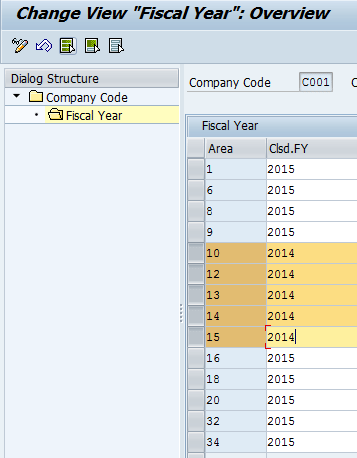
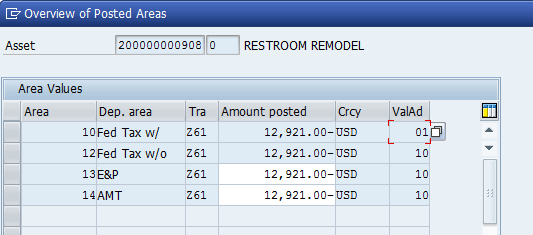
Learn the steps necessary to open the prior fiscal year and allow tax depreciation adjustments to individual asset records in SAP Asset Accounting (FI-AA).
More Resources
See All Related Content
How SAP Supports Mandated E-Invoicing Compliance Across Global JurisdictionsMandated e-invoicing is reshaping invoice processing, regulatory reporting, and system architecture. This article explains how SAP Business Network and SAP Document and Reporting Compliance support clearance, reporting, and global mandate variation.
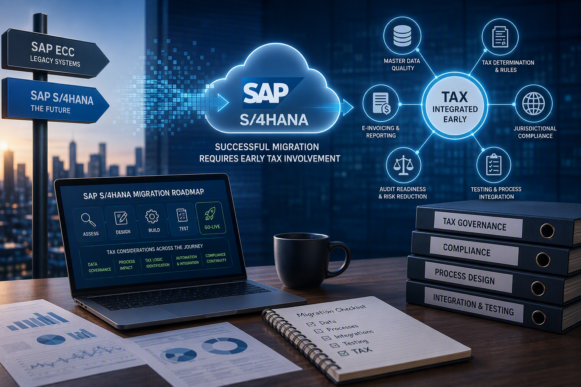
The Costly Mistake: Leaving Tax Out of SAP S/4HANA Migration PlanningSAP S/4HANA migrations often push tax into a late-stage compliance review, but hidden risks around tax determination, master data, and audit exposure demand earlier involvement. This article explains why leading organizations bring tax into governance from day one to protect timelines and Clean Core goals.
4 minute read

From SAP Transactions to Tax Intelligence: How AI Is Redefining Compliance for SAP ShopsSAP runs the transactions that power your business — but who is processing your tax compliance data? Most SAP-run enterprises are sitting on a goldmine of tax and transaction data, yet tax teams are still making manual corrections before every filing, reconciling across disconnected systems, and identifying audit exposure after the fact. As tax requirements become more real-time and global e-invoicing mandates expand, compliance can no longer be managed as a reactive process.
In this on-demand session, Sovos and SAPinsider explore a new model: AI-powered tax compliance intelligence built for SAP environments. Watch to see how leading SAP customers are connecting tax determination, e-invoicing, and indirect tax filing into a unified compliance layer — without replacing existing ERP infrastructure — while turning SAP transaction data into a real-time source of truth for compliance.
What You'll Learn:
- How to connect tax determination, e-invoicing, and indirect tax filing into one unified compliance layer for SAP environments
- How to use AI to map product tax codes in seconds instead of days
- How to surface exceptions before they become penalties or audit exposure
- How to answer "why was tax charged?" in plain language, directly inside the platform
- How to build a roadmap for modernizing tax compliance across S/4HANA, ECC, migrations, and global e-invoicing mandates
1 minute read
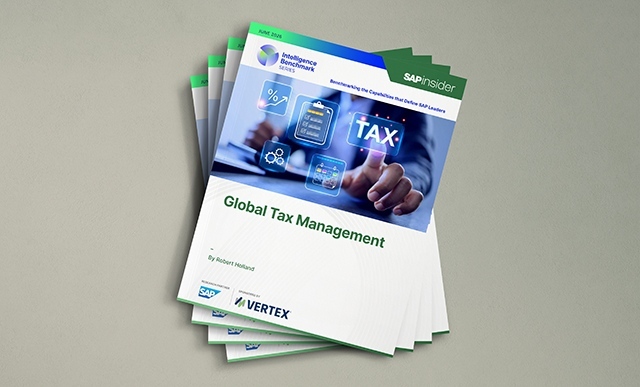
Global Tax Management – Benchmark Research Report 2026Global tax functions are at an inflection point. Between February and June 2026, SAPinsider surveyed its community of tax and finance professionals — including technology, finance, tax, and C-level leaders — to understand how they are navigating the most complex compliance environment in a generation. The findings are clear: AI adoption (42%), e-invoicing and real-time reporting mandates (35%), and regulatory and tariff volatility are reshaping the 2026–2028 tax agenda faster than most organizations can absorb with their current tools and architectures. Tax leaders know the operating models of the last decade won't be adequate for the next one, and they are responding by prioritizing automation, standardization, and data governance before chasing the next wave of AI.
But the most actionable finding in this report is the expectations gap — the striking distance between what tax automation and AI were expected to deliver and what has actually been realized. While 43% of organizations expected automation to deliver faster close and reporting cycles, just 6% achieved it; 36% expected better visibility into tax positions, yet only 11% saw it. This report diagnoses why the gap exists, where SAP-centric architectures are winning, and what separates the organizations realizing outcomes from those simply accumulating tools. Download the full benchmark to compare your strategy against your peers and build the foundation that closes the gap.
What you'll learn:
- The seven forces shaping the 2026–2028 tax agenda — and why AI adoption now outranks any single regulation
- Where the expectations gap is widest across close cycles, audit response, visibility, and accuracy
- The strategic priorities tax leaders are funding first: automation, process standardization, and master data remediation
- Which SAP solutions and third-party tax engines (Vertex, ONESOURCE, Sovos, Edicom) are in scope for the next 24 months
- The real state of AI in tax — high evaluation rates, low production deployment, and where the fast-follow use cases are
- The performance metrics that actually win budget: on-time filing, accuracy, and audit defensibility — not headcount reduction
- How leading teams treat tax transformation as an operating-model change, not a technology purchase
2 minute read