3 minute read
Meet the Authors
Key Takeaways
-
Royal Greenland is migrating from SAP ECC to SAP Cloud ERP to unlock standardized, platform-embedded AI capabilities.
-
The company is prioritizing SAP-delivered AI services over custom development to reduce complexity and accelerate value.
-
SAP Business Data Cloud and Datasphere form the data foundation for future analytics and AI-driven process improvements.
Royal Greenland is undertaking a major transition from on‑premise SAP ECC to SAP Cloud ERP Private (formerly RISE with SAP), to access newer capabilities emerging in the cloud.
Through the transition, the seafood company plans to consolidate infrastructure, operations, and future innovation into a single cloud operating model. In parallel, the company will also modernize its analytics landscape, shifting business intelligence workloads toward SAP Business Data Cloud and Datasphere, SAP said.
This will give the company a more standardized data layer to support reporting, analytics, and future AI use cases.
Explore related questions
Royal Greenland, which is fully owned by the Greenlandic self-government, said that rather than developing proprietary AI models, it plans to rely on AI capabilities embedded in SAP’s cloud platform, in order to accelerate value while reducing complexity and risk.
Lars Bo Hassinggaard, IT manager at Royal Greenland, said, “We are moving from our existing setup to SAP Cloud ERP and SAP Business Data Cloud because we want to have access to the capabilities that can be consumed on a cloud platform.”
From long‑running SAP ECC to SAP Cloud ERP Private
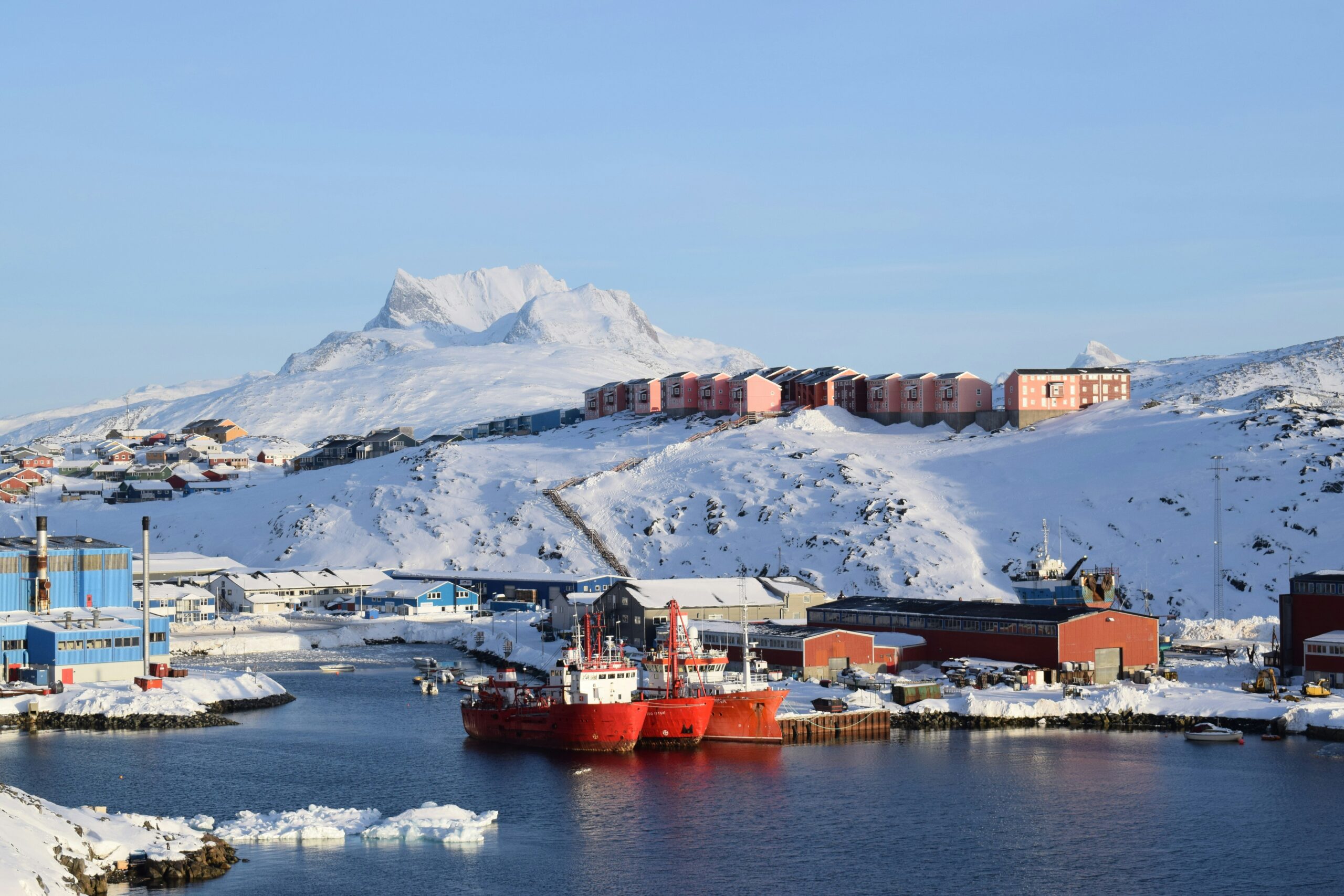
The seafood giant operates over 40 processing facilities in Greenland, as well as in Canada and Germany, and has used SAP since 1998 to support its operations. The current transformation represents the company’s largest SAP initiative to date.
During 2026, the company said it will focus on completing the cloud transition and stabilizing core processes, with the go-live planned for March 1, 2027. Following go-live, the company’s focus in 2027 will be on introducing innovation layers. These include improved analytics, more intuitive user experiences, and small AI agents designed to support administrative, financial, and process‑oriented tasks.
As part of the migration, Royal Greenland is using SAP’s Lean Selective Data Transition approach to reduce the volume of historical data carried forward into the new cloud environment.
“We keep 10 years of data and clean up so that we get rid of outdated company codes and history that do not provide value. We have achieved a 90% reduction that does not need to be stored and moved,” Hassinggaard said.
SAP is leading the implementation of the cloud environment, which will run on Microsoft Azure. The system, which will initially be hosted in Sweden, will have the option to transition to a Danish data center at a later stage.
Why AI Consumption Fits Royal Greenland’s Cloud Strategy
Royal Greenland is treating AI as a capability that should be delivered as part of the SAP platform itself from the start. According to Hassinggaard, the objective is not simply technical modernization, but to create a platform that makes advanced capabilities accessible without extensive customization or internal development.
“We are a company that would rather “tap” into existing AI solutions than invent them ourselves. It is much more efficient for us. There is no reason for us to spend resources on reinventing the deep dish that SAP already delivers,” says Hassinggaard explained, describing the company’s approach to AI as pragmatic and tightly aligned with platform strategy.
By relying on standardized AI services delivered by SAP, Royal Greenland expects to shorten time‑to‑value while avoiding the governance, security, and maintenance challenges that often accompany custom AI development.
“AI only makes sense if it is built into the systems people already use,” Hassinggaard noted. “Otherwise, you spend too much time maintaining solutions instead of creating value.”
By standardizing both the ERP core and the analytics layer, Royal Greenland expects to improve visibility across finance and operations, reduce manual administrative effort, and enable more consistent, governed use of AI. The approach allows IT teams to focus on process improvement and adoption rather than model development and ongoing lifecycle management.
Hassinggaard also emphasized the importance of methodology and planning, noting that large‑scale transformations require realistic timelines and experienced partners to avoid disruption while moving to the cloud.
What This Means for SAPinsiders
Standardized AI reduces delivery risk and complexity. Royal Greenland’s decision to consume SAP‑embedded AI rather than build custom models reflects a pragmatic trade‑off: faster time‑to‑value, fewer governance burdens, and less ongoing maintenance in a large, distributed enterprise environment.
Cloud ERP and data foundations enable AI at scale. By moving from on‑premise SAP ECC to SAP Cloud ERP and SAP Business Data Cloud, Royal Greenland is putting the data, semantics, and integration layers in place that make AI usable across finance and operations—not just in isolated pilots.
Process standardization determines AI impact. The company’s focus on stabilizing core processes before introducing AI agents highlights a broader lesson for SAP customers: AI delivers measurable results when it is applied to standardized, well‑understood processes, not layered onto fragmented system landscapes.
More Resources
See All Related Content

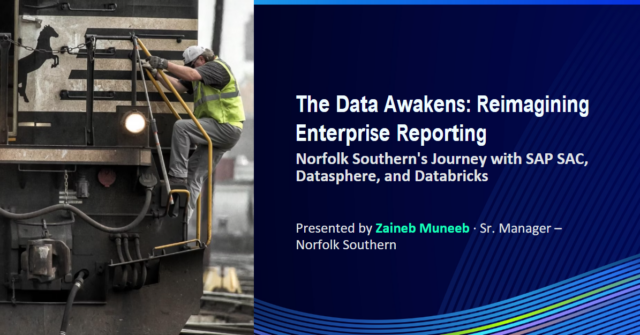
SAPinsider Las Vegas Session: Reimaging Enterprise Reporting with SAP and DatabricksNorfolk Southern overcame reporting challenges caused by fragmented data across disconnected systems by implementing a unified architecture combining SAP Datasphere and Databricks, which standardized definitions, reduced manual reconciliation, and enhanced data trust.
3 minute read