

1 minute read
Meet the Authors
Key Takeaways
-
The future of SAP innovation is shifting towards industry-specific AI, emphasizing the importance of regulated processes and domain data models over generic AI solutions.
-
TechWave's focus on operational readiness highlights the need for aligning technology investments with industry-specific objectives, ensuring that AI adds measurable value through coordinated process design and data governance.
-
Success in implementing AI within SAP environments relies on execution capabilities, including proven integration patterns and industry expertise, rather than merely offering advanced features.
As SAP pushes deeper into embedded, process-aware AI, services partners increasingly position industry context as the differentiator between interesting copilots and measurable business outcomes. TechWave, a global IT services and solutions partner with SAP expertise, argues that the next phase of SAP innovation will be shaped less by generic generative AI and more by industry-specific AI built around regulated processes, asset-intensive operations, and domain data models.
That point is more than marketing. Enterprises don’t run AI problems; they run manufacturing lines, distribution networks, regulated quality processes, and field-service operations—work that lives within ERP workflows and controls. As SAP continues to embed Joule more deeply into business processes and expand AI-enabled capabilities, the practical challenge is making AI succeed with sector-specific master data, approvals, and operating models.
From Pilots to Outcomes
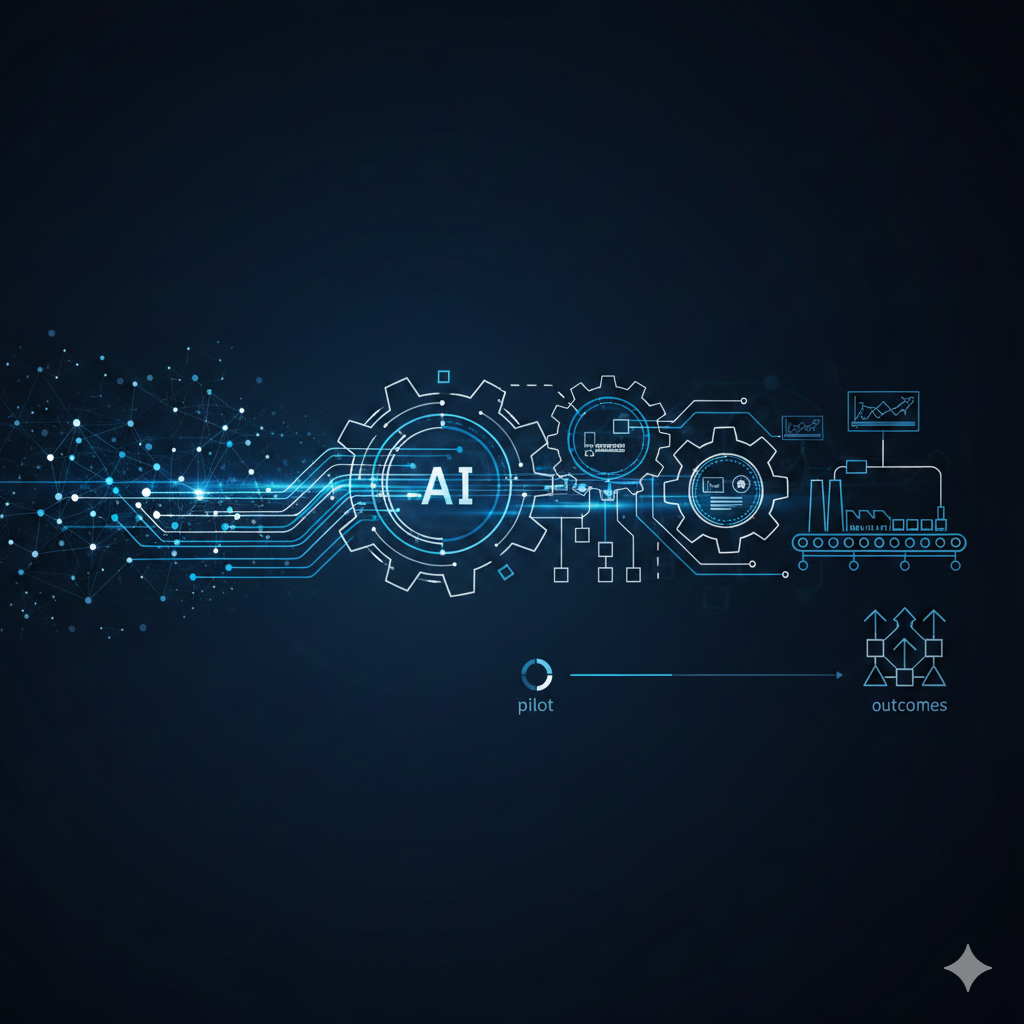
TechWave’s AI positioning emphasizes moving from experimentation to operational readiness, with strategy consulting, prototyping, and adoption approaches designed to deliver deployable solutions. The company frames its approach as aligning technology investments with business objectives and industry-specific requirements, treating domain context as a core design constraint rather than an afterthought.
Explore related questions
TechWave’s SAP services messaging similarly emphasizes enterprise transformation and ROI across advisory services, RISE with SAP services, BTP-enabled transformation, SAP Cloud ERP, and managed services. For SAP customers, the implication is that AI value increasingly depends on coordinated work across process design, data engineering, and governance—not merely enabling a model or a copilot.
Why Industry-Specific AI is Winning
TechWave’s industry narratives highlight recurring vertical realities where generic AI can struggle to meet production governance requirements. In manufacturing, for example, TechWave describes integrating SAP’s ERP ecosystem with AI, IoT, and cloud-native platforms to support resilience and cost efficiency, an approach that depends heavily on shop-floor data structures and compliance expectations.
This aligns with SAP’s 2025 direction toward deeper AI embedded in work. SAP has emphasized expanding Business AI capabilities and AI-enabled experiences tied to real processes, underscoring the importance of accurate data, controls, and industry-specific workflows.
Proof Points, According to TechWave
TechWave’s published success-story summaries show the types of programs it targets around SAP and adjacent platforms. Examples include process optimization for a consumer products company using SAP S/4HANA Private Cloud, a global SAP blueprint rollout spanning 65 countries for a technology distributor, and a rail-network condition-monitoring initiative in which frontline productivity increased by more than 50% through Azure-built app development.
On the AI side, TechWave lists solution themes such as an intelligent predictive site maintenance schedule for field operations across a large network of cell towers and an intelligent freight audit approach focused on freight audit and payment optimization. These examples reinforce the company’s thesis that AI value concentrates in repeatable, domain-specific decision loops such as maintenance scheduling, freight validation, and inspection. In these decision loops, SAP provides a process backbone and AI provides prioritization, prediction, and automation.
What This Means for SAPinsiders
Industry AI will accelerate measurable improvements in SAP processes. Day to day, technology leaders will spend more time selecting a few high-value processes for automation, aligning stakeholders on controls, and tracking outcomes through operational KPIs rather than broad AI adoption metrics.
Execution will matter as much as features. TechWave’s examples—global template rollouts, S/4HANA Private Cloud optimization, and the cited productivity lift of more than 50% in rail condition monitoring—suggest that the job’s impact is more integration, more data stewardship, and tighter governance to keep AI aligned with how the business actually runs.
Operationalization capability will define partner value. Evaluation criteria to prioritize include proven SAP-to-AI integration patterns (including BTP-enabled approaches), industry-domain expertise for defining exceptions and controls, and a clear path from prototype to production readiness that covers security, monitoring, and change management.
More Resources
See All Related Content
Inriver workflowsOptimize your PIM processes for peak efficiency, speed, and collaboration with configurable, automated workflows. Streamline Product Operations Automate data management across the entire product lifecycle—from onboarding to digital shelf analytics—with workflows tailored to your unique data models and business processes. Boost Productivity and Collaboration Provide clear visibility into tasks and assignments across teams, enabling seamless […]

Fix inaccurate content, spot product data gaps, and stay on-brand with Inriver Inspire AI | InriverInriver's AI-powered Product Information Management solution enables brands to optimize product data efficiently, accelerating launches and enhancing customer experience while maintaining data integrity and authority.
1 minute read

Building Trustworthy AI, Clean-Core Reporting, and Cross-Platform SAP AnalyticsArtisan Edge CEO Egan Bosch emphasizes that SAP IT leaders should prioritize a strong data foundation and validated reporting logic for AI integration, focusing on business value and clean-core strategies while ensuring auditability and flexibility in hybrid environments.
2 minute read

Improving Supply Chain Resilience in 2026 with AI, SustainabilitySAP is making agentic AI and sustainability the twin pillars of its 2026 supply chain roadmap, positioning them as prerequisites for resilience rather than side projects. For technology executives, that means redesigning day-to-day procurement and supply chain work around AI-driven decisions, automated workflows and emissions-aware planning. Agentic AI Reshapes Supply Chain Operations SAP argues that […]
3 minute read