

2 minute read

Meet the Authors
Key Takeaways
What you need to know
Enable’s 2026 Commercial Intelligence Survey finds many manufacturers and distributors lack full pricing and rebate visibility when commercial decisions are made.
Rebate management gaps can make it harder to demonstrate program returns, forecast liabilities, and understand the margin impact of commercial agreements.
AI investment in pricing and rebates is accelerating faster than data readiness, increasing the importance of connected and consistently governed commercial data.
Enable’s 2026 Commercial Intelligence Survey presents a confident picture of commercial performance. Respondents generally believe they understand their margins, can measure rebate performance, and have finance and commercial teams working in alignment.
The operational picture is less settled. The survey shows that many companies are still making pricing decisions without full visibility into rebate liabilities. It also finds that many struggle to show whether their rebate programs paid off, while unexpected accruals can force a reforecast later. The survey, conducted by InsightDynamo for Enable between June 17 and June 30, 2026, covered 301 commercial, finance, and pricing leaders at manufacturers and distributors with revenue from $350 million to more than $4 billion.
The findings will be discussed in Enable’s “Five Blind Spots Costing You Margin” webinar on Tuesday, Oct. 20, at 11 a.m. ET/8 a.m. PT, including how companies can benchmark their pricing, rebate, and finance performance against the survey results.
Explore related questions
Ask SAPi
Margin Data Arrives Too Late
The first constraint is visibility at the point of pricing. Although 90% of respondents say they know their true net margin after rebates and discounts, only 51% report full visibility into rebate liability when prices are set. Another 22% say margin does not have a single owner in their company. A price may then be finalized before the business can see how rebates and other commercial commitments will affect what it earns.
Speed adds another constraint. Just over half of respondents say they reprice fast enough to protect margin, with the study reporting an average repricing period of 30 days. But delayed price changes can erode revenue: 92% say they lose at least 1% of affected revenue, while 32% put the loss at 3% to 5% or more. If those costs only become clear after the price is set, any delay in repricing makes the margin harder to recover.
Rebates Test Financial Control
Confidence in rebate measurement is also high. While 98% of respondents say they can measure the ROI of their programs, only 22% say they can prove to leadership that a rebate program paid for itself. That suggests many teams can calculate a return but struggle to turn it into evidence that shows whether the program justified its cost.
The finance results show a similar disconnect. Although 81% say finance and commercial teams are aligned, 97% experienced a rebate accrual or true-up surprise that forced a reforecast during the past year. Another 71% say their teams lose four or more days each month to manual reconciliation.
Rebates affect more than commercial performance. As programs run, finance has to estimate expected liabilities before final settlement, while commercial teams need to understand whether those programs are delivering the intended return.
The survey suggests those two views are not always coming together cleanly. Enable describes the resulting problems as blind spots in measurement and process, with accrual surprises and manual reconciliation showing where those gaps can surface.
AI Depends on Data Readiness
Data and process problems become more apparent as companies apply AI to pricing and rebates. The study shows that investment is moving faster than readiness, with companies pushing ahead before the underlying data can fully support those systems.
The scale of that mismatch is clear in the survey. Nearly every respondent says their company is prioritizing AI for pricing and rebates, and most are increasing investment. AI is already in use for pricing at 44% of companies and for rebates at 39%, but only 30% say the underlying data is fully ready to support it. Another 15% acknowledge significant gaps or say their data is not ready.
AI can only work with the information available to it. If that data remains fragmented, AI may be making pricing or rebate recommendations without the full commercial context. The report identifies five priorities for addressing that fragmentation:
- Unify pricing and rebate data
- Improve data quality
- Clarify ownership and governance
- Measure program performance consistently
- Invest in ongoing change management
The opportunity is to use AI on top of a more consistent commercial foundation. If companies can build that foundation, AI can help teams act faster with a clearer view of the financial impact.
What This Means for SAPinsiders
Margin needs clear ownership. SAP environments can bring pricing, rebate, and financial data together without resolving who owns the final margin calculation. Companies need one agreed view that commercial and finance teams can use.
Rebate performance needs financial evidence. Measuring a program internally is different from showing that it delivered enough value to justify its cost. SAP teams should connect rebate performance to the financial measures leadership already uses.
AI readiness starts with commercial context. Pricing AI needs more than clean transaction data to make useful recommendations. It also needs access to the rebates, liabilities, and other commitments that determine what the company ultimately earns.
More Resources
See All Related Content
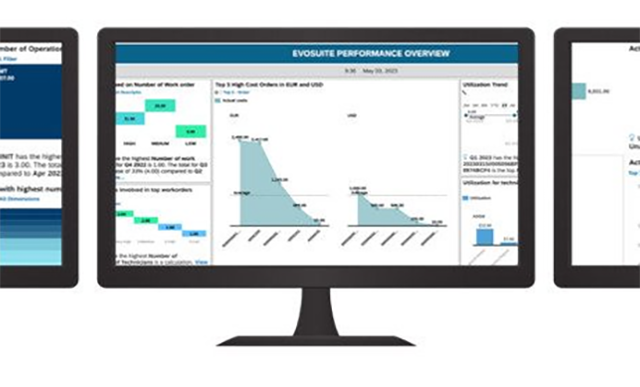
SAP Analytics CloudEvoSuite - Performance Overview demonstrates how organizations can unlock the value of maintenance data by combining SAP EAM information with AI-powered analytics in SAP Analytics Cloud. The solution delivers out-of-the-box reporting and operational insights that help improve maintenance planning, workforce utilization, equipment management, and cost control.
1 minute read


Agentic SAP Delivery: The Intelligence Layer that Compounds with every TransformationAgentic SAP delivery is an AI-driven transformation approach that integrates intelligence throughout the entire S/4HANA implementation process, enhancing project management and reducing risks while retaining knowledge for future engagements.
7 minute read