
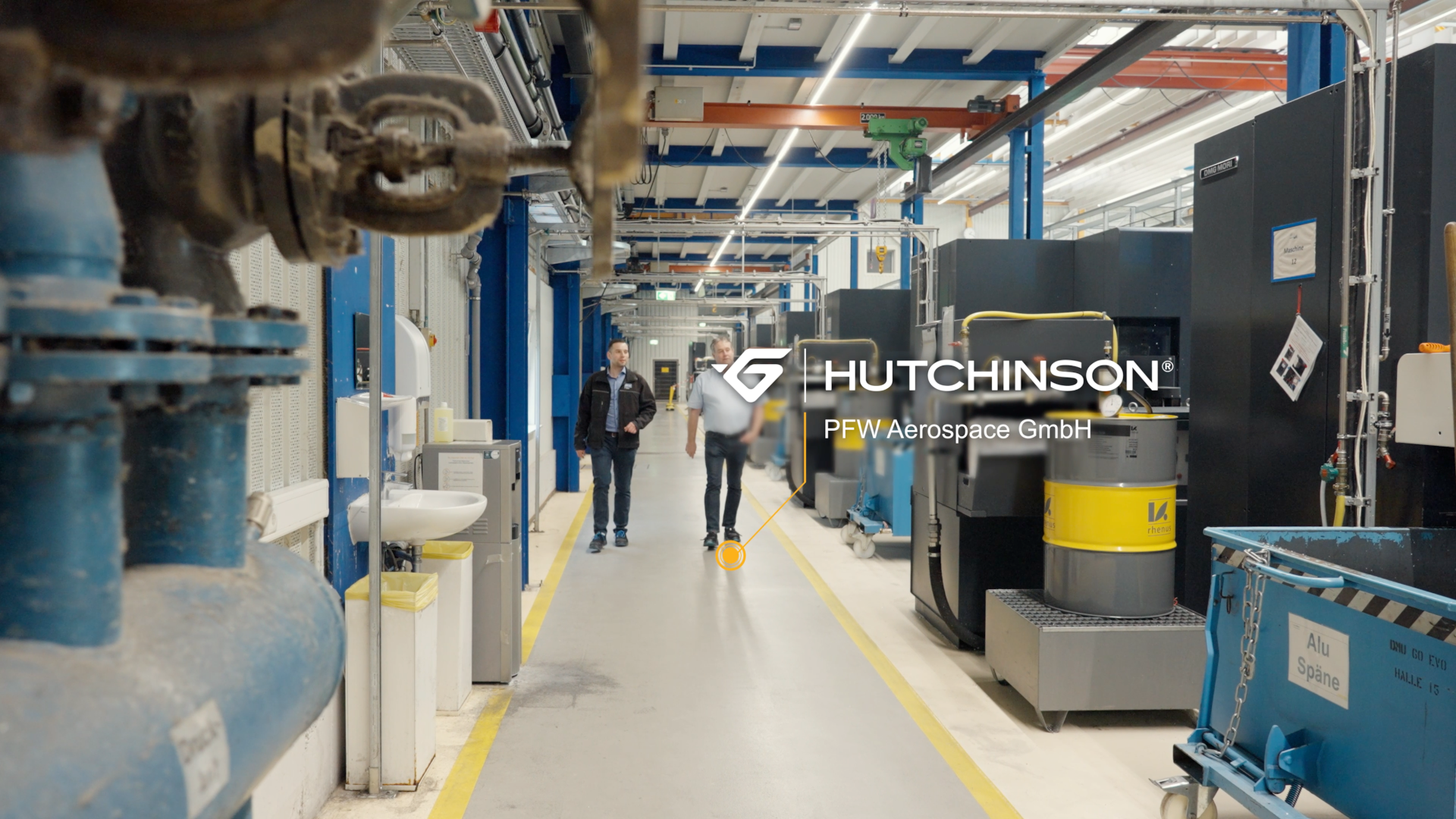
PFW Aerospace transitioned to predictive sensor-based maintenance using SAP Intelligent Asset Management products to optimize maintenance operations and reduce downtime.
Implementing SAP IoT, SAP Asset Central, and SAP Predictive Asset Insights enabled PFW to realign maintenance intervals with real-life conditions, improving asset performance.
The collaboration with Evora provided PFW Aerospace with expert support for data collection, analysis, and model creation, leading to enhanced maintenance planning and significant long-term benefits.
Evora customer PFW raised the following question: Do we perform our maintenance operations at the frequency needed? The answer was found in implementing a sensor based maintenance solution using SAP Intelligent Asset Management products: SAP IoT, SAP Asset Central and SAP Predictive Asset Insights.
Evora’s experts also supported us with the basics: data collection, analyzation and bringing it into models, which then helped us readjust our maintenance intervals and realign them with the real-life conditions. The cooperation with Evora was seamless, without any barriers — we work together as one company. We broke new ground in many places. It was always a bit of inventing new things, discovering new things and combining new things to achieve a viable solution.
Michael Schnorbach VP IT, PFW Aerospace and HUTCHINSON Germany
You are currently viewing a placeholder content from Default. To access the actual content, click the button below. Please note that doing so will share data with third-party providers.
Unblock content Accept required service and unblock content
More Information
Future applications are not limited to maintenance planning, but through the integration of various other functions, such as vibration measurements and identifying anomalies, we will be able to perform even more targeted and accurate maintenance and repairs, and the performance level of the machines can be increased even further.
Thomas Scholl Head of Infrastructure, PFW Aerospace
You are currently viewing a placeholder content from Default. To access the actual content, click the button below. Please note that doing so will share data with third-party providers.
Unblock content Accept required service and unblock content
More Information
We were very happy to have Evora as an experienced implementation partner at our side. From concept design and technology consulting to implementation, rollout, and support in productive operation, Evora delivered everything from a single source. From initialization to implementation took a period of 18 months. Based on this work, PFW will benefit for years to come by applying the concept to new use cases.
Florian Bauer Digital Application Consultant, Hutchinson PFW Aerospace
You are currently viewing a placeholder content from Default. To access the actual content, click the button below. Please note that doing so will share data with third-party providers.
Unblock content Accept required service and unblock content
More Information
Future Proof Solution
Benefits for both profitability and sustainability
Reduced Maintenance Spendings
On-demand maintenance service saves trips for external service providers and thus prevents CO2 emissions. PFW has implemented performance-based maintenance for 40 machines, which required approximately 100 service calls per year. It is anticipated that 25 service calls will be saved annually, avoiding up to 6,000 miles driven per year.
Rapid Failures Detection
PFW is working on an alarm system that detects critical machine conditions and quickly forwards them to the specialists. For example, the charging carriage of a heat treatment furnace is monitored so that error conditions are sent to the cloud. Automated alarm notification enables maintenance team to respond quickly and save the components.
Reduce energy consumption
PFW equipped their buildings with sensor technology and launched initial pilot projects in energy consumption. The aim is to use sensor data to identify anomalies in energy consumption and take appropriate measures.