
1 minute read

Meet the Experts
Key Takeaways
What you need to know
The upcoming end-of-support deadline for SAP ECC in 2027 marks a critical turning point for organizations still using legacy systems, compelling them to transition to modern platforms like SAP S/4HANA and SAP Business Data Cloud to remain competitive.
The retirement of SAP ECC and legacy BW architectures necessitates a comprehensive rethinking of financial reporting, analytics frameworks, and data management strategies, significantly impacting enterprises' operational and analytical capabilities.
This transformation not only affects IT teams but also requires alignment across business units and leadership to leverage the opportunities presented by cloud technologies, ensuring organizations can deliver real-time insights and meet future demands.
The 2030 end-of-support deadline for SAP ECC is no longer a distant date on a roadmap—it is a functional reality forcing a Great Reset of enterprise architecture.
Today, we are witnessing a generational shift in expertise. Much like the mystery of how the pyramids were built, the builders of the original SAP ECC and BW systems—the consultants and architects who understood every line of custom ABAP and legacy G/L logic—are moving toward retirement. Therefore, for organizations still running on classic G/L or decades-old BW 7.x environments, the transition to SAP S/4HANA and the SAP Business Data Cloud (BDC) is a high-stakes reimagining of how a business actually functions.
This article breaks down why prolonging the pain of legacy BW architecture is a losing game. We also explore the critical shifts in financial architecture occurring today, the modern SAP analytics landscape as of Q1 2026, and why the leap from on-premise silos to SAP Datasphere is the only way to bridge the gap between human intuition and AI-driven insights.
Explore related questions
Ask SAPi
End-of-Life for SAP ECC
SAP ECC is often seen as outdated, though for those who started with SAP S/4 HANA in the last 10 years, it may still feel like a term they have never, or certainly do not, need to know. However, for many corporations, December 2027 is a critical date, as SAP will end support for the SAP ECC product suite, with the option to extend for a few more years for an additional fee.
In SAP terms, this is what is happening from a business and technical point of view:
- SAP ECC, which was released in 2004, over 22 years ago, is being replaced with better options.
- SAP S/4 HANA platform, which has been recommended for years as the new path forward, was released in 2015 and may need a new platform itself, since that was over 11 years ago.
- All SAP efforts are focused on current and future investments; the product in this case, SAP ECC, is not included in future developments, or other products won’t support it any longer.
- Phasing out a product is a classic move to boost sales by essentially transitioning customers towards modern, revenue-generating platforms.
- Most importantly, all new personnel within SAP are trained in the new technologies, and SAP ECC is a tool that the consultants themselves think more about regarding retirement rather than keep working.
- Organizations still running on SAP ECC Classic G/L face the most disruptive migration path, as they are essentially jumping across two decades of architectural evolution at once.
- SAP’s 2006 recommendation to adopt New G/L was effectively a mandate in disguise. Those who bypassed it now face technical debt due to a total overhaul of financial tables, T-codes, and BW extractors. Moreover, they must finally reconcile the structural divide between FI (Finance) and CO (Controlling)—a shift that fundamentally alters how the business reports data.
- Finally, the 2027 sunset is a hard stop. No negotiation with SAP representatives or optimistic promises from star consultants will move the needle. Unless your organization is prepared to pay significant premiums for extended support, modernization is the only viable path forward..
End-of-Life for SAP BW versions and Migration paths
While the impact of the 2027 deadline is significant on SAP ECC users, there are more options available for SAP BW users depending on the version they use.. However, much depends on whether the user is affected by an SAP ECC source system or is already using an SAP S/4 HANA system because the financial architecture of their ERP system would drastically change their reporting and supported technologies moving forward. For example, some clients are already experiencing SAP BW BEx queries support since they are obsolete and are rushing to create alternatives even with third-party tools.
As shown in Figure 1, SAP has already provided a path forward for SAP BW systems to SAP BW Private Cloud (PCE) versions, basically taking on-premises systems to the cloud, and integrating them with SAP Business Data Cloud (BDC).
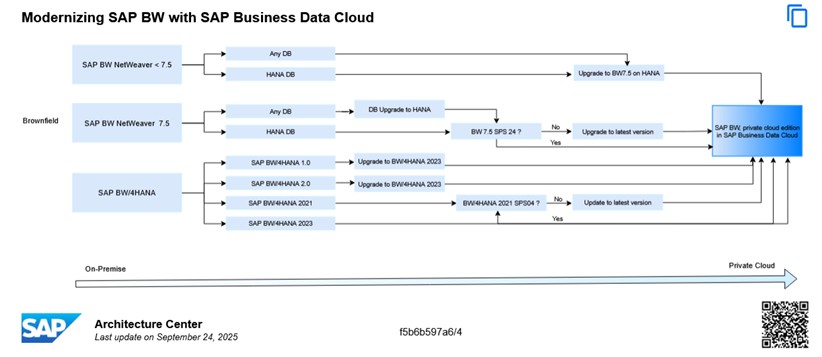
Figure 1. SAP BW Modernization to SAP Business Data Cloud (BDC) Source: SAP.com
For organizations working on an SAP S/4 HANA upgrade from SAP ECC, the impact is double because while their Analytics & Reporting architecture will change, their data will be intact on the technical upgrade; their reports, cubes, extractors, ABAP developments, and more will require detailed review and analysis to make sure everything is working. Additionally, their cloud box must be configured to fit the company like a glove to avoid reporting performance issues.
However, the idea of migrating SAP BW architecture to SAP BW Private Cloud Edition (PCE) with limited life support is like prolonging the pain of a dying horse. Although some users are literally “in love” with SAP BW architecture because the current CIO or Operations manager designed it, Arellius Enterprises can recommend smarter investment paths and simpler architectures.
Currently, we advise against migrating from SAP BW PCE to SAP BW and instead investing in SAP Business Data Cloud (BDC) technologies and architecture. However, we are flexible on having hybrid models for critical processes that users have significantly invested in.
As of Q1 2026, cloud technologies like SAP Databricks, SAP Snowflake, and more have had a significant change on organizations. Thus, the key question an organization must ask from a Data & Analytics perspective is whether it wants to maintain its SAP BW Architecture. If the answer is yes, then they have options, and if no they have other options. As shown in Figures 2 and 3, we simplify your choices as a manager or as an organization.
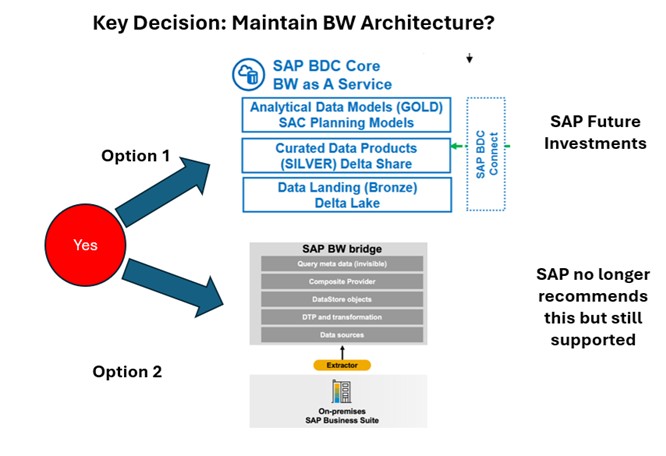
Figure 2. Available choices if you DO want to maintain the SAP BW Architecture
As shown in Figure 2, the best option for organizations that want to keep the current architecture is to implement SAP BDC Core BW as A Service within the SAP BDC platform. The second option is to use the SAP BW Bridge solution released in November 2021, to allow existing SAP BW/4HANA and BW 7.3+ customers to transition to the cloud. As of Q1 2026, SAP still supports SAP BW Bridge technology, but future SAP Investments will be directed toward SAP BW PCE. SAP would also introduce new features, such as the SAP BW Query Generator, in Q2 2026 for SAP BW PCE to improve integration with SAP BDC.
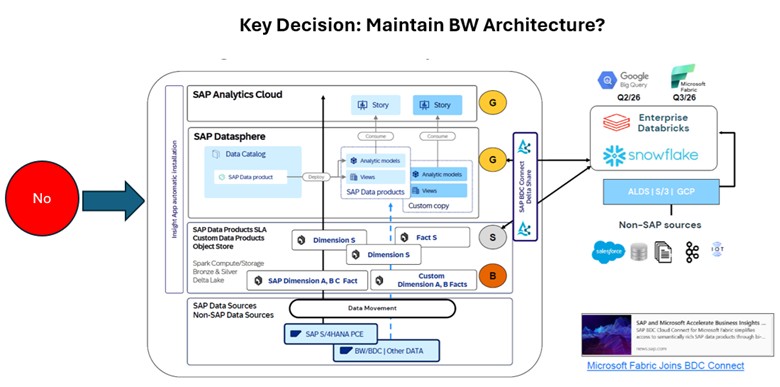
Figure 3. Available choices if you DO NOT want to maintain the SAP BW Architecture
As shown in Figure 3, if an organization decides to reconsider the SAP BW architecture, they have the support of newer and better tools for SAP Analytics & Reporting as part of the SAP BDC (Business Data Cloud) solution that include the following:
- SAP Datasphere, the direct replacement tool for all SAP BW systems.
- SAP SAC, the direct replacement of tools such as SAP BPC Planning and Integrated Planning with a financial focus. Please note that SAP offers an Integrated Business Planning (IBP) solution for supply chain planning in the cloud.
- SAP Databricks, Google BigQuery, and SAP Snowflake offer integration with these SAP partners to manage large data sets and introduce powerful AI tools within the SAP ecosystem.
- SAP has introduced the concept of Intelligent Applications to share pre-built solutions within the cloud, either from partners or created by the end user’s organization.
SAP BDC and Cloud Technologies: the new SAP frontier
Finally, organizations experiencing significant impacts on their SAP roadmaps, especially those in SAP ECC Classic Architectures, could face a situation like the one shown in Figure 4.
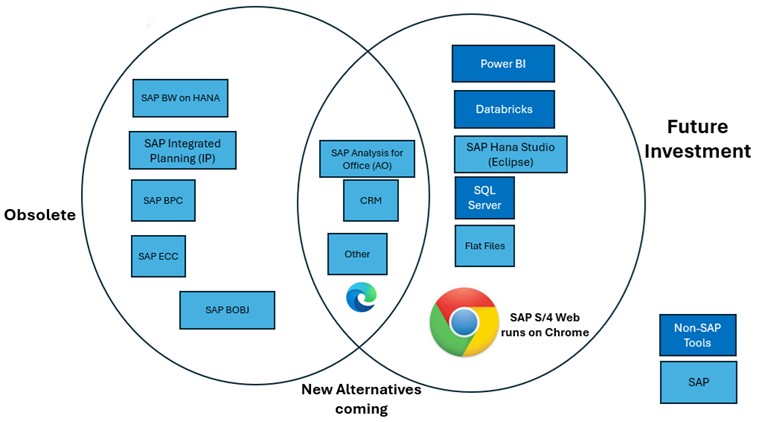
Figure 4. Example view for an SAP ECC organization with SAP BW architecture and plans to migrate to S/4 HANA
As shown in Figure 4, a significant number of SAP solutions, such as SAP BPC and SAP IP, are nearing the end of life or are already considered obsolete, with limited support. The quick solution for these cases, where SAP BW is at the core, is to migrate directly to SAP BDC without delay. With the current capabilities of SAP servers to buy and expand capacity almost overnight, SAP BDC and related technologies clearly make for a very attractive option. However, SAP has not made it easier to select cloud server sizing, memory capacities, and compute resources, since there are many variables and specific procedures involved.
Certainly, Arellius Enterprises can help, or organizations can use the SAP BDC capacity estimator to get an initial idea of their power needs.
A major advantage of the growing SAP Cloud technologies portfolio is the speed at which environments can be provisioned, scaled, and adjusted. Systems can be up and running quickly, and server configurations can often be modified almost overnight. The challenge lies in proper sizing. Achieving the right balance between performance (system speed) and annual operating cost may require careful tuning and ongoing adjustments to avoid bottlenecks or inefficiencies.
A strong example of cloud-scale performance is the NBA’s use of SAP HANA Cloud to deliver real-time, high-speed, and in-depth statistical data to fans. The platform supports more than 65 million page views and 15 million users, providing rapid access to live analytics and player-tracking information. This partnership demonstrates how massive datasets can be transformed into interactive insights at remarkable speed, significantly enhancing the fan experience.
Finally, for SAP ECC users who might be looking to improve and leverage the massive transformation efforts, Figure 5 provides a general view of other SAP cloud offerings beside the ones described in this article.
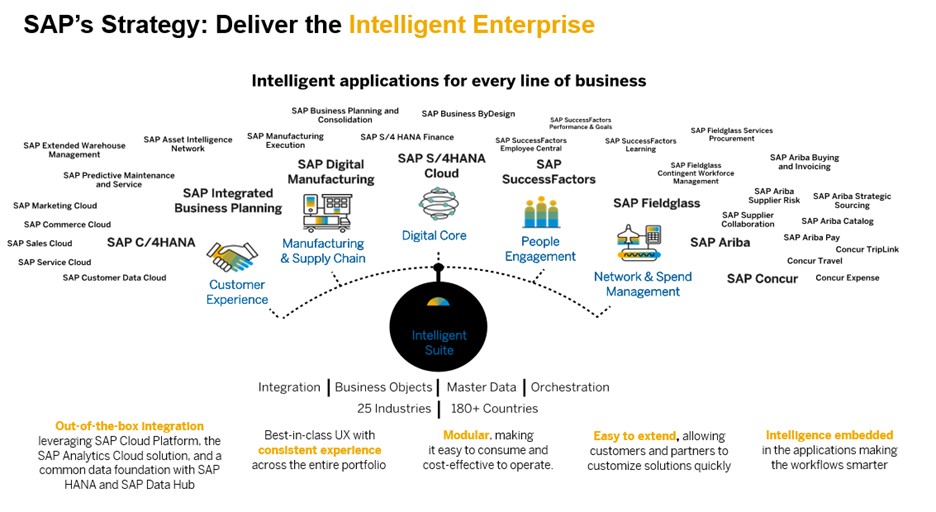
Figure 5. General Overview of the SAP Intelligence Enterprise for SAP Cloud offerings (Source: SAP)
Conclusion
The transition from SAP ECC to SAP S/4HANA, combined with the parallel evolution of SAP BW and the broader analytics landscape, represents one of the most significant enterprise technology shifts of the last two decades. This transformation is not simply a technical upgrade; it is a structural change that affects financial architecture, data models, reporting strategies, and long-term innovation capabilities. With the approaching end-of-life deadlines for SAP ECC and legacy BW environments, organizations are entering a period where decisions made today will define their operational and analytical flexibility for years to come.
The modernization journey introduces both complexity and opportunity. While system conversions, financial data restructuring, and analytics redesign require careful planning and investment, the move toward cloud-enabled platforms such as SAP S/4HANA, SAP Business Data Cloud, SAP Datasphere, and SAP Analytics Cloud opens the door to real-time insights, scalable infrastructure, and deeper integration with emerging technologies, including artificial intelligence and large-scale data processing platforms. The shift also encourages organizations to rethink legacy dependencies and evaluate whether to preserve, transform, or retire existing BW-based architectures.
Ultimately, the Great SAP Reset is about aligning the digital core with the future of enterprise intelligence. Organizations that approach this transition with a clear roadmap, realistic expectations, and a willingness to modernize both technology and processes will be better positioned to extract value from their data and remain competitive in an increasingly data-driven world.
Organizations should begin by treating the SAP ECC-to-SAP S/4HANA and BW transformation as a unified strategic initiative rather than as two separate technical projects. Financial architecture changes in SAP S/4HANA directly impact analytics, reporting structures, and data extraction methods, making early coordination between ERP, analytics, and business teams essential.
Organizations should also prioritize proper cloud sizing and performance planning. While SAP cloud platforms offer rapid scalability and deployment flexibility, incorrect capacity planning can lead to performance issues or unnecessary operational costs. Iterative tuning and phased adoption can help achieve the right balance between speed, reliability, and budget.
It is equally important to align technology decisions with long-term business strategy. Rather than replicating legacy processes in new systems, companies should use this transition as an opportunity to simplify data models, modernize reporting practices, and reduce technical debt accumulated over years of incremental enhancements.
Finally, leadership should invest in training and change management. As older technologies phase out and new platforms become the standard, building internal expertise in SAP S/4HANA, cloud analytics, and data-driven decision-making will be critical to ensuring a successful and sustainable transformation.
More Resources
See All Related Content
CDS Views: Compliant, Trusted and Reliable SAP Data ExtractionSAP's stricter data access regulations necessitate the adoption of CDS Views for compliant and efficient data extraction, with Theobald Software offering two methods, CDSFlow and ODP OData, tailored to specific user scenarios.


From Extraction to Data Product: Using SAP Metadata IntelligentlyThe webinar highlights utilizing SAP metadata and data lineage to efficiently locate data sources, automate documentation, and convert raw data into clear, usable products, thereby enhancing data transparency and enabling self-service for business units.
1 minute read

Protecting Vendor Bank and Tax Data in SAP MDG with UI Data Protection MaskingA specialist SAP architect explains how UI Data Protection Masking in SAP MDG hides vendor bank accounts for all unauthorized users and masks tax numbers only when the vendor is a natural person, using a combination of role-based and attribute-based access control.
4 minute read