6 minute read
Meet the Authors
Key Takeaways
What you need to know
SAP introduced Physical AI at TechEd 2026, extending its Autonomous Enterprise strategy into warehouses, factories and industrial operations.
SAP's approach uses business context to guide physical tasks and feeds execution results back into SAP systems for auditability, operational decisions and follow-up actions.
SAP highlighted customer use cases at Arçelik-LG, Intel and Holcim, spanning humanoid robots in warehouse operations, autonomous material movement and robotic asset inspections.
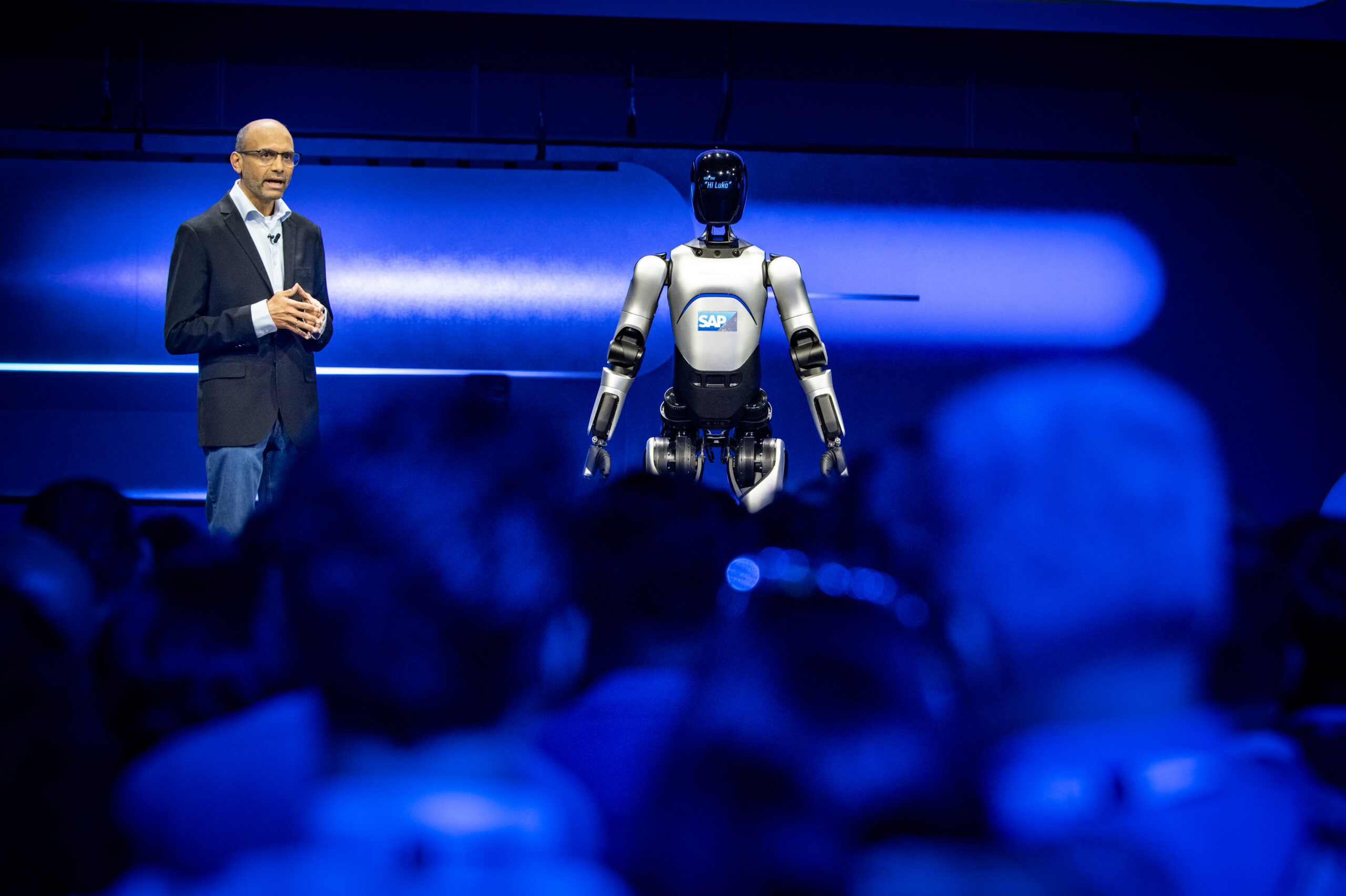
“Most physical AI helps machines act. Physical AI by SAP helps businesses act.” That is how SAP is describing its latest step toward the Autonomous Enterprise. At SAP TechEd 2026, the company revealed how it plans to connect robotic systems to enterprise data, business rules, workflows and audit records. For organizations already running SAP, it says, physical tasks can then draw on the business context, intelligence and governance they already have in place.
SAP wants physical operations and enterprise systems to share information and coordinate actions, and it is positioning itself as the orchestration and governance layer for physical AI. In SAP’s framing, linking robots and physical systems directly to the processes that run an organization makes physical execution a governed, auditable part of the business. Verified outcomes is the core idea here: SAP says results from the physical world flow back into its systems securely, where they can trigger follow-up actions.
Physical AI also introduces a new category of operational data. In an interview with SAPinsider in May earlier this year, Adelya Fatykhova, SAP’s architecture lead for embodied AI and robotics, said this data comes from robots, sensors, cameras and other devices. The aim, she said, is to combine it with business data so customers can optimize processes with a full picture of their operations.
Explore related questions
Ask SAPi
Old Integration, New Intelligence
Connecting robots to business systems is not new. Manufacturers have linked robots, warehouse management systems and ERP software for years. SAP itself documented robotic integration with Extended Warehouse Management in 2019. Its SAP S/4HANA 2022 release introduced integration services for SAP Warehouse Robotics that allowed warehouse orders to be assigned to robots, execution status to be tracked and completed tasks to be confirmed in SAP. SAP’s newer approach aims to extend these capabilities beyond individual warehouse integrations. As Fatykhova explained in May, SAP is building physical AI around shared services on SAP Business Technology Platform, where business AI agents can use robots as tools across different enterprise applications.
Those integrations already connected physical work to business records. What SAP is now emphasizing is the role of AI and business context in determining how physical tasks are initiated, coordinated, and monitored. SAP’s Physical AI capabilities are designed to create a two-way flow of information between enterprise systems and physical machines. First, SAP uses business data, such as order priorities, inventory levels and compliance rules, to determine what needs to be done and sends the task to a robot or other physical system. The machine executes the task and sends back its status, results and observations. SAP then records that information against the relevant business process, where it can trigger follow-up actions. Physical-world data can also feed into SAP Business Data Cloud as structured data to support planning and predictions. Throughout the process, SAP provides business orchestration, governance and oversight, while robotics partners handle physical execution.
Where Governance Gets Tested
SAP says that customers already running SAP can extend their existing business context and controls to physical execution, with traceability, auditability and human oversight.
SAP pointed to early deployments at TechEd. At air conditioner manufacturer Arçelik-LG, a humanoid robot executes and records inbound storage tasks. Intel ran a proof of concept at its Chengdu site in which warehouse transport tasks generated in SAP become robot missions. Holcim uses drones and quadruped robots for asset inspections that start and finish in SAP.
But are there any challenges SAP encounters in delivering physical AI? Fatykhova said, “On the technology side, key challenges include hardware readiness and certification, as well as integration. Customers expect robots to be fully integrated into their enterprise systems, not operate as standalone tools. Identifying the right use cases is also critical, since physical AI is most valuable in scenarios where tasks or environments are unpredictable.”
That last point raises another question. Physical AI is particularly useful in environments where tasks and conditions change, but those same conditions make reliable execution more difficult. SAP says its approach allows physical systems to draw on existing enterprise controls. How well those controls translate into autonomous physical operations remains to be seen.
There is also the question of customer readiness. SAPinsider’s June 2026 research found that 74% of respondents were still identifying AI use cases, experimenting or had no firm plans to use AI directly in SAP processes. Another 43% reported no AI use in SAP-related processes at all. Governance remains a concern: 37% said they had no AI-specific controls for SAP data, while 63% expressed concerns about the accuracy and reliability of AI outputs in critical processes.
While SAPinsider’s research did not examine robotics, it highlights the challenges organizations already face in bringing AI into enterprise workflows. SAP is now extending that ambition into physical operations, where system decisions can result in actual movements of materials, equipment and machines. The next test will be whether customers can integrate these capabilities into existing environments, govern their execution and demonstrate measurable results beyond individual deployments.
What This Means for SAPinsiders
- Identify where physical AI can improve existing SAP workflows. Start with processes such as warehouse material movement or equipment inspections, where delays, manual handoffs or missing operational data create measurable costs. Assess whether connecting physical systems to SAP EWM or Plant Maintenance could improve execution, reduce errors and keep business records current.
- Establish governance across business and physical systems. SAP’s approach extends enterprise context and controls to robotic execution, but organizations still need to define where SAP’s authority ends and the robot’s operational controls begin. Test how task failures, incorrect execution, human intervention and audit records are handled before allowing greater autonomy.
- Evaluate deployment maturity before scaling. SAP’s customer examples span proofs of concept and implemented use cases. Request evidence of integration with existing SAP environments, hardware compatibility, implementation costs and measurable operational outcomes. The decision to scale should depend on demonstrated improvements in accuracy, throughput, inspection efficiency or operating costs.
More Resources
See All Related Content