
4 minute read

Meet the Authors
Key Takeaways
What you need to know
PLM SAP integration remains a weak link in manufacturing, with materials, BOMs, and change records still flowing through brittle point-to-point interfaces.
eQ Technologic's eQube-DaaS platform and its library of more than 100 certified connectors helped United Launch Alliance integrate Teamcenter PLM with SAP in under three months using standard BAPIs, IDOCs, and OData services.
SAPinsider's 2025 Enterprise Integration research found only 18% of organizations achieve full real-time integration, making a decoupling layer critical during S/4HANA programs.
The product lifecycle management system and the SAP ERP core describe the same products in most manufacturing enterprises. Yet they rarely communicate effectively with each other. Materials, bills of material, change records, and classifications must flow from engineering into SAP for planning and execution, and too often that flow depends on point-to-point interfaces, manual rekeying, or brittle custom code.
eQ Technologic approaches this problem through its eQube-DaaS (Data-as-a-Service) platform, which establishes what the company calls an enterprise-wide data fabric: a connected network of integrated data, applications, and devices built on a digital backbone.
A Virtualization Layer
The eQube-DaaS platform uses a data virtualization layer to connect and aggregate data from legacy systems, modern applications, and cloud platforms, exposing it as REST, OData, or web services. It supports cloud, on-premises, and hybrid deployments and can operate as an iPaaS with containerized deployment on Kubernetes, Docker, and Red Hat OpenShift.
Explore related questions
Ask SAPi
Central to the SAP story is the company’s library of more than 100 certified connectors, which are prebuilt, API-based, upgrade-tolerant, and designed to honor the underlying application’s security model. The eQube Connector for SAP has a long certification history, having been certified as Powered by SAP NetWeaver back in 2015.
United Launch Alliance’s PLM-to-SAP Thread
The most instructive SAP evidence on the company’s site is its project for United Launch Alliance (ULA). ULA struggled with fragmented point-to-point integrations while synchronizing complex Teamcenter PLM data with SAP. The requirement was demanding: Automated creation and updating of materials, MBOMs, inspection records, and classifications in SAP, triggered by authoring events in PLM, alongside multi-system transaction management and workflow orchestration across teams.
Using eQube’s low-code approach, ULA established seamless PLM-to-ERP integration in under three months, without deploying components on the end systems. The eQube SAP Connector performed the data exchange using standard BAPIs, IDOCs, and OData services, keeping the integration aligned with SAP-supported interfaces rather than database-level shortcuts. A separate eQ Integrator case shows a similar pattern in process manufacturing, where data elements were automatically created in both Oracle Agile PLM and SAP ECC using transformation rules, with augmented data analytics sorting records into match and no-match buckets before commit.
What SAPinsider Research Says
SAPinsider research confirms how widespread, and how unresolved, this challenge remains. The Enterprise Integration for SAP 2025 benchmark found that organizations integrate an average of 36 applications with their SAP solutions while juggling more than four integration tools. Yet, only 18% have achieved full integration with real-time data flow between systems. The most common action respondents are taking is implementing an integration strategy that spans cloud and on-premises SAP and non-SAP systems (64%), a direct acknowledgment that hybrid landscapes remain the norm.
Looking ahead, SAPinsider’s ERP Migration and Transformation 2026 research shows 55% of organizations have deployed SAP S/4HANA or SAP S/4HANA Cloud. Still, only 34% have fully transitioned, which means integration layers must bridge old and new SAP cores simultaneously during multi-year programs.
For enterprise architects, the eQ Technologic model illustrates a design choice worth debating: rather than rebuilding each PLM-to-SAP interface during an SAP S/4HANA program, a virtualization and connector layer can decouple the engineering systems from the ERP transition, allowing the SAP core to move while the digital thread stays intact.
What This Means for SAPinsiders
Measure integration maturity before the S/4HANA move, not after. With only 18% of organizations achieving real-time integration across systems, an honest maturity assessment should shape the migration sequence and the middleware rationalization plan.
Favor standard SAP interfaces in every integration decision. The ULA implementation relied on BAPIs, IDOCs, and OData services, which keeps integrations supportable through upgrades and aligned with SAP’s clean core direction.
Use a decoupling layer to protect the digital thread during migration. Since most organizations run parallel ERP environments mid-transition, connector-based virtualization can keep PLM, MES, and analytics flowing while the SAP backend changes underneath.
More Resources
See All Related Content
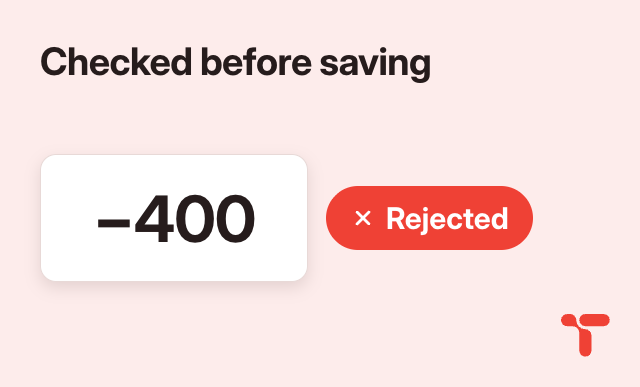
Every change validated, authorized, and on the recordEvery entry is checked against your master data before it is written, access is decided by roles down to the row, and every change is on the record in your own platform. Business data stays where it is. NextTables keeps configuration only.
1 minute read
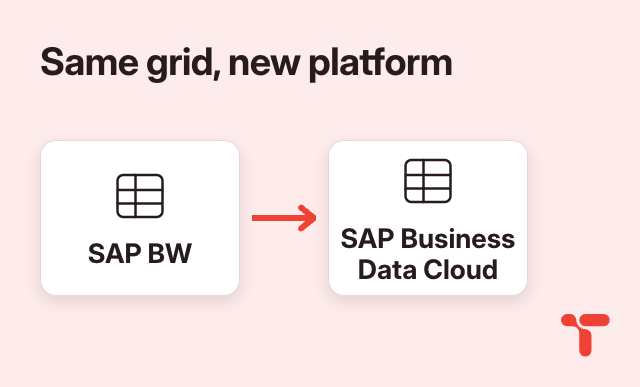
SAP BW today or SAP Business Data Cloud tomorrow: the same gridOne runs inside your SAP Business Warehouse (BW) as an add-on, the other as a service on your enterprise data platform. The grid, validation at entry, import and embedding work the same way on both. Where it runs, who signs in, and how each platform keeps changes validated, authorized and auditable is what differs.
1 minute read