
1 minute read
Meet the Authors
Key Takeaways
What you need to know
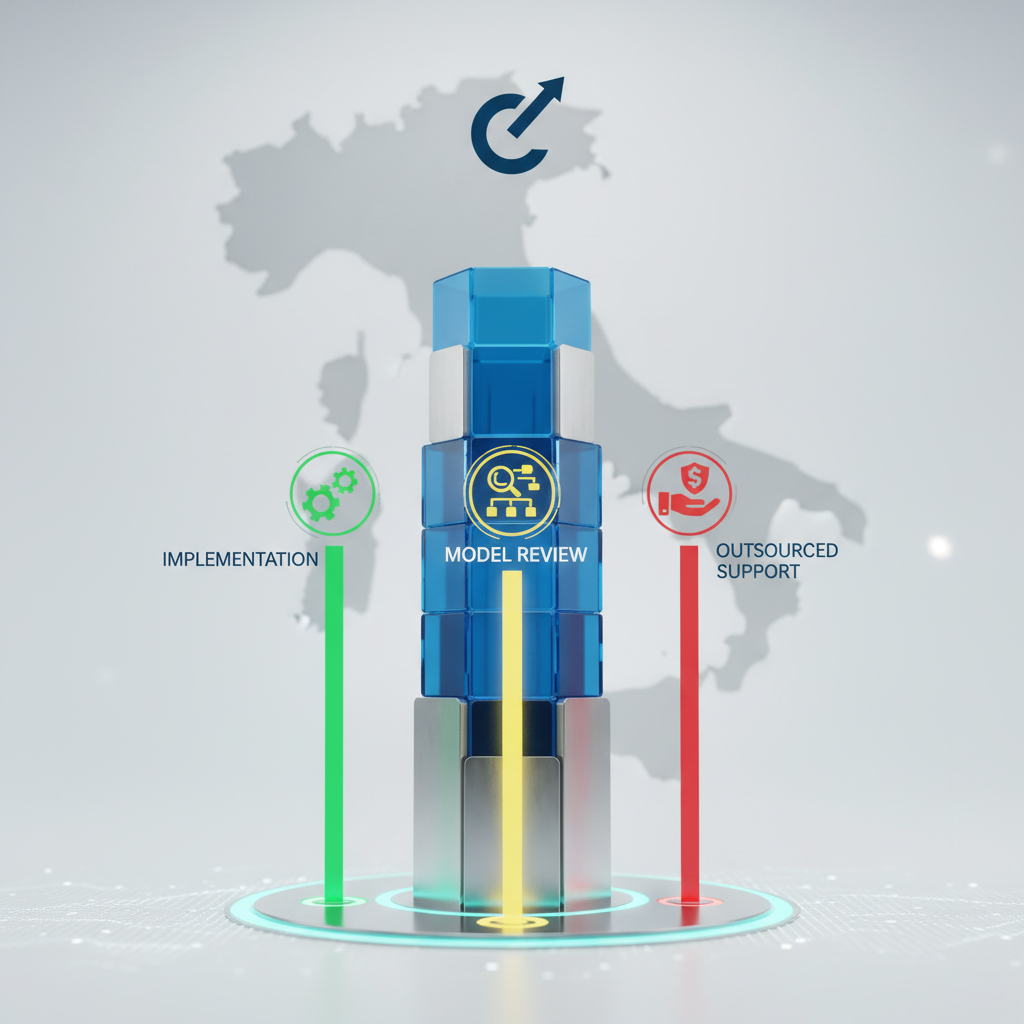
Camasia structures its SAP Controlling practice into three service lines: implementation, model review, and outsourced support, aligning with a full lifecycle approach for client engagements.
This integrated approach from Camasia helps reduce risks associated with transitioning between project phases and managing complex SAP S/4HANA migrations.
The consultancy's broad expertise across SAP Controlling sub-modules and proprietary add-ons addresses common functionality gaps, requiring careful governance planning for long-term support.
Camasia srl, a financial consultancy based in Italy, has organized its SAP Controlling practice around a stated specialization in Business Controlling, positioning itself to help clients implement and operate the SAP Controlling tools best suited to their business. The firm describes its overarching goal as helping clients build and manage what it calls their “Controlling Tower,” a term Camasia uses to describe the combination of systems, processes, and reporting that support management accounting. Camasia describes an intent to build lasting client relationships that carry through implementation, ongoing assistance, continuous improvement, and training, extending its engagements beyond a single project.
From Implementation to Continuous Improvement
Camasia organizes its work into three named service lines. The first, which it calls Build the Controlling Tower, covers the design and implementation of Management Control systems within SAP R/3 and S/4HANA projects and roll-outs. The second, Improve Controlling tools, covers reviewing and evolving an existing Controlling model, along with new tools, maintenance, and reporting. The third, which Camasia calls Co-pilot, covers Controlling closing support, training, and outsourced assistance.
The three-part structure reflects a lifecycle view of SAP Controlling work, with initial implementation followed by periodic review and then by ongoing operational support. Organizations that move between SAP R/3 or ECC and SAP S/4HANA often need to reconcile classic Controlling functionality, including margin analysis, with the Universal Journal data model that SAP S/4HANA introduced. A provider positioned across both implementation and ongoing review is better placed to manage that kind of transition without bringing in a separate partner for each phase. Bundling initial deployment with longer-term run and reporting support is a pattern seen broadly across SAP consulting, and Camasia’s three service lines map closely onto that pattern.
Explore related questions
Ask SAPi
The firm frames its client relationships in these terms directly, describing its goal as building lasting relationships through implementation, assistance, continuous improvement, and training that extend past a single project. That framing extends to the model review in the middle of the three service lines, where Camasia positions itself to revisit a client’s Controlling setup after go-live.
Coverage Across the SAP Controlling Toolset
Camasia lists coverage across core SAP Controlling sub-modules, including Cost Center Accounting, Internal Orders, and Product Costing Actual through Material Ledger. Its scope also extends to Business Planning and Consolidation and Activity-Based Costing, among other Controlling tools it supports. The firm attributes this breadth to specialization matured through the implementation of many complex projects, which it says allows it to recognize and use the full range of possibilities the SAP standard offers.
SAP Controlling functions as the module family for internal management accounting, covering cost centers, internal orders, and product costing, in contrast to Financial Accounting, which is oriented toward external and statutory reporting. Business Planning and Consolidation is commonly used for group-level financial planning and consolidation, and it is increasingly discussed alongside newer planning capabilities embedded directly in SAP S/4HANA. Activity Based Costing is often cited among SAP practitioners as complex to configure and maintain, which is one reason some organizations underuse it without dedicated support.
Camasia states that it offers in-house add-ons to cover specific issues, positioning them as extensions of standard SAP Controlling functionality. The existence of these add-ons suggests the firm has identified recurring gaps in standard functionality through repeated client work, gaps consistent enough across engagements to justify building supplementary tools.
What This Means for SAPinsiders
A single provider spans build, improve, and run. Structuring engagement around implementation, model review, and outsourced support reduces the need to onboard a new partner at each project phase. That lowers handoff risk for teams running ongoing Controlling operations across system transitions.
Sub-module breadth signals readiness for complex landscapes. Coverage across Cost Center Accounting, Business Planning and Consolidation, and Activity Based Costing suggests capacity to support multi-entity cost and profitability structures. Buyers evaluating specialists for these needs may weigh that breadth as a proxy for depth of fit.
In-house add-ons require governance planning. Custom tools built to cover gaps in SAP standard functionality create long-term dependencies that internal teams must track. SAP customers should clarify support, upgrade, and knowledge-transfer expectations before relying on any vendor-built add-on.
More Resources
See All Related Content


Caleo Consulting Turns SAP EC-CS’s Fading Support Into a Group Reporting Migration Playbookcaleo consulting gmbh helps finance teams navigate the shift from legacy SAP EC-CS to SAP S/4HANA for Group Reporting. Leveraging two decades of experience, the German consultancy also integrates ESG reporting into its consolidation and group reporting services.
3 minute read