5 minute read
Meet the Authors
Key Takeaways
-
SAP is transforming New York Fashion Week by integrating its enterprise software to create a connected platform that links designers, consumers, and commerce in real time, enabling a more seamless shopping experience.
-
This shift matters because it democratizes access to advanced retail technologies for emerging designers and addresses structural challenges in fashion retail, allowing brands to develop direct-to-consumer strategies and enhance customer relationships.
-
The collaboration between SAP and N4XT Experiences impacts the entire fashion industry, establishing an operational backbone for cultural events and showcasing how enterprise-level data can empower creativity and innovation across various brands.
When SAP first appeared around New York Fashion Week, most of the fashion industry did not know what it was. Now, the company is positioning itself as the digital backbone behind how the event operates, sells, and scales. Its partnership with N4XT Experiences is set to transform Fashion Week in 2026 from a series of shows into a connected platform that links designers, consumers, and commerce in real time.
The shift reflects a deliberate strategy. SAP had previously sponsored LA Fashion Week in 2023, but discussions intensified after N4XT took over production of New York Fashion Week from IMG in 2025 and presented a plan for a more integrated, experience-driven model. By fall 2025, the companies were mapping a deeper collaboration, and within less than two months they built the Retail Innovation Lab at NYFW Collections that debuted this season.
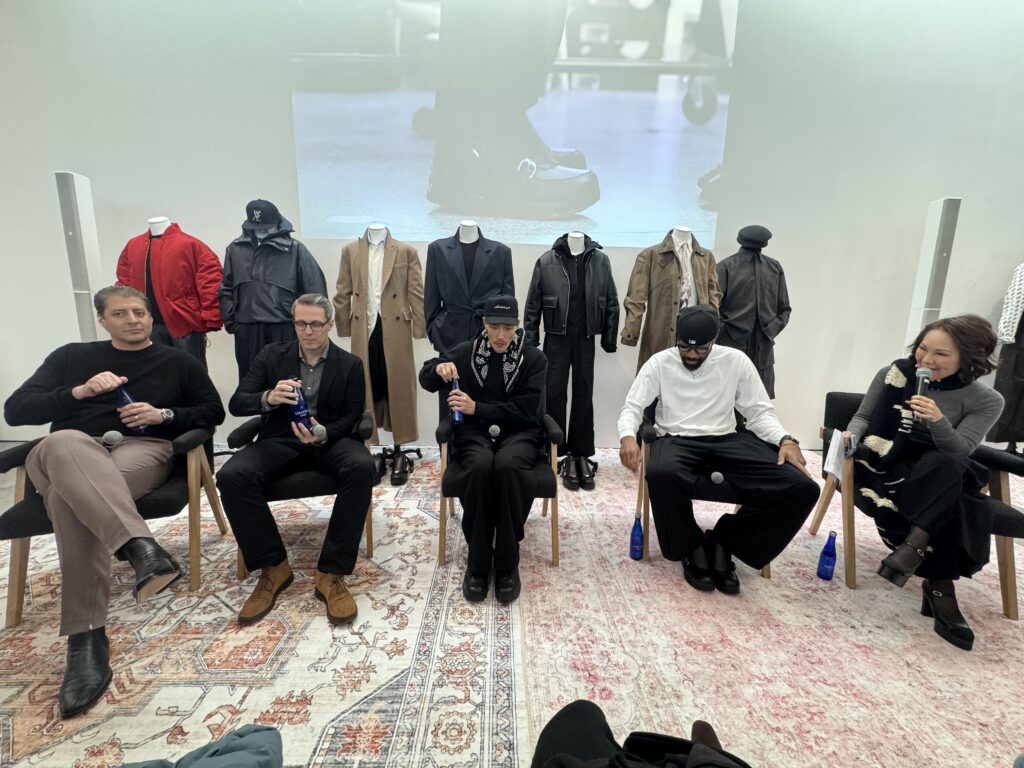
On February 12, SAPinsider attended the invitation-only launch event, which included a live technology walkthrough and a panel discussion featuring Imad Izemrane, CEO of N4XT Experiences; fashion designers Maxwell Osborne and Dao-Yi Chow, co-founders of Public School; and Jan Gilg, global president of customer success, Americas, at SAP.
Explore related questions
The Technology Layer Behind Fashion Week
On stage, Gilg framed SAP’s role plainly. “What we do is build business software for enterprises,” he said. “We help companies run their operations, including finance, supply chain, marketing, and more.”
Retail is one of SAP’s largest industries. “We have over 400,000 customers, and the largest brands in the world are using SAP,” Gilg noted. What most people in the room did not realize, he added, is that SAP also operates extensively in what he described as the “front office.”
In the Fashion Week context, SAP powers the physical environment into which visitors walk. Screens, product displays, and interactive tools in the Lab all draw from centralized enterprise data, while product information, pricing, materials, and availability flow from backend systems into customer-facing interfaces.
“At the end of the day, it’s all about data,” Gilg said. “That’s our core competency—data that runs businesses.”
In a fully enabled scenario, this data layer, backed by smart technologies such as AI-enabled cameras and RFID tags, supports automated checkout because product and transaction information are linked. For SAP, this is an extension of its core competency: managing enterprise data and turning it into usable operational intelligence.
Real-Time Retail Environment
The Retail Innovation Lab is a live environment rather than a showroom prototype. AI-enabled cameras analyze anonymized movement patterns to understand where visitors walk, what they interact with, and how long they engage with specific products. The system uses faceless and skeletal modeling rather than personal identification, allowing behavioral insights while maintaining privacy.
“We collect all this information to put together a comprehensive profile of the customer,” Gilg explained, referring to how in-store data is comparable to online behavior such as cart abandonment patterns. That real-time data capture in turn feeds analytics engines that help brands optimize layout, merchandising, and inventory decisions. The goal is a store that adapts continuously instead of relying on static merchandising assumptions.
For designers, especially smaller labels, this level of data visibility has historically been inaccessible. Public School’s founders noted that tools like these were once reserved for global luxury houses.
“Five years ago, this was never going to be available to independent emerging brands,” Osborne said. “Now you don’t need to be Louis Vuitton or Chanel to have this kind of technology to support your business.” SAP is extending accessibility to emerging brands trying to understand customer behavior across channels.
Why N4XT Needed SAP
N4XT Experiences operates as a production and infrastructure platform for fashion events, owning both New York Fashion Week Collections and LA Fashion Week. Its model differs from traditional show organizers: It provides venues, production, logistics, and operational support to designers at no cost, funding operations instead through sponsorship and partnership activations.
“We created a business model that addresses all the needs of different designers in different ways,” Izemrane explained. That approach requires technology capable of coordinating designers, venues, scheduling, retail activation, and eventually digital aggregation. “What we need to do with New York Fashion Week is embrace technology and position ourselves at the forefront of bridging the real world and the digital world.”
Izemrane added that building a unified digital layer is central to N4XT’s long-term plan. Together with SAP, N4XT is developing a platform intended to aggregate Fashion Week participants into a single connected environment spanning physical events and digital engagement.
Retail Pressure is Accelerating the Shift
The urgency behind the partnership is tied to structural changes in fashion retail. Public School’s founders spoke candidly about wholesale payment cycles and cash flow challenges.
“It’s frustrating all around,” Chow said, describing delayed payments from retailers. Osborne added that crushing cash cycles and extended payment timelines were part of why the brand previously stepped back from the runway.
The response now is a stronger emphasis on direct-to-consumer models and closer customer relationships. “The wholesale model just feels broken,” Chow said.
Technology makes that shift viable. “Consumers are not not spending money,” Izemrane said. “They’re just doing it in a different way.” But for direct-to-consumer strategies and closer customer relationships to truly flourish, data visibility and operational coordination are needed—that is the gap SAP has positioned itself to fill.
From Event Sponsor to Ecosystem Enabler
Instead of treating Fashion Week as a branding opportunity, SAP is using it as a live deployment environment. The Retail Innovation Lab shows how enterprise systems can operate behind cultural platforms, connecting product data, supply chain information, customer behavior, and transactional intelligence in real time.
For N4XT, SAP provides the infrastructure required to redesign how Fashion Week functions. For designers, it delivers enterprise-grade capabilities without enterprise-scale overhead. And for the ERP industry, it shows how its technology can operate beyond traditional enterprise environments.
If the collaboration succeeds, the most important outcome may not be the AI-enabled cameras, smart mirrors, or RFID tags, but the precedent: global cultural events becoming operational platforms powered by ERP systems.
What This Means for SAPinsiders
SAP is showcasing industry infrastructure in a live environment. By running operational systems inside New York Fashion Week, SAP demonstrated how its platform can power an entire ecosystem. The Retail Innovation Lab serves as visible proof of enterprise data, analytics, and experience integration functioning in real time.
Front-office experiences now depend on core enterprise data. The Lab also illustrates how customer-facing innovation is inseparable from backend systems. For SAP customers, this reinforces the architectural reality that retail experience innovation depends on clean, unified enterprise data foundations.
Industry platforms are becoming strategic expansion zones. With the N4XT partnership, SAP is extending its influence into a vertically concentrated ecosystem. As industries digitize their event, commerce, and engagement layers, enterprise platforms that unify operational and experiential data will increasingly carry competitive advantage.
More Resources
See All Related Content
SAPinsider Las Vegas: Cloud Data Strategy Becomes Operational Discipline for SAP LeadersSAP technology executives must view cloud data migration as an ongoing operational discipline, integrating scalability, security, cost control, and governance into daily practices to enable real-time analytics, while transitioning to S/4HANA cloud involves strategic phased migrations.
SAP, UnternehmerTUM Bringing Embodied AI to Shop FloorSAP's collaboration with UnternehmerTUM on the SafetyGuard prototype exemplifies the integration of embodied AI in operational processes to enhance workplace safety, streamline inspection workflows, and foster co-innovation for rapid prototyping, signaling a shift towards AI-native, robot-agnostic platforms within SAP's digital ecosystem.
3 minute read

The Deutschland Stack: Bridging the Gap Between AI Compute and SAP Business ValueDeutsche Telekom and SAP’s Industrial AI Cloud is more than a sovereign cloud pitch. Discover how the Deutschland Stack positions SAP as the operational control plane for digital twins, quality inspection, and sustainable industrial AI.
3 minute read

CCH Tagetik: Modernizing Financial Close on SAPCCH Tagetik on SAP HANA supports financial close, consolidation, and planning directly on SAP data. The platform integrates with S/4HANA and legacy systems, reducing reliance on separate data pipelines and enabling finance processes to operate closer to SAP data structures.
4 minute read