
1 minute read

Meet the Authors
Key Takeaways
What you need to know
SAP’s new business transformation maturity assessment gives enterprises a self-service, web-based way to measure transformation readiness across strategy, process excellence, technology foundations and change capability, replacing intuition with a quantified baseline for S/4HANA migration and AI-driven modernization.
The assessment matters because it identifies maturity gaps, prioritizes actions and links results to SAP Signavio process mining, automation opportunities and best practices, helping CIOs and transformation leaders decide where to start, how to sequence initiatives and whether to pursue brownfield, selective data transition or greenfield S/4HANA approaches.
This impacts CIOs, enterprise architects, transformation offices and SAP customers evaluating partners, because the maturity scorecard can be used in RFPs, board discussions and ongoing performance tracking to align roadmaps, KPIs and investment decisions with documented readiness and measurable business outcomes.
SAP introduced a business transformation maturity assessment tool designed to help organizations quickly determine how prepared they are for large scale change programs and to identify the gaps that block value realization. For CIOs, transformation leaders and enterprise architects facing S/4HANA migrations and AI driven modernization, the tool offers a structured way to move conversations from vague aspirations to data backed roadmaps.
Self-Service Assessment Turns Intuition into a Quantified Baseline
The transformation maturity assessment is a self service, web based questionnaire that guides leaders through key dimensions such as strategy alignment, process excellence, technology foundations and change capabilities. In a short session, organizations receive a maturity scorecard that benchmarks their current state, highlights weak spots and proposes prioritized actions, giving executives a consistent baseline to use in steering investments and board discussions.
For day to day work, this means program offices and architecture teams spend less time inventing their own frameworks and more time acting on a common view of readiness across business units and regions. The output can inform which initiatives should start first, where sponsorship is lacking and how to phase effort between quick wins and foundational projects such as process standardization or data cleanup.
Explore related questions
Ask SAPi
The assessment is underpinned by SAP Signavio’s transformation capability model, which connects maturity levels directly to process mining insights, automation opportunities and best practices drawn from SAP’s global customer base. Instead of treating maturity as an abstract score, the tool links results to specific recommendations inside the Signavio portfolio, including which processes to analyze, standardize or redesign to reach the next stage.
Strategic Implications for S/4HANA and AI-Driven Programs
SAP positions the maturity assessment as a front door for organizations that want to accelerate transformation without losing control of risk and cost. By segmenting companies into clearly defined maturity stages, the tool helps differentiate between those still exploring basic process visibility and those ready to scale continuous improvement, AI and automation across the enterprise.
For S/4HANA programs, this provides critical context when choosing between brownfield, selective data transition and greenfield approaches. A lower maturity score around process governance or data quality may suggest investing in harmonization and Signavio led process discovery before committing to aggressive timelines, while higher maturity organizations can move faster and focus on innovation scenarios.
The tool also complements SAP’s FLASH digital maturity assessment for broader enterprise benchmarking and the SAP BTP maturity assessment that targets platform usage, creating a family of diagnostics that can be used together. Executives evaluating transformation partners can use these assessments as a neutral baseline for RFPs, asking providers to align roadmaps and KPIs with documented maturity findings instead of generic best practice slides.
Ultimately, the assessment encourages a shift in leadership behavior from one time “readiness checks” to ongoing measurement. As organizations repeat the survey over time, they can track how investments in process excellence, cloud platforms and AI capabilities translate into higher maturity levels and tangible business outcomes such as cycle time reduction or improved margin.
What This Means for SAPinsiders
Maturity data will anchor transformation roadmaps. SAP’s new assessment means SAP programs can replace intuition with quantified readiness baselines that guide S/4HANA approaches, AI pilots and portfolio sequencing across business units and regions.
Diagnostics frameworks will shape partner selection. By using SAP’s maturity outputs in RFPs, enterprises can demand that GSIs and advisors align proposals, milestones and KPIs to specific gaps instead of selling generic templates or one size fits all journeys.
Continuous measurement becomes a leadership discipline. Repeating the assessment over time encourages executives to treat transformation maturity like a tracked KPI, linking process, platform and talent investments to measurable improvements rather than one off program launches.
More Resources
See All Related Content
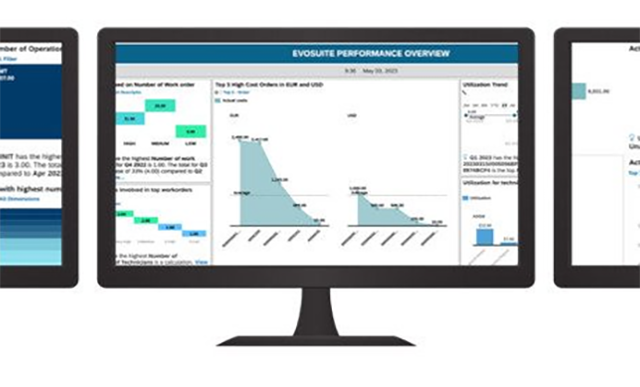
SAP Analytics CloudEvoSuite - Performance Overview demonstrates how organizations can unlock the value of maintenance data by combining SAP EAM information with AI-powered analytics in SAP Analytics Cloud. The solution delivers out-of-the-box reporting and operational insights that help improve maintenance planning, workforce utilization, equipment management, and cost control.
1 minute read

Enterprise Data UnificationA global semiconductor leader transformed their data and processes across supply chain, finance, and manufacturing for SAP S/4HANA. Tessera's high-capacity processing and AI mapping capabilities were crucial for this large-scale data validation, migration, and transformation.
1 minute read