
1 minute read

Meet the Experts
Key Takeaways
What you need to know
SAP and Palantir are shifting enterprise AI from isolated copilots to governed operational execution, where AI can reason over live business context and trigger actions inside real workflows. This matters because it improves speed, traceability, and compliance, and it primarily impacts SAP-heavy enterprises, finance operations, and regulated industries that need trustworthy automation.
The biggest architectural change is the rise of a semantic context layer, driven by Palantir Ontology and Foundry, that connects SAP transactional data with cross-system business relationships, policies, and actions. This matters because AI needs context, not just content, and it impacts enterprises with fragmented ERP estates, complex supply chains, and decisions that span SAP and non-SAP systems.
Runtime governance is becoming a core part of AI architecture, with Palantir Apollo and SAP’s governed workflows focusing on deployment control, permissions, policy enforcement, and continuous monitoring. This matters because enterprise AI must be safe in production, and it impacts vendors, system integrators, and service partners that now need expertise in ontology design, agent governance, and AI-ready operating models.
The SAP and Palantir story is worth taking seriously, but not for the usual event-driven reasons. The real signal is architectural: SAP is pushing deeper into governed enterprise execution, while Palantir is positioning itself as a cross-system operational intelligence layer that can model context, support AI reasoning, and coordinate action across fragmented enterprise estates.
That matters differently depending on where someone sits. For end users, the question is whether work gets simpler, faster, and more intelligent without becoming less trustworthy. For vendors and service partners, the opportunity shifts away from generic implementation work and toward ontology design, agent governance, decision orchestration, runtime control, and AI-ready operating models.
The market signal beyond Sapphire
Explore related questions
Ask SAPi
Sapphire 2026 made the partnership visible, but the more important signal is the broader market direction. Enterprise AI is moving away from isolated copilots and toward architectures where models are embedded in real workflows, grounded in live business context, and constrained by policy. In other words, the next competitive battleground is no longer whether AI can generate language, summarize screens, or surface anomalies. It is whether AI can operate safely inside real enterprise systems where transactions, approvals, compliance rules, and cross-functional dependencies actually matter.
That is exactly where SAP and Palantir begin to intersect. SAP is extending AI into business process execution through Joule, embedded workflows, and domain-specific agents. Palantir is extending AI into enterprise-wide decisioning through Foundry, AIP, and Apollo, with the idea that AI becomes useful only when it can reason across multiple systems, understand business relationships, and act within a governed control plane. The overlap is not accidental. Both respond to the same market demand: enterprises want AI that can move from recommendation to action without losing traceability, governance, or operational trust.
The architecture underneath the headlines
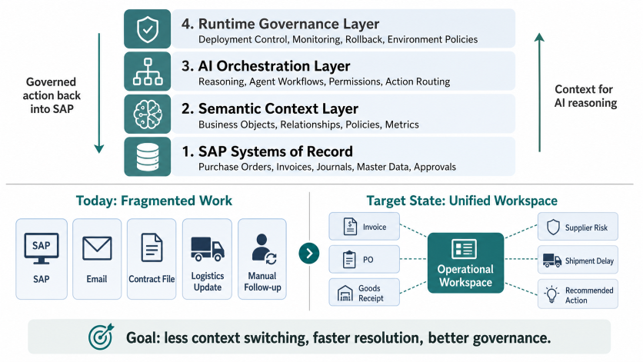
The cleanest way to understand the combined design is to break it into four layers: systems of record, semantic context, AI orchestration, and runtime governance.
At the systems-of-record layer, SAP remains the transactional backbone. This is where legal and financial truth is established. Purchase orders are approved, invoices are posted, journal entries are booked, supplier master records are maintained, and workflows follow formal authorization paths. In architectural terms, this layer is optimized for consistency, integrity, auditability, and deterministic execution. It is not designed to hold every possible signal needed for decision-making, but it is the place where high-value business actions must ultimately land.
The semantic-context layer is where Palantir becomes relevant. Foundry is not simply ingesting data into a reporting repository. Its real architectural contribution is the Ontology, which creates a machine-readable representation of business using objects, relationships, states, metrics, policies, and available actions. Instead of treating enterprise systems as disconnected applications with separate tables and APIs, Ontology attempts to model the enterprise as an operating graph. A supplier is no longer just a vendor record in SAP; it becomes a contextual object linked to contracts, invoices, risk indicators, logistics delays, performance history, and downstream financial impact.
This is a significant design shift. Traditional enterprise architecture often separates operational systems, analytical warehouses, workflow engines, and AI tools into different silos. The SAP-Palantir pattern suggests a more integrated operating model where transactional truth remains in SAP, but operational context is assembled across the wider landscape so that reasoning and action can happen against a richer model of reality.
Why the semantic layer matters technically
A great deal of enterprise AI still fails because the model sees content but not context. It can summarize a contract, classify a ticket, or answer a question, but it cannot reliably determine which business object is authoritative, which downstream process will be affected, what policy constraints apply, or what action is even allowed.
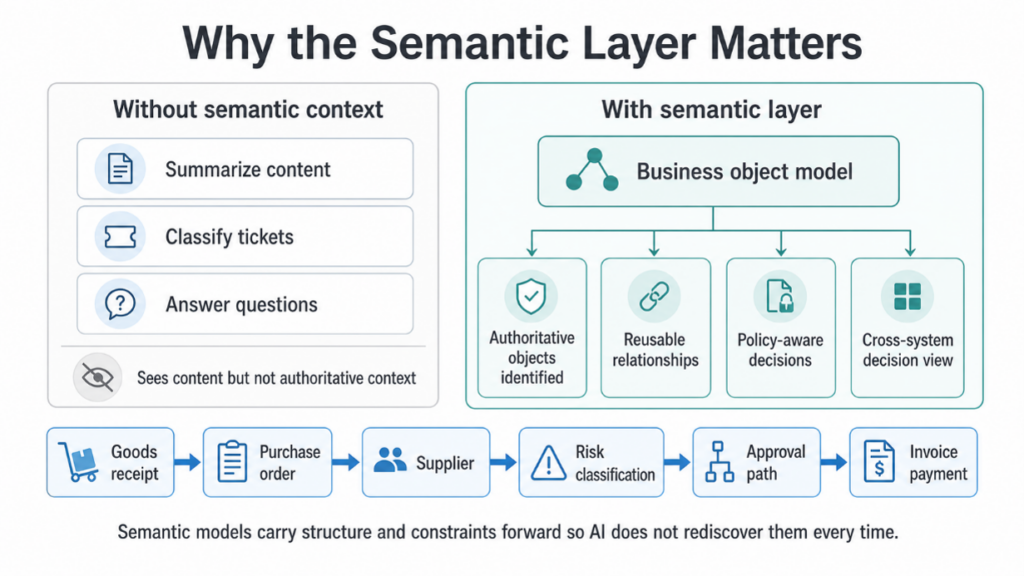
That is where a semantic layer changes the design. In a well-built ontology-driven architecture, business objects are not only defined once; they are reused across workflows, AI agents, dashboards, exception handling, and operational applications. Relationships between those objects also become reusable. That means an AI workflow does not have to rediscover, every time, that a goods receipt connects to a purchase order, which connects to a supplier, which is subject to a risk classification, which changes the approval path, which affects whether an invoice can be paid. The semantic model carries that structure forward.
For SAP-heavy enterprises, this matters because many important business decisions spill beyond SAP’s own boundaries. A close exception may depend on a file received from a bank, a transportation delay from a logistics provider, an attachment in a shared drive, a risk flag from a compliance platform, and a cost allocation rule in SAP. If AI is asked to assist with that decision, it needs more than API access. It needs a usable model of the decision environment.
How AIP changes the AI design pattern
AIP is important because it shifts AI from interface-level assistance to operationally governed execution. Most enterprise AI discussions still focus on the front end: a chat window, a copilot, a summarizer, a smart search layer. Those are useful, but they are not architecture.

Architecture begins when AI interacts with permissions, actions, and stateful processes. AIP is designed around that middle layer. It connects large language models and other AI services into enterprise workflows through a governed environment where data access, object access, allowed actions, and evaluation logic can all be controlled. This is the difference between asking an LLM to comment on an invoice discrepancy and allowing an AI agent to investigate that discrepancy across contracts, shipments, prior exceptions, and policy rules before routing a recommendation into a formal approval workflow.
Technically, that raises the bar considerably. The system now needs identity-aware access to the right business objects, strong mappings between prompts and operational context, a way to constrain outputs to permitted actions, and a control mechanism for handling confidence thresholds, escalations, retries, and exception states. It also needs evaluation and monitoring, because enterprise AI cannot be governed as a one-time deployment. It has to be observed continuously, tuned against outcome quality, and measured against operational accuracy, risk, and business impact.
This is one reason the SAP-versus-Palantir framing is too simplistic. SAP is strongest when AI is deeply embedded inside known business workflows and controlled application boundaries. Palantir is strongest when the decision logic has to span multiple systems, data types, and organizational domains. In practice, many enterprises will need both patterns at once.
Apollo and the runtime control problem
Apollo deserves more attention than it usually gets because deployment architecture is now part of AI architecture. In earlier enterprise software eras, infrastructure and application design could often be treated as adjacent topics. With governed AI, that separation becomes harder to maintain.

If models, agents, and data pipelines are expected to run across public cloud, sovereign cloud, private infrastructure, plant-level environments, or even air-gapped networks, then runtime control becomes a first-order design issue. That includes release propagation, environment-specific policy enforcement, rollback controls, package dependencies, observability, credential rotation, and failure-domain isolation. In short, the enterprise must know not only what the AI is allowed to do, but where it is running, how it is updated, and what happens when behavior deviates from expectation.
This matters especially in sectors where SAP already operates as part of a highly regulated backbone. Manufacturing, energy, pharmaceuticals, defense-adjacent environments, and critical infrastructure operators often cannot adopt AI through a pure SaaS mindset. They need deployment flexibility and operational control that matches their risk model. That is where Apollo becomes more than a DevOps story; it becomes part of the platform trust model.
SAP’s side of the technical equation
On SAP’s side, the key technical context is that autonomous process execution only works when core process design is strong enough to support it. That starts with clean-core discipline, stable integration patterns, standardized business rules, role design, and master data quality. If those elements are weak, AI simply scales confusion faster.

This is especially important in SAP landscapes because process integrity depends on configuration as much as on data. Document types, posting logic, release strategies, substitution rules, tolerance settings, derivation logic, and segregation-of-duties constraints all shape what the system treats as valid. An AI layer sitting above SAP must either understand these constraints explicitly or route decisions back into execution paths where those constraints are enforced automatically.
That is why the phrase “governed execution” matters. In enterprise architecture, action is not truly governed just because it was recommended by a model that saw the right data. It is governed when identity, authorization, policy, traceability, and process integrity all remain intact from recommendation through execution. SAP is naturally strong in the final execution step. The design challenge is ensuring that everything leading up to that step carries the same discipline.
What end users would actually feel
From the end-user point of view, all this technical depth only matters if it improves the shape of work. A good architecture should reduce context switching, shorten exception cycles, and make cross-system tasks feel more coherent.

Take finance operations as an example. A user investigating an invoice hold today may need to open SAP, review procurement history, check a supplier email, look at a contract, confirm whether the goods receipt posted correctly, and ask someone in logistics why a shipment was delayed. In a more mature SAP-plus-Palantir architecture, that user could be working from an operational workspace where the relevant business objects, relationships, anomalies, and recommended actions are assembled in one place. The user is not merely shown data faster; the system presents a governed path to resolution.
That is the difference between AI as convenience and AI as operating leverage. Convenience helps users move faster inside existing fragmentation. Operating leverage reduces the fragmentation itself.
What vendors need to understand
For vendors and service providers, architecture creates both opportunity and pressure. The opportunity is obvious: customers now need help designing cross-system semantic models, governance frameworks for agents, evaluation mechanisms, action-control patterns, and hybrid deployment strategies. The pressure is that generic claims about AI enablement will not be enough.

System integrators will need deeper capability in process instrumentation, ontology mapping, policy engineering, and runtime governance. Middleware providers will have to explain how their offerings complement or compete with ontology-centered operating models. Data governance vendors will need a stronger answer for how cataloging, lineage, and stewardship connect to real-time operational AI. Application vendors will face a harsher question: are they adding intelligence to a feature set, or are they strengthening a meaningful layer in the enterprise operating architecture?
This is where the market gets more technical very quickly. The real differentiation will come from design patterns, not slogans. Vendors that understand object models, event flows, action constraints, identity propagation, model evaluation, and deployment control will have a much stronger story than those still selling AI as a feature bundle.
Where the architecture fits best
The joint architecture looks strongest in organizations with one or more of the following conditions: multiple ERP instances, high process fragmentation, strict regulatory constraints, large volumes of unstructured operational information, or decision processes that regularly span SAP and non-SAP systems.
That includes post-merger enterprises, global manufacturers, energy companies, regulated supply chains, and large finance organizations where close and compliance decisions depend on data from many operational domains. In these environments, the value is not simply in faster reporting. It is in creating a governable decision layer that can coordinate work across fragmented infrastructure without bypassing the transactional backbone.
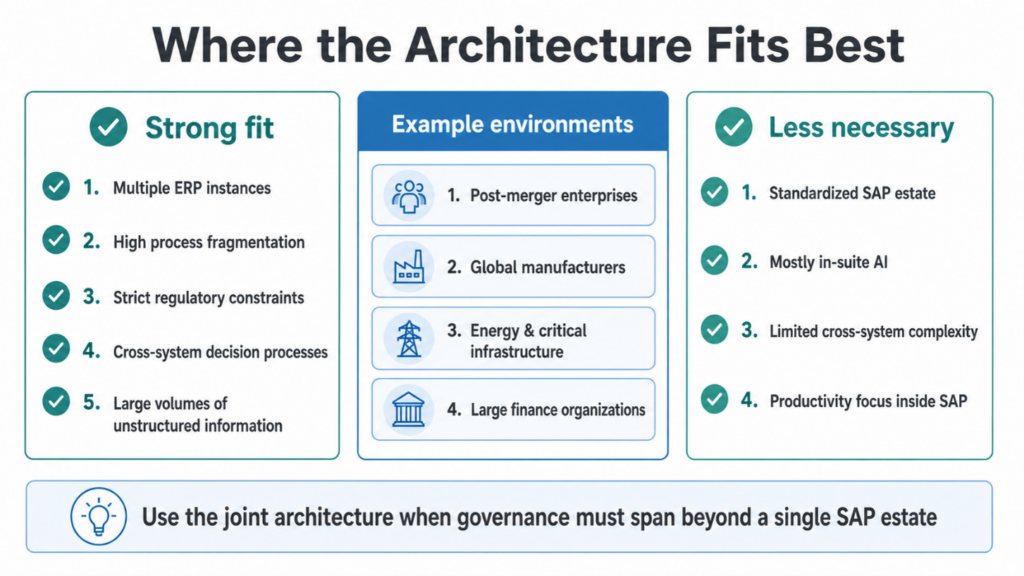
At the same time, not every customer needs that level of architecture. Enterprises with relatively standardized SAP estates and mostly in-suite AI ambitions may get more value from staying close to SAP’s native roadmap. If the problem is primarily workflow productivity inside SAP-controlled boundaries, the additional semantic and operational layer may add more complexity than benefit.
What does this means now
The market is getting louder, but the real issue is fairly clear. SAP is trying to make enterprise processes more AI-native from within the core, while Palantir is trying to make enterprise decisioning more context-rich and operationally intelligent across the broader landscape.
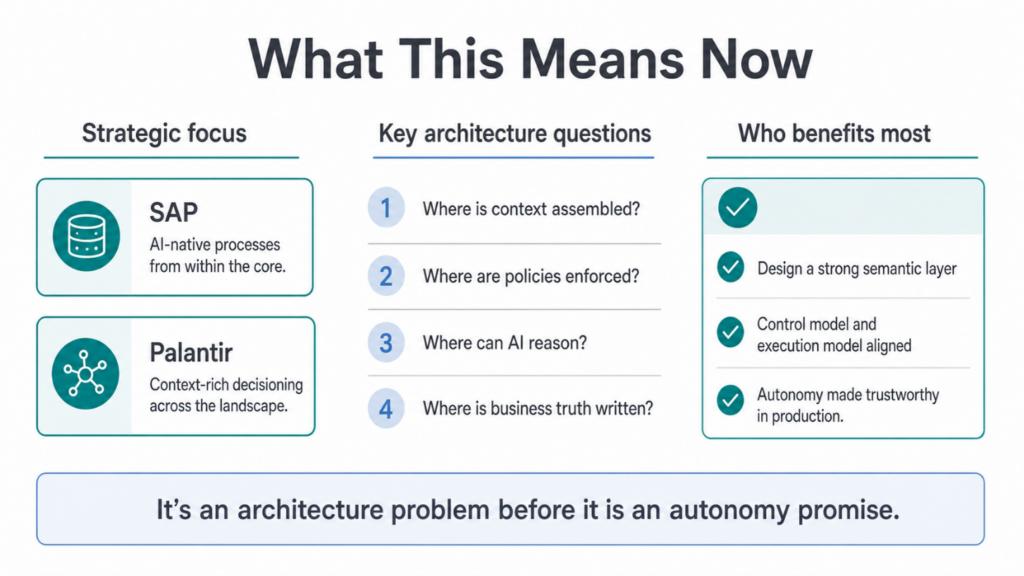
That is why this should be understood first as an architecture question. It is about where context is assembled, where policies are enforced, where AI is allowed to reason, where actions are constrained, and where business truth is ultimately written. The companies that benefit most will not be the ones that talk most confidently about autonomous operations. They will be the ones that design the semantic layer, control model, and execution model carefully enough to make autonomy trustworthy in production.
More Resources
See All Related Content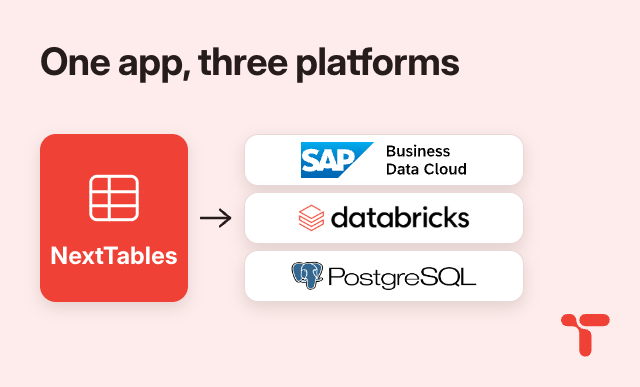
One data maintenance app, three enterprise data platformsBuild data maintenance apps, guided for business teams, trusted by IT. Business teams update their own data, with validation at entry, role-based authorization down to the row, and an audit log of every change stored inside your data platform.
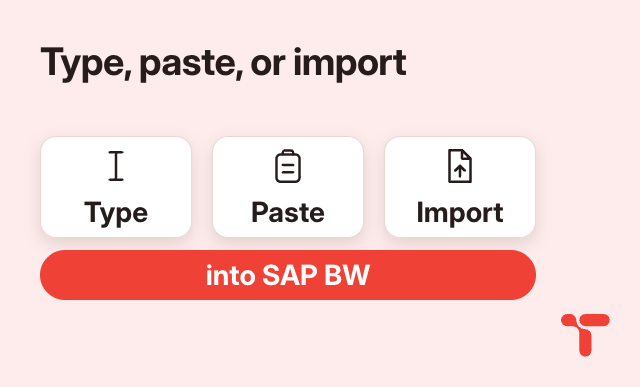

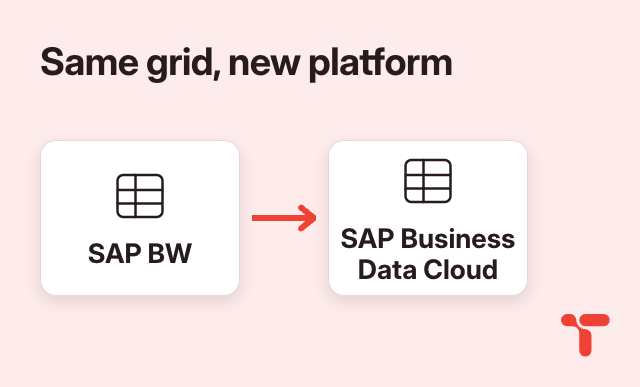
SAP BW today or SAP Business Data Cloud tomorrow: the same gridOne runs inside your SAP Business Warehouse (BW) as an add-on, the other as a service on your enterprise data platform. The grid, validation at entry, import and embedding work the same way on both. Where it runs, who signs in, and how each platform keeps changes validated, authorized and auditable is what differs.
1 minute read