

2 minute read

Meet the Authors
Key Takeaways
What you need to know
iRun replaces conventional ticket-based operations with an SLO-based model supported by autonomous agents and shared operational intelligence.
iTransform uses integrated delivery squads and BlueVerse accelerators across enterprise platforms, data, analytics, and digital experience.
SAP customers evaluating agentic services should examine contractual accountability, automation levels, audit trails, and agent guardrails.
Larsen & Toubro Infotech Ltd, operating as LTM, has repositioned its two core service lines, iRun and iTransform, around agentic AI, moving away from the tower-based delivery and augmentation models that have long defined IT operations and enterprise transformation work. Both offerings route through BlueVerse, LTM’s internal AI platform concept, and both reflect what the company describes as a shift from AI augmentation to AI autonomy across operations and transformation alike.
iRun: From Reactive IT Operations to Autonomous, AI-Led Resilience
iRun is LTM’s managed IT operations model, built around business outcomes and powered by what the company calls BlueVerse for iRun, a layer described as composable and interoperable with enterprise systems. The mechanism centers on converting incidents into what LTM terms operational intelligence. Instead of closing tickets and moving on, BlueVerse for iRun is designed to build shared intelligence across systems so that automation becomes contextual and decisions become clearer over time. Autonomous agents carry out the resulting actions, and LTM states that these agents operate within defined guardrails, with traceability and compliance built into their execution.
That governance layer supports a change in what LTM commits to deliver. The company states its commitment goes beyond uptime and service-level agreements, delivering instead against Service Level Objectives, owning outcomes and working to minimize disruptions over time. LTM describes this as a three-part shift: scattered knowledge into shared intelligence, reactive processes into pre-emptive action, and siloed operations into a single integrated model. Underlying this is a unified intelligence layer that maps how systems, applications, dependencies and business processes connect, paired with a knowledge fabric that the company says learns from every incident, decision and outcome it processes.
Explore related questions
Ask SAPi
On the execution side, LTM says its AI reasons across systems to diagnose root causes and predict failures, executing within governance and audit trails. The company attributes 60 to 70 percent automated resolution rates to this model, positioning iRun as an augmentation of human capability aimed at a more resilient, less complex operational backbone. Managed services for SAP Basis and application management have historically relied on SLA-based ticketing structures measured largely on uptime and response time, and LTM’s SLO-based, outcome-owned commitments mark a departure from that norm. SAP’s own Business AI and Joule work reflects a similar movement toward embedding autonomous AI directly into ERP operations.
iTransform: Building the AI-Ready Autonomous Enterprise
iTransform is LTM’s transformation services suite, built to unite enterprise platforms, data and digital experience under a single delivery model. The company frames the problem in terms of legacy platforms, fragmented data and disconnected customer and employee experiences that slow decision-making, with the goal of helping organizations become AI-ready and insight-driven as customer expectations, regulations and technologies continue to shift.
Delivery runs through what LTM calls integrated delivery squads, teams that execute multi-service transformation programs spanning four capability areas: Enterprise Platforms, Data & Analytics, Interactive, and iNXT. LTM describes this as combining domain and technology convergence, embedding industry context into each engagement so outcomes stay measurable and tied to business results. Supporting this delivery model is a partnership ecosystem spanning hyperscalers, enterprise platform vendors, and AI-native platforms, alongside BlueVerse for Tech, a curated library of AI accelerators and industry playbooks intended to shorten time to value.
LTM situates this within a broader industry shift, arguing that as AI moves from augmentation toward autonomy, tower-based delivery models are being replaced by AI-led, outcome-centric approaches. SAP customers running S/4HANA transformations through RISE with SAP or GROW with SAP often face similar fragmented data and legacy platform challenges. SAP Activate remains the standard phased methodology many system integrators use to structure such programs, offering a general point of comparison for delivery approaches.
What This Means for SAPinsiders
- SLO commitments could reshape vendor agreements. SAP operations teams evaluating managed services should examine whether outcome-based SLO language, rather than legacy uptime-only SLA terms, appears in new vendor proposals. This shift changes what accountability actually covers in a contract.
- Agentic delivery changes how proposals should be evaluated. Enterprises comparing SAP system integrators may need to ask directly how much of a proposed engagement is AI-automated versus staffed by people. That ratio affects both cost assumptions and delivery timelines in ways traditional staffing models did not.
- Autonomous agents raise new governance questions. SAP teams considering AI-led operations models should assess audit-trail depth and guardrail design before granting agents autonomy inside production landscapes. Compliance and change-control processes built for human-driven tickets may not map cleanly onto agent-executed actions.
More Resources
See All Related Content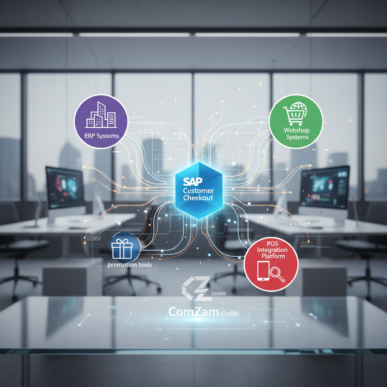
ComZam GmbH Builds Integration Layer to Connect SAP Customer Checkout with ERP and Webshop SystemsComZam GmbH offers an integration platform connecting point-of-sale systems with ERP and webshop platforms. This solution helps retailers running SAP Customer Checkout unify operations, manage inventory, and handle promotions, leveraging over 12 years of specialized SAP expertise.


SAP Releases Accounting Accruals Agent for Month-End CloseSAP has released an AI agent that applies company accrual policies, retrieves financial data, calculates accruals, and prepares journal entry proposals. The agent works through Joule in SAP S/4HANA Cloud Public Edition and is under Restricted Availability.
3 minute read

conarum Frames RFC-to-RAP OData Migration as an Architecture Governance DecisionConarum provides guidance on migrating from RFC to RAP-based OData, emphasizing architectural governance over automatic upgrades. The firm advises retaining RFC for SAP-to-SAP scenarios where stable, and using RAP OData for broader consumer landscapes, applying these same principles to its proconarum platform development.
3 minute read