
4 minute read
Meet the Authors
Key Takeaways
What you need to know
Retail IT teams using SAP Customer Checkout should plan for a dedicated connector layer to synchronize inventory and transaction data with their ERP system in real time, reducing reconciliation effort.
When selecting partners for SAP Customer Checkout deployments, retailers should prioritize those with extensive, documented experience with the specific SAP product for better integration and customization.
Implementing promotion and loyalty tools necessitates assigning clear ownership for ongoing rule maintenance to manage discount conditions, loyalty schemes, and campaign budgeting effectively across channels.
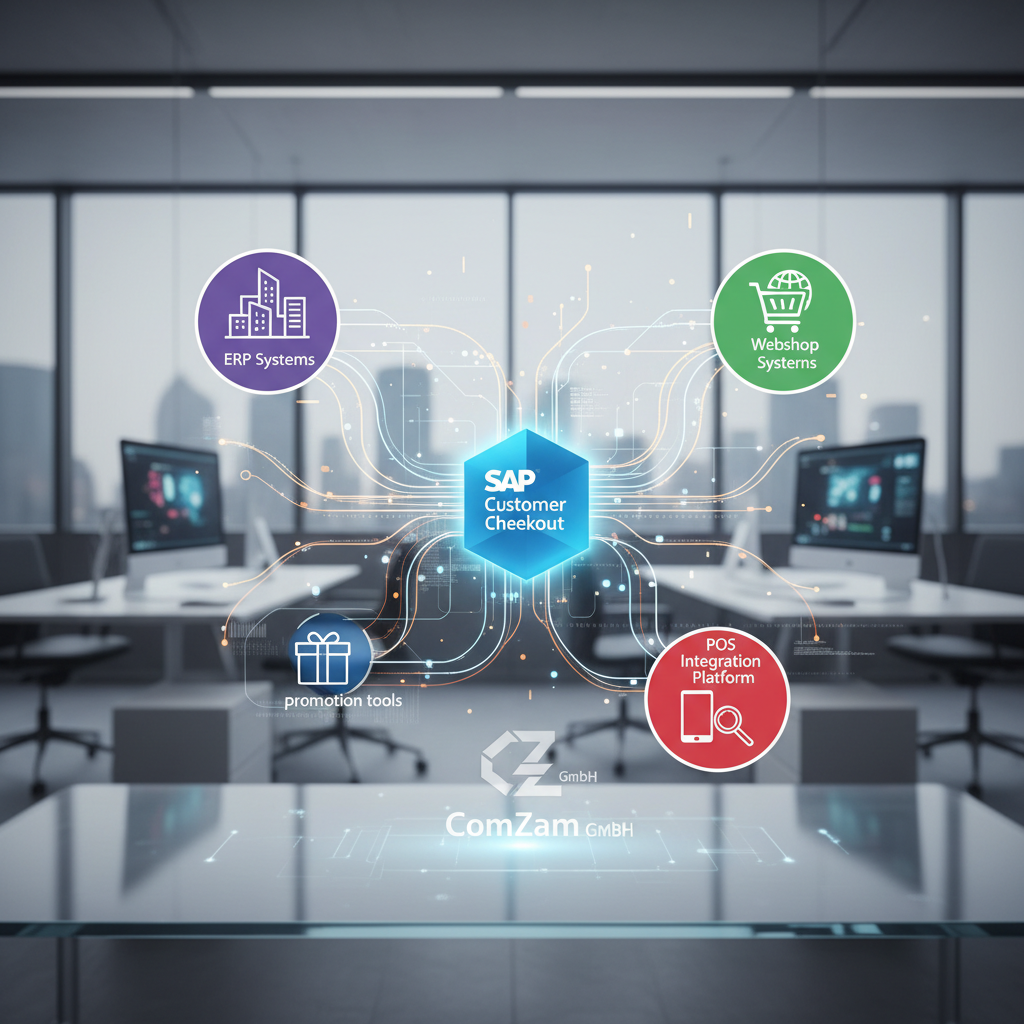
ComZam GmbH offers an integration platform that connects point-of-sale systems with ERP systems, delivery platforms, and customer engagement systems, positioning the offering for retailers ranging from small operations to larger multi-store businesses. The company describes its portfolio through three named products: Integration Server, Promotion Suite, and Inventory Management. Behind that portfolio is a specialization in SAP Customer Checkout, where ComZam says it has more than 12 years of experience consulting on the application and integrating it into a retailer’s broader technology landscape.
Unifying POS, ERP, and Webshop Operations
The Integration Server functions as the connective layer in ComZam’s portfolio, linking point of sale systems to ERP systems, delivery platforms, and customer engagement systems. ComZam frames this connectivity as scalable, as point-of-sale works seamlessly whether a retailer runs a single storefront or a larger network of locations. The scalability framing positions the Integration Server as the mechanism through which transaction data, pricing, and product information move between the store and the back office.
Inventory management complements that connection by giving retailers a real-time view of stock. The tool tracks goods movements within a store, supports transfers between store locations, and handles stock counting, all while integrating with both POS and ERP systems. Retailers running SAP Customer Checkout at the point of sale generally still need a way to keep inventory positions synchronized with the ERP system in near real time, since master data and stock records maintained separately in each system tend to drift without a dedicated connector. Synchronization gaps like this are common across POS-ERP integrations generally, not unique to any single vendor’s architecture.
Explore related questions
Ask SAPi
Promotions, Loyalty, and SAP Customer Checkout Specialization
The Promotion Suite handles the customer-facing side of ComZam’s portfolio, managing promotions built on conditions and discount actions alongside loyalty point schemes and budgeting. Retailers using this component can structure campaigns and reward programs without building that logic natively in SAP Customer Checkout.
The Promotion Suite’s structure connects to ComZam’s stated specialization. The company reports more than 12 years of experience with SAP Customer Checkout and consults on how to apply the product and integrate it within a client’s existing systems. Where a retailer’s requirements extend beyond what SAP Customer Checkout provides as standard, ComZam develops plugins to close the gap. Extending a standard SAP product through plugins is a familiar pattern across SAP partner ecosystems, where partners commonly build custom extensions to cover retailer-specific promotion, loyalty, or reporting needs that the base application does not address. ComZam’s services span implementation projects, plugin development, and consulting, describing an engagement model centered on customizing and integrating SAP Customer Checkout rather than replacing it.
What This Means for SAPinsiders
POS-ERP synchronization still needs dedicated middleware. Retail IT teams running SAP Customer Checkout should expect that keeping inventory and transaction data aligned with ERP in real time requires a connector layer rather than relying on the POS application alone. Planning for that middleware early can reduce reconciliation work between store and back-office systems.
Specialist tenure becomes a factor in partner selection. Retailers scoping SAP Customer Checkout deployments will weigh long-tenured specialist partners against broader systems integrators when deciding who handles integration and customization work. Documented experience with a specific SAP product can narrow that shortlist during vendor evaluation.
Promotion and loyalty rules add governance overhead. Managing discount conditions, loyalty point schemes, and campaign budgeting across channels creates an ongoing rule-maintenance responsibility for retail IT and merchandising teams. Organizations adopting this kind of promotion tooling should assign clear ownership for reviewing and updating those rules over time.
More Resources
See All Related Content
The Cloud MES Foundation Shapes Whether SAP’s Manufacturing Agents Can Work as IntendedSAP validated 20 delaware-developed agentic AI use cases built with Joule Studio on SAP BTP, four of them aimed at the shop floor. SAPinsider research suggests the harder question for manufacturers is whether the SAP Digital Manufacturing, data, and governance foundation underneath those agents is ready.

N’ware Extends SAP Business One With WMS and Manufacturing ApplicationsN'ware Technologies, a founding SAP Business One partner, enhances SAP's SMB ERP with its own certified WMS and manufacturing applications. These add-ons provide specialized solutions for wholesale distributors and manufacturers, offering real-time visibility, automated processes, and improved supply chain management. The integrated suite aims to optimize operations and reduce manual efforts.
3 minute read

Nakisa Cloud Connector Delivers Native Integration Across SAP ECC and S/4HANANakisa's Cloud Connector provides native, bidirectional integration across SAP ECC and S/4HANA using REST APIs and BAPIs. This enables real-time master data transfers and journal entry postings, supporting lease and real estate management within existing ERP landscapes.
3 minute read