
Mar 16-19, 2026Las Vegas, Nevada, NV
Blogs
Upcoming Events
SAPinsider Las Vegas 2026
Related Vendors

Stay up-to-date on the latest SAP news, SAPinsider events, and timely conversations around how customers are using SAP technology to get ahead. Learn what these updates mean for the SAPinsider Community and how they can be applied in the business world.
1456 results

SAPinsider Unveils New Research and Content Strategy for 2019Jan 31, 2019 — “Life is flux,” according to the Greek philosopher Heraclitus, and this well-known assertion that all things change applies just as readily to businesses, which must constantly adapt to changing user needs. The current push for digital transformation, for example, is centered on enabling the efficiency and flexibility required to instantly and effectively meet the changing […]
3 minute read

SAP Rolls Out SAP S/4HANA-Based SubledgerJan 30, 2019 — Earlier in January, SAP announced its new SAP S/4HANA for financial products subledger. Aimed at handling the complex regulatory and reporting requirements for financial institutions, insurance companies, and fintech companies, the subledger uses a central data hub for information between operational and finance systems. Regulatory changes like IFRS 9 and 17 have added new wrinkles […]
1 minute read

SAP Sets the Stage for New XM Frontier With Qualtrics AcquisitionJan 29, 2019 — SAP has taken a giant step forward in setting the stage for the future of the experience economy. Last week, SAP announced that it had completed its acquisition of Qualtrics International, the global pioneer of the experience management (XM) software category. Ryan Smith will continue to lead Qualtrics, which will retain its current leadership and […]
3 minute read
New Horizons: An Outline of the SAPinsider Digital Supply Management New Research ApproachJan 29, 2019 — I’m reading a book titled The Barons of the Sea, which is an account of the 19th century merchants and trading companies that battled for supremacy in importing tea from China in exchange for shipments of opium. The goal of these entrepreneurs was to find a way to shorten a traditional six-month journey from China […]
2 minute read
Cloud Continues to Lead SAP Growth: SAP Sets Aggressive 5-Year OutlookJan 29, 2019 — On January 29, 2019, SAP officially announced its financial results for Q4 2018 and the full year of 2018. Cloud revenues continue to power SAP’s overall revenue growth — SAP reported that cloud revenue for the year reached €4.9 billion and overall revenue edged up 5% to €24.71 billion. Overall cloud and software revenue fell […]
4 minute read
A Smooth-Running SAP S/4HANA Implementation Depends on Successful SizingJan 29, 2019 — With support for SAP Business Suite ending in 2025, the pressure to make the move to SAP S/4HANA is steadily rising, and over 2,200 SAP customers are already using the solution. While there are many important considerations involved when it comes to ensuring a successful move, there is one in particular that is crucial — […]
2 minute read

What Intelligent Robotic Process Automation (RPA) Capabilities Are on the Horizon for SAP CustomersJan 28, 2019 —
Audio pioneer Dolby Laboratories, which has been delivering audiophiles a superior sound and sight experience since the 1970s, decided in 2016 that it wanted an equally stringent level of quality assurance for its business process testing. The business sought a risk-based automated testing solution to reduce or eliminate regression test coverage gaps and lengthy testing integration cycles. Discover how Dolby Labs implemented a solution by SAP partner Tricentis that provided risk-based prioritization and documentation of regression testing and end-to-end coverage for automating workstreams. Learn how the company automated regression testing for approximately 40% of mission-critical applications and saved roughly 75% savings in hours on regression testing.
Gone are the days when retailers could forecast inventory based on previous actuals and manufacturers could absorb unplanned production downtime by artificially inflating stock levels. In today's digital age, the abillity of companies to provide exemplary customer service in a digital environment is now tied to the performance and availability of their ERP systems. SAP customers are increasingly moving away from managing these systems in their own data centers and relying on cloud environments to run their mission critical applications and deliver high availability.
Learn why managed cloud provider CorpFlex opted for the Cisco HyperFlex hyperconverged infrastructure to run its customers’ SAP solutions and how this provider is offering improved technology and service options to these customers that minimize their system latency and reduce their storage footprint. See how CorpFlex can now deliver an approximate 40% performance improvement to its customers’ workloads, along with a capability to add a new node and create a new SAP environment for a customer in as little as two hours.
With millions of patients, pharmacies, and hospitals relying on its healthcare services and products, Cardinal Health employs an IT landscape consisting of thousands of SAP and non-SAP applications running countless business processes to conduct its business. To uphold stringent quality standards, improve operations, and provide necessary maintenance and business process testing, the company sought a test automation solution that could reduce costs, improve reliability, and promote continuous integration and development. Learn how it implemented Worksoft automation solutions to achieve these outcomes — as well as receive unexpected benefits from robotic process automation (RPA).
Preventing access risk and ensuring regulatory compliance are top priorities for any business, and cable and wire manufacturer Southwire Company, LLC, understands how analytics are required to successfully achieve these goals. Concerned that access-related risks were unacceptably high, Southwire embarked on a multi-phased project that aimed to remove, reduce, and mitigate these risks and to design more efficient user roles. Learn how Southwire Company, LLC, leveraged Security Weaver solutions to identify risks, remove or reduce segregation-of-duties (SoD) conflicts, optimize user role design, and improve overall business processes.
Offering personalized services can improve the customer experience for nearly any type of business. Companies leading in this digital age are establishing a competitive advantage by deploying technology that leverages data generated by customer behavior to improve their customers’ experience across different channels. Learn how lighting manufacturer Acuity Brands — which provides lighting, lighting controls, and building management solutions globally — has evolved its business to now offer connected building technology solutions that enable its customers to transform their buildings from cost centers to strategic assets. Learn how Acuity partnered with SAP to create a solution for joint customers that improve in-store operations for the store managers and associates, in-store engagement with customers, as well as conversions — and how this proof of concept is intended to extend well beyond the retail space to other industries.
Deforestation is devastating to Earth’s rainforests, and to the planet as a whole — it creates more of an impact on climate change than the emissions of planes, trains, cars, trucks, and ships combined, according to a study. With 90% of rainforest logging being done illegally, a massive opportunity opened up for Rainforest Connection, a non-profit organization focused on using technology to combat deforestation. Rainforest Connection teamed up with SAP to analyze data collected by recycled cell phones that monitored the sounds of the rainforest not only to identify illegal logging as it was happening, but even predict where a tree could be cut illegally ahead of time, allowing rangers to stop the activity and prevent future deforestation.
For the past 120 years, The Goodyear Tire & Rubber Company has been at the forefront of a continuously changing mobility industry. It has achieved this by leading with innovation in its products and services for customers, as well as in its internal systems and processes. Following this commitment, the company recently updated its system landscapes by expanding its SAP footprint. SAP system monitoring and change management processes have become progressively important to Goodyear – resulting in an increasing trend in working with SAP Solution Manager. With a goal of implementing better, easier, and faster software tools and processes – and answering SAP system users’ call for improved system performance and usability – the business decided to upgrade to SAP Solution Manager 7.2. Learn how the upgrade provided Goodyear benefits such as improved efficiency and resource allocation, enhanced visual representation, and a less restrictive content documentation structure.
Sanofi, a major multinational pharmaceutical company, has plans for expansion. To facilitate that growth, Sanofi decided it needed to automate its financial close, account reconciliation, and journal entry processes as many of them were manual and disparate across its business units. Discover how even partway through a global implementation of a record-to-report solution to transform its financial processes, Sanofi has already seen greater efficiency and time savings, allowing the staff to concentrate on value-added activities for its life-saving health care operations and medical research and development.
The disruptive nature of technology innovation is not limited to business: The public sector must also consider the impact of digital transformation. The State of Illinois recognized a need for improved technology and functionality across its growing responsibilities, and in 2016 began a digital transformation that aimed to replace 420 systems across 58 agencies in 30 months. The state selected SAP HANA Enterprise Cloud to deploy SAP ERP and SAP HANA technology across its organization. Learn how it leveraged SAP solutions to achieve better decision making on improved data analysis as well as better spend tracking and hiring processes — and how the gains are causing other agencies across the state to ask how they can benefit.
During the digitization of the medical world, the mental health field was virtually passed over. To fill this gap, HarrisLogic develops technology platforms for the behavioral healthcare field to help its users identify the workflow of mentally ill individuals moving through the system and ensure no one gets lost in the cracks. Through a combination of various engines that apply clinical evidence-based practices, fuse data streams together from various locations, and apply advanced and predictive analytics — paired with SAP technology — HarrisLogic was able to drastically improve the delivery of much needed mental health services, drive more connections to healthcare, and create a reliable model to gauge the risk in a variety of settings.
Three billion people across 230 countries currently consume lifestyle entertainment from Discovery, Inc. — a company that creates more than 8,000 hours of original programming in 50 languages each year and distributes television and digital content globally. After experiencing fast domestic and international growth, and with day-to-day accounting functions spread across offices in more than 20 countries, the company knew it could benefit from global standardization of controls and governance of its SAP landscape. In an effort to standardize and automate its financial close and journal entry process, Discovery, Inc. integrated its SAP ERP system with BlackLine solutions — Account Reconciliations, Journal Entry, and Task Management. Learn how the business now benefits from stronger financial controls, more efficient audit processes, and an improved journal entry workflow.
Due to its aggressive acquisition strategy, professional services company VINCI Energies – which has already grown to 77,500 employees spread throughout more than 1,000 global companies – needed an updated ERP program and IT strategy to integrate its new companies into the fold as quickly and easily as possible. To accomplish this, the business decided to consolidate on a single-instance environment with over 30,000 users running on SAP S/4HANA. Learn how VINCI Energies underwent a 10-month project that culminated in a migration over the weekend that imparted some valuable lessons. With 14 countries live so far and plans to deploy it universally, uncover the benefits the business is already reaping from the capabilities that SAP S/4HANA has introduced and innovating with SAP Cloud Platform, SAP C/4HANA, and more intelligent reporting and analytics.
On the heels of its migration to SAP S/4HANA, professional services company VINCI Energies wanted to extend the new functionality with a new application for employee timesheet entry that would replace former manual, paper-based processes. Learn how the business designed and developed the online app using SAP Cloud Platform, and how this application is creating more advanced capabilities for workers and managers who need to keep track of hours and other associated costs applied to individual projects from the field.
When Versum Materials was divested in 2016, it took the opportunity not only to make a fresh IT start with a greenfield SAP S/4HANA implementation, but also to do it with a big-bang approach. The newly independent business accomplished the massive change in 15 months with a painless go-live. Along the way, it discovered some major differences between its original SAP ERP system and SAP S/4HANA, including security and data models, and passes along several lessons learned.
Processing $2 billion through its billing system and $120 billion of global travel spend annually, travel technology company Sabre needed a sophisticated and failure-proof software system. The business turned to SAP HANA Enterprise Edition to handle its complex requirements. The Sabre team worked with SAP to implement this solution, and as a result, has since reduced invoice processing and review time from days to hours and runtime for reports to minutes, paving the way for more advanced analytics and decision making by the business.
McAfee was amidst sweeping change – shifting its accounting standards and financial reporting in SAP ERP, separating its IT systems from its parent company in a spinoff, and moving from a waterfall method to an agile methodology. In response, the business wanted to increase the velocity of its application delivery and testing. Learn how the organization turned to Worksoft Certify to automate its SAP testing and business processes, the many benefits that resulted, and how it used the solution in ways it didn’t originally anticipate.
After 140 years in business, global technology giant Ericsson knows a thing or two about staying at the forefront of a changing industry. Learn how the company has modernized its IT delivery approach, and increased customer satisfaction, by adopting a continuous delivery model for its digital business support systems portfolio, and how it used the ActiveControl solution by Basis Technologies to integrate SAP applications into this new model.
When Cooper Standard — systems and components provider for the automotive and industrial industries — saw the need to automate access management, the company undertook a project would affect over 11,000 desktop users, require defining common processes to meet compliance requirements, and improve control over its heterogenous SAP and non-SAP application landscape. Learn how the company came to the decision to select and implement a suite of access management applications by Security Weaver designed to tackle critical and complex challenges.
2 minute read

How SAP Customers Can Meet the Challenges of Italy’s E-Invoicing MandateDec 19, 2018 — When Italy flipped the European Union’s (EU’s) regulations on business-to-business (B2B) electronic invoicing (e-invoicing), it opened the floodgates for the type of complex regulations companies doing business in Latin America have had to deal with for more than a decade. For SAP customers that aren’t prepared for European B2B e-invoicing, that could be very bad […]
5 minute read
A Look at the Reporting Benefits of SAP Analytics CloudDec 5, 2018 —






SAP has done it again. It's made us all rethink what we are currently doing as we wait patiently until it has a fully integrated product. I'm, of course, talking about SAP Analytics Cloud, which is part of its Unified Reporting strategy that will allow customers to combine data from all SAP systems, including SAP SuccessFactors. I've written at www.stephenhgallo.com recently about reporting in 2018, and this is a follow-up to it. I'll start with the cynical approach to this with the it's-about-time dig, but in truth, I've been doing SAP ERP HCM reporting with SAP tools for more than 10 years. It's hard. I’m sure that it took years of planning for SAP to finally take on this initiative with its daunting requirements, and I'd probably shed a few tears of dread if I were sitting in SAP’s conference rooms designing how this is all going to work. I say years of planning because none of this works without SAP HANA. When SAP decided to build SAP HANA, I have to imagine this was one of the use cases for building it.
What I'm finding in the market, though, is a polarizing effect every time SAP announces something with the roadmap in its infancy. To SAP's credit I've seen more innovation in this product since it launched than in many of SAP’s prior endeavors. SAP is constantly trying to make it better, or in this case, the best, and it will get there. The effect that it has on customers, though, is the old wait-and-see mentality. For example, someone at an organization considering investing in SAP Analytics Cloud might comment as follows: "Should we purchase now? No wait, on the roadmap six months from now is the feature we might need. Let's wait until SAP launches it and then see how the feedback is on it.” Wash, rinse, and repeat. What I'm going to try to impress upon you is not to wait. Start piloting the application. It does have its merits.
Let's start this journey by talking about what SAP currently offers. I won't go deep into the current SAP SuccessFactors reporting; others have already done so. However, if we look back at the SAP ERP Central Component (SAP ECC) side of the house, we still have our good old ad hoc query, SQ01 - ABAP Query for HR, and then solution tools to get data out of your module of choice, Wage Type Reporter (Payroll), PT_QTA10 (Absence quotas), and so on. Again, there are reams of information on these. When I speak about the SAP ECC side, I’m also referring to systems based on Employee Central Payroll (ECP).
These tools provide you with the data to do your own analysis. You can download whatever you like, shove it in a warehouse — Excel, Access, your choice — and create your own analytics. The problem, however, is every time you want to produce an up-to-date version, you need to download the data all over again. This is not a very efficient process.
SAP Analytics Cloud Reaches the Pinnacle of Reporting
When I look at a reporting maturity model, I see SAP Analytics Cloud as the highest level of reporting. If you go from reactive reporting to proactive reporting to metrics to planning and finally to predictive analytics, SAP Analytics Cloud is at the top of the game. SAP Analytics Cloud is going to bring us out of the Excel analytics that every HR department is doing monthly, quarterly, or annually. It's providing the automated analytics that allow you to monitor your key business metrics to see if your business is performing to the levels that you desire. SAP has other analytics products in the market, including SAP Business Intelligence (SAP BI) and SAP Lumira, but I consider SAP Analytics Cloud’s ability to link up to your systems with ease as the benefit it offers to enterprises. Let’s take a look at Tables 1-5 to see the data sources to which SAP Analytics Cloud can link.
Table 1
SAP data sources that can link live data to SAP Analytics Cloud
Table 2
Sources that contain live data that can be accessed via SAP HANA Smart Data Integration, SAP Cloud Platform, and SAP HANA and then linked to SAP Analytics Cloud
Table 3
Cloud solutions that contain import data that can be linked to SAP Analytics Cloud
Table 4
SAP data sources that contain import data that can be linked to SAP Analytics Cloud
Table 5
Other data sources that contain import data that can be linked to SAP Analytics Cloud
To clarify, live data resides in the source system. SAP Analytics Cloud reads it on the fly to get your data. Import data will be brought out of your system into the cloud. Currently the advantage of import data is that it's easier to create your own datasets of data mashed up against other import data. Apparently, there are still some limitations of mashing up live data with import data, but SAP has said it is resolving that soon.
Now we must understand the types of questions planning and predictive analytics help us solve to understand what value SAP Analytics Cloud brings to an organization. I use some examples that were shown at SAPPHIRE NOW:
- Are we attracting hires by ethnicity? (Recruiting)
- Are we hiring a diverse workforce? (Onboarding)
- Are we promoting across ethnicities? (Employee Central/SAP ECC)
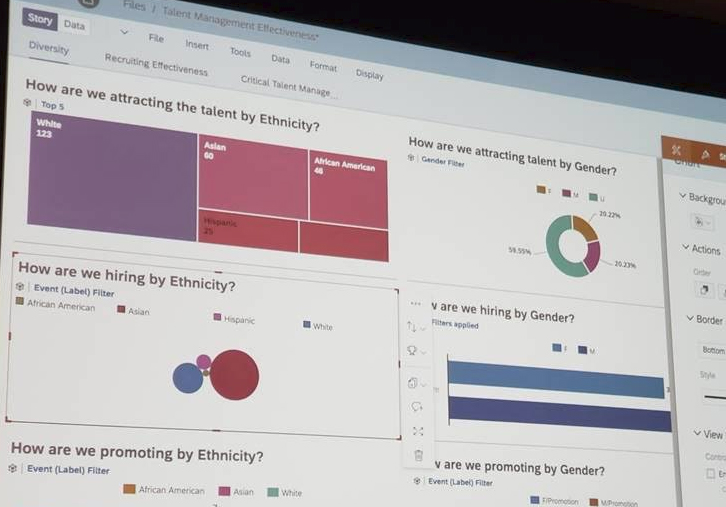
Figure 1 is a screen shown in a demonstration at SAPPHIRE NOW.
Figure 1
An example of the ethnicity dashboard
With these metrics, as chief of diversity, I can get instant insight about how my plans are performing, which areas of the company need my involvement, and a view of the overall health of the workforce sliced by any dimension I see fit. SAP Analytics Cloud can also, based on prior data, predict where your trends for these metrics will go in the future. So right now, it might look like region X is not performing, but looking at a predictive trendline into the future (not shown), we can see they are on the upside. Therefore, I should focus my time on regions where my metrics are trending downward. This information is invaluable for leaders and managers, but also invaluable to analysts. Analysts spend countless hours putting these types of charts and predictions together, only to have to do them all over again next month. With SAP Analytics Cloud you have the build-it-once, use-forever type of deployment.
Get On Board, But Check the Roadmaps
For the executives and managers of the world I see SAP Analytics Cloud as a no-brainer. Even if you sit and tell yourself that you’ve invested so much time in Work Force Analytics, or SAP Lumira, or SAP BI, know that the SAP Analytics Cloud is going to have all of this available in the platform. Some of it is already here and some of it is coming. Always check the roadmaps at https://www.sap.com/products/roadmaps.html and watch the webinars. This is the future of SAP reporting, and it's something you should get on board with. Coming from a guy who works for an SAP software partner that does reporting, take this advice with more than a grain of salt. If you're a leader, get a subscription, grab an analyst, and lay out a one-month plan of analytics you want and point them in right direction. You might be surprised with what they can accomplish in a short period of time.
However, if this is the greatest thing since sliced bread for managers, it still lacks some functionality and some of these use cases may never be included in the software or can be arduous to build. SAP is great at always showing us its prize pony when it talks about innovation, but there is always a dark underbelly of SAP ERP HCM that only us on-the-ground analysts understand — data consistency and auditing. This term is so broad in scope I will just provide a few examples below of issues I've come across in the past. These are problems that every customer has and some a customer created for itself, but remember customers buy SAP solutions because of all the standards SAP provides. However, you also buy SAP software because you can customize it to your business processes. These five examples are SAP ECC based; however, I'm sure those of you on Employee Central or an SAP ECC hybrid system can relate:
Issue 1: I have Rehire Dates that are before my Hire Date on Infotype 0041.
Cause: This is caused by human error.
Issue 2: We have a Z table in SAP ECC based on a payroll area that stores my annual merit effective dates and we need to ensure that the base pay Infotype was loaded correctly based on those dates.
Cause: This is a customization problem.
Issue 3: I need to know which employees are reaching their 401K limits as I need to start their deferred comp plans.
Cause: This issue is seen everywhere in the US as configuration is not always correct.
Issue 4: I work in Wisconsin, and I have this work schedule, so I'm only allowed to be in Payscale groups 12345 and 12346.
Cause: The business rule was localized to a customer process.
Issue 5: I need to submit to a union by region all the hours and types of hours their employees worked.
Cause: This is an example of the dreaded union reconciliation.
The examples I listed above are actual examples of things I've worked on for customers recently. Looking at the list I'm sure you can imagine some things you've had to reconcile in the past. And what do we use to get this data if you just have standard SAP tools?
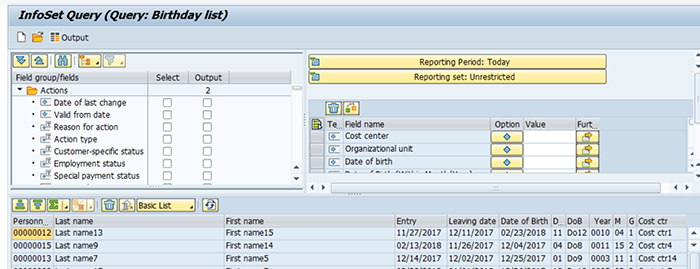
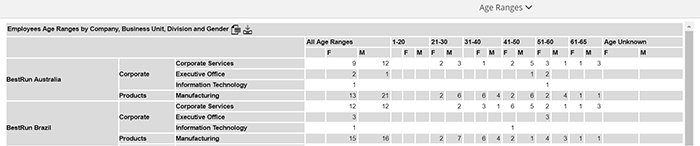
Three choices of a few of the reporting tools to accomplish this that are available are SAP Ad Hoc Query (Figure 2); SAP Success Factors Ad Hoc Query/Online Report Designer (ORD), as shown in Figure 3; and SAP Wage Type Reporter (Figure 4).
Figure 2
SAP Ad Hoc Query
Figure 3
SAP SuccessFactors Ad Hoc Query
Figure 4
SAP Wage Type Reporter
You look at some of the use case examples and think, well, actually we could put most of these into Payroll Control Center (PCC). And you are right. It all boils down to budget and priority. If I have an analyst who can put this together, why spend the time and the money to put some of this in PCC. The answer is you should always be improving your processes, but I digress, and that's a philosophical discussion for another day. (Also, PCC adoption is low. That’s another philosophical discussion.) The first four items I listed could be done in PCC; however, the fifth is kind of an ad hoc request that we are all too familiar with. Someone, somewhere, either in our company or outside our company, requests a bit of data that we do not have readily available. So, we use the standard SAP tools to mash this data together and provide them the report.
As long as I've been doing this, there is no way around ad hoc requests. They will always be the fly in the ointment to any reporting strategy. This is where SAP Analytics Cloud falls down. When I go to customers and we define what they are looking for, 20% of it is metrics; 40% is operational reporting such as payroll; 20% is data consistency; and the last 20% of the work is ad hoc requests. It's typically 20% of what they are producing, but in some cases, it can be 40% of the effort. Keep this in mind when you decide to move to SAP Analytics Cloud.
So, I do recommend that you move to the SAP Analytics Cloud. It's actually really neat, fairly intuitive, and for things like basic gender or hiring metrics, you can have those up and running quickly. I built a gender dashboard in a day. Don't think, however, that SAP Analytics Cloud solves all your reporting issues. It doesn't. You will still need tools — whether they are standard solutions delivered by SAP or third-party tools — to assist with your ad hoc questions, data remittance type reports, and master data consistency audits.
Happy reporting.
9 minute read
How SAP Uses Emerging Technologies to Help Its Customers Realize Their DreamsNov 28, 2018 — Q: You’ve had a lot of roles within SAP. Could you tell us a little bit about your path to your current role within SAP? A: I have always been curious and wanted to understand how companies run. And what better way to do that than to join the world’s largest enterprise software provider and […]
11 minute read