

Mar 16-19, 2026Las Vegas, Nevada, NV
SAP Hybris


What Is SAP Hybris?
Hybris was a German company founded in 1997 that focused on omnichannel e-commerce solutions. In 2013, SAP acquired Hybris and replaced the name with SAP Hybris (also referred to as SAP Commerce Cloud). The SAP Hybris portfolio included several offerings: commerce, marketing, sales, service, and billing. In 2018, SAP Hybris and its portfolio were changed to SAP Customer Experience (CX) to better reflect the move toward business/brand CX.
What Is SAP Hybris?
Hybris was a German company founded in 1997 that focused on omnichannel e-commerce solutions. In 2013, SAP acquired Hybris and replaced the name with SAP Hybris (also referred to as SAP Commerce Cloud). The SAP Hybris portfolio included several offerings: commerce, marketing, sales, service, and billing. In 2018, SAP Hybris and its portfolio were changed to SAP Customer Experience (CX) to better reflect the move toward business/brand CX.
How Companies Utilized SAP Hybris
A majority of companies using SAP Hybris were retailers that wanted access to both business-to-business and business-to-consumer commerce reach. What made SAP Hybris an attractive solution was its customization and scalability capabilities. Companies could customize the solution to best suit their business models. Regardless of size, companies could scale the solution and expand their omnichannel offerings as their business grew. Because SAP Hybris was part of the SAP family of solutions, it integrated seamlessly with other SAP applications that could support a company’s operational needs.
Key Considerations for SAPinsiders
- The Disruptive Dynamics of Customer Engagement. In this article, learn how companies created individualized customer experiences with SAP Hybris. In today’s marketplace, it’s customer experience that differentiates a company from its competitors. According to the article, “Above all, SAP Hybris lets you run an agile, consumer-centric business. In this case, agility is not some fancy business metaphor: It’s real. The digital economy is driven as much by changing customer expectations and demands as it is by products or services. You cannot just get something right once and then sit back. You need a business model that evolves and keeps customers’ attention by continually getting things right in new ways.”
- Case Study Update: Real-World Lessons from National Vision’s SAP Commerce and Marketing Implementation. In this case study, National Vision shares the outcome of its holistic implementation of SAP Hybris commerce and SAP Hybris marketing modules. According to Hillary Bliss, Director of CRM & Marketing Analytics, data is critical to the success of every organization, and National Vision is no different. On the marketing side, accuracy is key to ensuring that campaigns are deliverable and accurately personalized. “A huge portion of our effort was dedicated to ensuring the data loaded into the cloud platforms was accurate; further work was done to define and establish data transfer protocols to ensure that data in the cloud and source systems was kept clean, which application should overwrite the other when there is a disagreement, etc.,” she said.
75 results

SAP S/4HANA On-Premise vs. Cloud: What Is the Difference?May 23, 2024 — Looking to transition your business to SAP S/4HANA but unsure which deployment option suits you best? Dive into the comprehensive comparison between SAP S/4HANA On-Premise and Cloud editions to make an informed decision. While On-Premise offers full customization and control, Cloud boasts ease of implementation and scalability. Explore the benefits and limitations of each solution, catering to businesses of all sizes and complexities. Discover the hybrid model for a flexible approach combining on-premise and cloud functionalities. Ready to adopt S/4HANA? Learn about brownfield, greenfield, and consolidation migration strategies to seamlessly integrate this powerful ERP system into your operations. Don't miss out on the competitive advantages SAP S/4HANA brings – unlock your business's potential today.
3 minute read
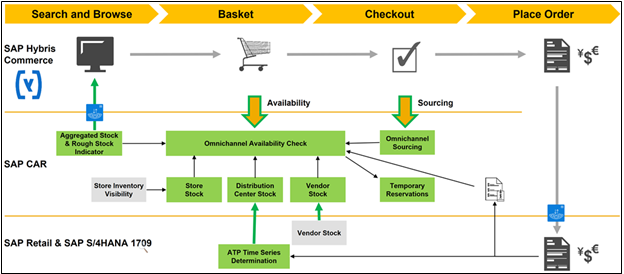
Digital transformation with SAP – Omnichannel Inventory and Sourcing with SAP Customer Activity Repository (CAR)Mar 18, 2021 — Going live on your digital transformation journey, writes Rizing Principal Consultant Chris Veli, is only the first step in a larger journey. To maximize your SAP S/4HANA investment, you should add two key transformation functionalities that will help you vastly improve customer experiences while following through with cost-effective and timely deliveries: omnichannel inventory visibility, which is the ability to know when and where your stock is in near real-time across your organizational channels, and sourcing, which is the method of how customer online orders are filled. How can you leverage these two add-ons to better achieve your business objectives while keeping customers engaged?
Using real-world examples, this article will empower organizations to leverage SAP Customer Activity Repository (CAR) in order to:
• Achieve omnichannel inventory visibility by implementing SAP CAR Point of Sale Data Transfer and Audit, empowering SAP S/4HANA to calculate near-real-time stock
• Ensure the lowest impact to web shops and back-end systems by supplying inventory and time series data
• Improve fulfillment of e-commerce sales by leveraging Omnichannel Article Availability (OAA) to ensure that only available inventory is presented to the customer and that all transactions undergo a final validation availability check
• Understand the components of sourcing, including data sources, filtering, sorting, and business objectives
9 minute read
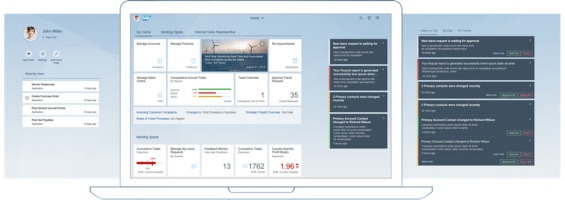
SAP Fiori AuthorizationsOct 16, 2020 — SAP Fiori 3.0 replaces traditional user interfaces offered by SAP such as SAP GUI. With the upgraded interface, SAP provides applications using cards (formerly called tiles) that contain different business tasks. To access these applications end users must have the proper authorizations. This SAP Expert article written by a security and GRC professional explains how to create authorizations within SAP Fiori so end users can access the solution's applications and underlying business data.
Read this article to learn:
- A general understanding of SAP Fiori’s architecture and deployment scenarios;
- How to assign authorizations so end users can access front- and back-end servers and tools such as SAP Fiori Launchpad, SAP Fiori Launchpad Designer, and SAP Fiori Content manager;
- Design considerations for catalogs and groups; and
- How SAP Fiori authorizations impact access control and segregation of duties.
14 minute read

Elevating Customer Experience with SAP C/4HANA for Consumer Goods and RetailSep 1, 2020 — The explosion of digital technologies and the new possibilities they have created has dramatically reshaped customer behaviors and expectations, and the pace of change is only increasing. Customer interactions are evolving rapidly, the number of communication channels has exploded, and customers expect to engage across them seamlessly. As today’s customers segment themselves into tribes that share common mindsets and goals rather than age, gender or socioeconomic factors, consumer packaged goods (CPG) companies and retailers are experimenting with creating new human-centric experiences to better engage their customers, create higher value for them, and thus achieve much faster growth and better ROI.
This article will help you understand:
- How customer behaviors and expectations have changed in the digital age and why CPG companies and retailers must change their business capabilities in order to stay relevant
- Implications those changes have on the front-office architecture design to enable intelligent customer experiences
- How SAP C/4HANA can help CPG companies and retailers effectively engage with customers and consumers on different digital touchpoints
- Why choosing a human-centric and agile approach is key to success when designing for change and innovation
12 minute read

Your Guide to Generating Predictable Revenue Streams with SAP S/4HANAApr 14, 2020 — This article will shed some light on subscription order management (SOM), which has been folded into the SAP S/4HANA digital core. You’ll learn how SOM can empower organizations to evolve their business model into one capable of selling products-as-a-service to generate new and predictable revenue streams.
6 minute read
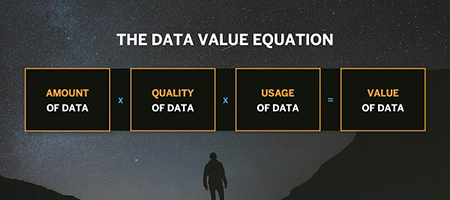
Turn Any-Sized Data Volume into Business Value: Discover the Power of SAP Data Warehouse CloudFeb 19, 2020 — Data volumes today are growing exponentially due to the various ways that data is being produced. SAP customers are being inundated with information as more and more data is arriving into hybrid environments of on-premise and cloud systems from various ERP solutions, data lakes, customer feedback via mobile apps, and social media interactions, to name a few. Business users want access to data and analytics without having to burden IT for assistance, and companies want faster and more cost-effective solutions with options in the cloud. This article shares how, in response to these demands, SAP now offers SAP Data Warehouse Cloud. You will learn:
- How this new solution brings together data from different sources
- How it unifies that information in an easily understandable and accessible environment
- How it provides a platform where business users can collaborate harmoniously with IT
13 minute read

Deploy SAP Solutions in Minutes in the CloudSep 14, 2018 —
Many companies are looking to the latest digital technologies to remain competitive and open up new business opportunities. At the same time, IT organizations are under increasing pressure to save time and resources when it comes to technology deployments. So how can you take advantage of the latest technology without the time-consuming setup and configuration that is often associated with on-premise deployments? SAP Cloud Appliance Library is a tool that enables you to deploy the latest SAP solutions in the cloud — quickly and simply. Learn how this tool can help you simplify deployments, minimize infrastructure costs, and stay ahead of the competition.
8 minute read

SAP CEO Bill McDermott Kicks Off SAPPHIRE NOW 2018 by Announcing SAP C/4HANAJun 5, 2018 — SAP CEO Bill McDermott kicked off his SAPPHIRE NOW 2018 keynote discussing a simple, yet significant concept: The biggest problems the world faces also represent the biggest opportunities. Whether it’s feeding a growing population, managing a changing environment, or eliminating bias in the workforce, McDermott stated that these problems are best solved by businesses that […]
3 minute read

Paving the Way to SAP S/4HANA CloudMay 16, 2018 —
With SAP S/4HANA Cloud, SAP brings the advantages of the cloud to ERP software with a suite of solutions that paves the way to digital, integrated processes across your business. So how does SAP S/4HANA Cloud integrate into existing software solution landscapes to enable end-to-end business processes? What options are available to support these integrations in an easy and cost-efficient way? This article walks through three different approaches for integrating SAP S/4HANA Cloud with other solutions in your landscape, so that you can make the best choice for your own organization.
9 minute read

Solve Deep Business Issues Quickly and Easily with SAP S/4HANA Cloud ApplicationsApr 30, 2018 —
This article provides an overview of cloud-based solutions that SAP Solutions Extensions offer for HR, finance, and industry-specific business processes. It describes the benefits these solutions offer, such as streamlining global HR processes; protecting data, applications and interactions; and improving efficiency of processes for industries such as retail and fashion management and utilities.
3 minute read