
8 minute read

Meet the Authors
Key Takeaways
What you need to know
Techwave is spearheading an API-first approach to open banking, enabling banks, fintechs, and digital platforms to create scalable financial experiences, which is crucial as open banking payments are expected to exceed $116 billion by 2025.
The shift from viewing compliance as a regulatory checkbox to a growth opportunity underscores the importance of governance, especially for SAP-centric organizations, where enhanced audit-ready systems can boost consumer trust while driving service innovation.
Financial institutions must adapt their provider evaluation criteria to focus on orchestration capabilities rather than just API exposure, emphasizing the need for effective consent management, integration tools, and AI-driven insights to enhance operational efficiency and customer experiences.
Techwave is positioning an API-first blueprint for open banking to help banks, fintechs, and digital platforms move beyond basic compliance toward scalable, connected financial experiences. The company frames the opportunity in big numbers, claiming that open banking payments are projected to surpass $116 billion by 2025 and that embedded finance (including “Buy Now, Pay Later” or BNPL) will drive $560 billion in global transactions this year.
This blueprint narrative aligns with Techwave’s broader positioning as a global IT services and solutions partner with core practices in SAP, cloud, data, and automation/AI. For SAP-centric organizations, the challenge is delivering open financial integration without creating security, audit, and operational sprawl. This is particularly important when consent rules and stronger authentication requirements govern the sharing of financial data.
From Regulation To Platform Strategy
Techwave links open banking to Revised Payment Services Directive (PSD2) and UK Open Banking regulations, arguing that leading institutions now treat compliance as a growth lever rather than a checkbox. The company also cites a consumer awareness gap: 87% of U.S. consumers use open-banking-linked services, while only 34% recognize the underlying technology. This positions compliance as both a trust challenge and an experience opportunity.
Explore related questions
Ask SAPi
Independent context supports the broader point that open banking requires strong governance: in the UK, open banking activities fall under FCA oversight, and standardization efforts have been driven by the Open Banking Implementation Entity (OBIE). For SAP teams, this raises expectations for audit-ready traceability across identity, consent, data sharing, and third-party connectivity.
The Blueprint: Orchestration with Built-In Compliance
Techwave’s blueprint centers on a custom-built orchestration layer that unifies multiple financial service providers, fintech partners, and data streams through a single integration backbone. It highlights a unified API gateway across payment rails (including RTP, SEPA, and SWIFT), pre-built connectors and onboarding toolkits that shorten partner integration timelines significantly, operational intelligence dashboards for latency and partner SLAs, and a regulatory-aware architecture for compliance tagging, consent management, and explainable data flows.
Techwave also emphasizes event-driven architecture to support high-frequency interactions via asynchronous APIs, with a focus on resilience and low latency. For many SAP development teams, that pattern aligns with modern integration design: decouple the ERP core from external networks, standardize API management, and use centralized monitoring to reduce brittleness at scale.
Where SAP Fits: Clean Core Plus Connectivity
Although Techwave’s article is not presented as an SAP product release, the blueprint is SAP-aligned in that SAP finance teams need integration patterns that minimize invasive core customization. SAP positions SAP Multi-Bank Connectivity as a secure network owned and managed by SAP that enables multiple services over a single channel, providing a standardized route for payments and statements connectivity.
In practice, many enterprise strategies pair standardized bank connectivity with an integration layer that enforces policy controls, routes messages, and provides consistent monitoring as partners proliferate. That approach is increasingly important as open banking extends beyond basic payment initiation into consented data sharing, reconciliation, dispute handling, and customer experience workflows.
What This Means for SAPinsiders
Faster, compliant integrations will reshape finance IT priorities. Day-to-day, technology leaders will spend more time designing reusable API patterns (gateway, throttling, versioning), consent/audit data models, and event-driven integration flows that can be extended to new fintech partners without re-architecting.
Open banking will raise the bar for governance and observability. Expect increased emphasis on end-to-end traceability—latency, SLA monitoring, exception handling, and explainable data flows—because Techwave’s blueprint treats operational intelligence and compliance tagging as first-class capabilities rather than afterthoughts.
Provider evaluation will shift toward assessing orchestration depth, not just API exposure. Selection criteria should prioritize demonstrable controls (consent handling and audit evidence), integration acceleration assets (connectors and onboarding toolkits), and proof that AI-driven enrichment or risk models can be operationalized to deliver measurable outcomes comparable to Techwave’s cited engagement and default-rate improvements.
More Resources
See All Related Content

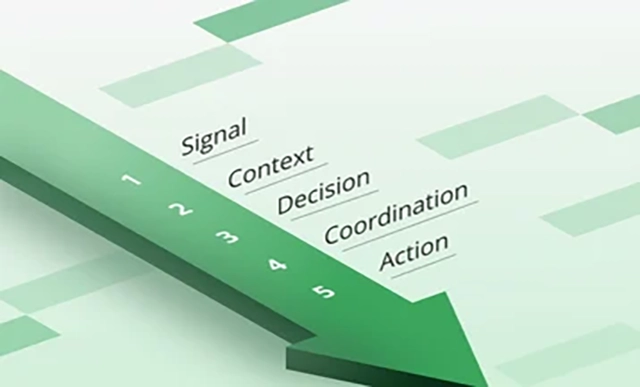
What Is Orchestrated Planning? The Next Evolution of FP&A in the AI EraThe evolution of enterprise performance management is transitioning from merely connecting data across departments to orchestrated planning, which emphasizes real-time decision-making and action execution through the integration of AI and governed financial and operational data, addressing the challenges of decision latency as organizations face increasing data complexity and volatility.
13 minute read