

8 minute read
Meet the Authors
Key Takeaways
What you need to know
Enterprise landscapes are increasingly hybrid by default, requiring a strategic shift away from point-to-point connections toward unified, scalable integration platforms.
SAP Integration Suite, powered by SAP BTP, delivers the prebuilt content and standardized governance necessary to manage sprawling multicloud applications seamlessly.
By establishing a resilient abstraction layer, organizations can secure their core data while enabling fast, responsible AI innovation across the business.
Enterprises don’t operate in a single, neatly-bounded SAP landscape anymore. ERP, line-of-business applications, and data platforms now span on-premise, private cloud, and multiple hyperscalers with a growing mix of SAP and non-SAP workloads reshaping the integration conversation.
In a recent SAPinsider Expert Exchange session, Robert Holland, Chief Research Officer at SAPinsider, spoke with Arti Gopalan, Director of Product Management for SAP Integration Suite, about what this shift demands.
Gopalan framed the conversation around compounding complexity. “On average, a large organization has around 600 applications, but when we talk to our customers, we know there are thousands of applications that they are trying to ensure are seamlessly connected and interacting with each other.”
Explore related questions
Ask SAPi
When Every Landscape Is Hybrid by Default
Still, hybrid and multicloud environments rarely result from deliberate strategy. Business units license cloud apps, regional teams adopt their own tools, and mergers create overlapping landscapes, leaving IT to manage a patchwork of interfaces that makes even small changes risky.
“The hybrid architecture, the multicloud architecture, the presence of point solutions which have been built in-house by organizations over a period of time, are all still relevant,” Gopalan explained. She added that they have not moved away from the landscape but are growing instead. Thus, organizations caught in this tangle struggle to respond to market shifts, regulatory change, or new commercial models.
What SAP Integration Suite Brings
Gopalan sees the integration conversation changing: “Organizations are moving away from point-to-point interfaces. [Now] It is much more the platform thinking, where conversations around API-centric, event-driven, standardized, reusable integrations will drive agility and innovation.”
That reflects a deeper shift. According to Gopalan, “The concept of process integration has moved away from being yet another back-office utility. It has become more strategic and foundational; it is becoming a fabric to create a seamless operating model across the organization.”
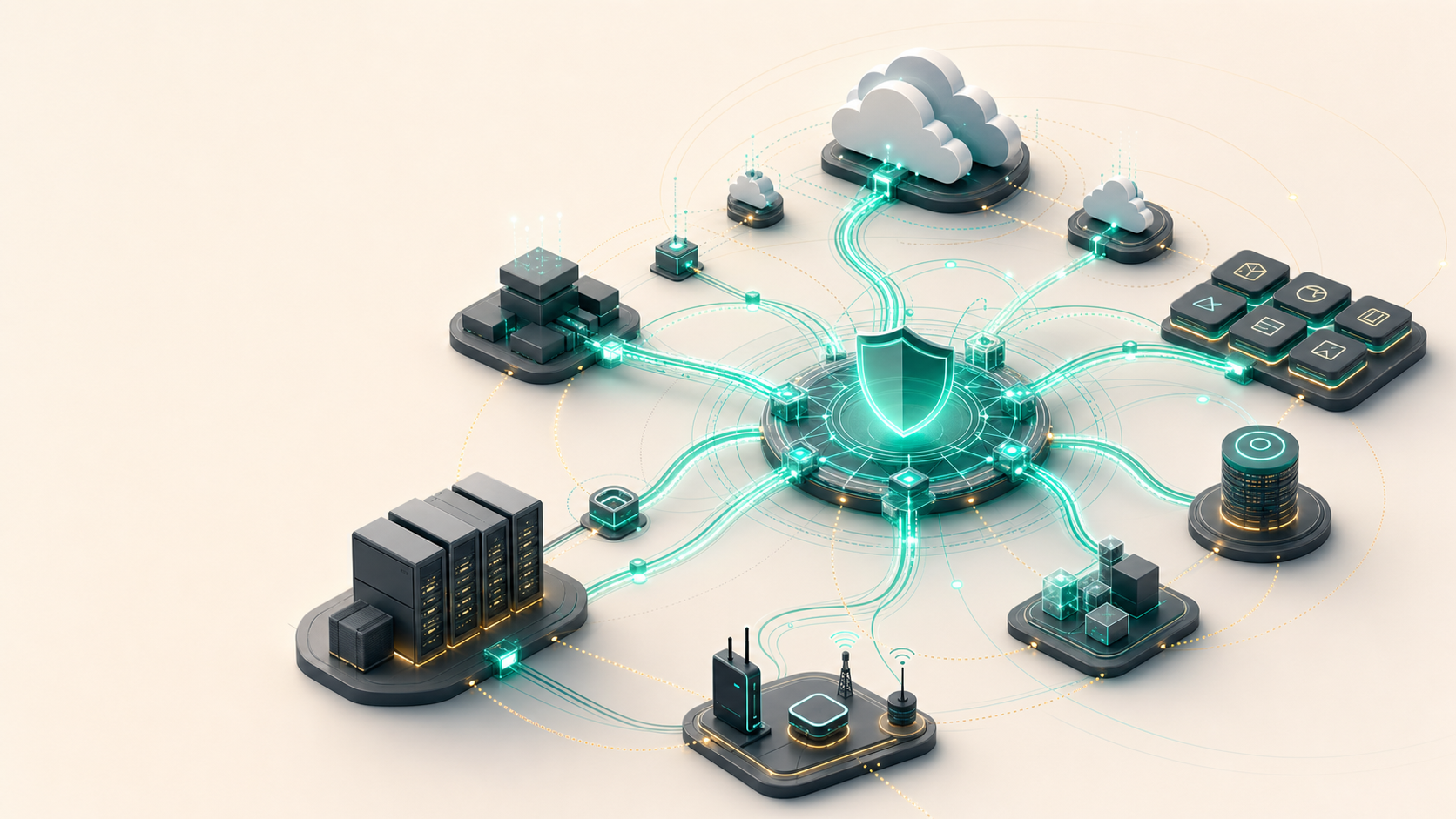
This is where SAP Integration Suite, a cloud-based platform on SAP Business Technology Platform (SAP BTP), becomes integral, as it connects SAP and non-SAP systems across on-premises and multicloud environments. SAP Integration Suite delivers this through three levers:
- Prebuilt integration content, such as packs, APIs, and mappings for SAP-to-SAP and SAP-to-third-party scenarios
- A unified environment to design, monitor, and govern integrations
- Open standards support connecting legacy systems and hyperscaler-native services into SAP processes
Resilience and Governance in a Multicloud World
Operational risk scales with cloud sprawl. “In 2026, the hardest problem is not around connecting endpoints. Connectivity has become the table stakes for an iPaaS,” Gopalan highlighted. “The more important challenges are around network variability, trust, security, how you handle failures, and if you have end-to-end visibility on what is happening across the applications in question when it comes to a business process.”
“The key is ensuring consistency, reliability, resilience under all these variable conditions,” she added.
Governance is the other side. As more teams build integrations independently, duplication and policy drift multiply. Gopalan described the balance that SAP Integration Suite is designed to strike: “The key is to balance business process innovation and agility, which is where fluidity with integrations comes into play, while being mindful of the guardrails that are in place. Management is still centralized with Integration Suite, but the processing itself runs in a specified location, giving a more controlled environment.”
Why Hybrid and Multicloud Integration Matters
Integration is often the hidden constraint on the speed of modernization. Gopalan framed this in terms of portability: “Integrations as a platform creates an abstraction layer, and it makes sure that organizations can change the where as well as the how, based on requirements, independently of each other.” That turns integration from one-off work into a reusable asset.
For SAP architects, integration leads, and CIOs, this extends into AI territory. Gopalan concluded, saying that she sees the platform becoming “a trusted boundary and a foundational capability which will enable our customers to scale AI responsibly, making sure that acceleration of innovation is not impeded, and that the core data, the assets, the operational trust is maintained, while there is a safeguard around all of it.”
What This Means for SAPinsiders
- Treat hybrid and multicloud as the default, not the exception. The integration strategy should assume that complexity will increase, not decrease.
- Standardize on a platform. Prebuilt content, unified tooling, and governance capabilities replace fragmented patterns with reusable, scalable ones.
- Build resilience and governance from the start. Decoupled flows, centralized monitoring, and clear policies prevent integration from becoming a bottleneck as cloud, data, and AI initiatives accelerate.
More Resources
See All Related Content
Having It Both Ways: How Hybrid Cloud Control and Orchestration Achieve Reliable, Resilient Enterprise OpsHybrid cloud complexity does not have to undermine enterprise reliability. Charles Crouchman examines how orchestration, workload automation, and AI can help organizations coordinate SAP and non-SAP systems across cloud and on-premises environments while supporting modernization, cost control, and resilient operations.

SAP API Policy: What Customers Need to Know About Integrations and AI AgentsSAP has clarified how its API Policy affects existing integrations, custom ABAP, third-party platforms, and AI agents. Most documented integrations remain intact, while autonomous AI access faces stronger governance requirements and several commercial and operational questions remain unresolved.
5 minute read

AVEVA Folds OSIsoft’s PI System Into CONNECT as a Single Industrial Intelligence PlatformAVEVA has integrated OSIsoft's PI System into its CONNECT platform, creating a single industrial intelligence hub. This move impacts SAP-integrated operations by centralizing historian data in the cloud, streamlining access and governance for time-series information across industries.
3 minute read
Chachapoya Consulting Builds SAP SuccessFactors Practice Around Repeatable M&A OnboardingChachapoya Consulting, an SAP Silver Partner, built its SAP SuccessFactors practice around a unique delivery model to help Insight Corporation standardize HR operations amidst continuous M&A. This approach enabled rapid onboarding of new acquisitions using template-driven configurations, backed by multi-year managed services.
3 minute read