

2 minute read

Meet the Authors
Key Takeaways
What you need to know
SAP Business One AI readiness starts with clean item masters, customer and vendor records, approval rules, and consistent document practices.
Agentic AI can automate SAP Business One workflows, but poor master data can turn faster transaction processing into faster error creation.
Organizations should address SAP Business One data quality and process automation controls before expanding AI agents into custom workflows.
Agentic AI has moved from concept to catalog item for SAP Business One customers. That means platforms such as MyWave.ai, offered by Forgestik, now operate as conversational AI co-workers that perform tasks on behalf of users, automating workflows across SAP Business One, CRMs, and marketing tools through a no-code interface. The technology promise is substantial with MyWave.ai citing more than 80% reduction in manual work and errors and an eightfold reduction in workflow completion time.
Yet, the readiness question receives far less attention. An AI agent that creates sales orders, records expenses, or generates documents is only as reliable as the master data, rules, and process discipline underneath it. For CIOs and ERP program managers, the practical agenda, therefore, revolves around which data foundation is more important.
All About Item Masters
Every automated transaction touches the item master. Duplicate SKUs, inconsistent units of measure, missing item groups, and stale pricing turn AI-driven order entry into a fast way to create bad documents.
Explore related questions
Ask SAPi
Before enabling conversational transaction creation, organizations should deduplicate item records, standardize naming conventions, and verify that units of measure, warehouses, and price lists are complete and current. That is because an agent asked to “create an order for 50 units of the blue valve” cannot resolve ambiguity that humans have tolerated for years.
Customer and Vendor Records
Agentic platforms personalize interactions and orchestrate data across systems, which means customer records become live inputs rather than static references. MyWave.ai, for instance, fetches unknown data from relevant systems or documents, or asks the user directly, before completing a process.
That design rewards clean records such as accurate contacts, valid payment terms, correct tax codes, and consolidated duplicates. On the other hand, automation amplifies inconsistency where the same customer exists three times with different terms.
Approval Rules and Exception Logic
One of the strongest arguments for agentic AI in ERP is enforced compliance. MyWave.ai emphasizes process compliance through controlled algorithmic behavior and Guardrail Conditions that ensure the correct process is always followed, along with detailed audit trails. Still, guardrails can only enforce rules that exist. Many SMEs run informal approval practices. For example, a manager verbally approves discounts, or credit holds are released by habit rather than policy.
Before automation, these implicit rules must be made explicit in SAP Business One, including approval thresholds, authorization hierarchies, and documented exception paths. Codifying exception logic is often the single largest readiness effort, and the most valuable.
Document Discipline
Workflow automation depends on documents flowing in the correct sequence such as quotation, order, delivery, invoice, with proper base-document relationships. Organizations that routinely skip steps, back-date documents, or use free-text lines lose the structured context AI agents rely on.
Forgestik’s positioning of MyWave.ai as a certified solution for SAP Business One that operates within predefined parameters without altering the central record-keeping system underscores the point. The ERP remains the system of record, so record quality remains the ceiling on automation quality.
Readiness Is the Real First Project
SAPinsider research on AI adoption has repeatedly found that data quality and process standardization rank among the top barriers holding organizations back from moving AI initiatives beyond pilots. The encouraging news for midmarket firms is that readiness work is finite and well understood.
A focused cleanup of item masters, business partner records, approval rules, and document practices, ideally validated with an experienced partner such as Forgestik, converts AI from a risky experiment into a controlled productivity program. Deployment options that start with pre-built Waves for standard SAP Business One processes, such as conversational expense recording and document generation, allow teams to prove value on clean, contained processes before extending to custom workflows.
What This Means for SAPinsiders
- The AI business case should be costed as a two-phase investment, and skipping phase one inverts the ROI. Vendors quote automation gains, such as MyWave.ai’s cited 80% reduction in manual work, against the assumption of clean inputs. When organizations deploy agents on top of duplicate SKUs and informal approval habits, the same speed multiplier applies to errors. CIOs and AI leads presenting an AI budget should include remediation as a named line item because the alternative is paying for it later as incident response.
- Codifying informal rules delivers value even if the AI project never ships. The exercise of making approval thresholds, exception paths, and authorization hierarchies explicit in SAP Business One is an internal controls upgrade that auditors, insurers, and acquirers increasingly expect from midmarket firms. Organizations that frame the readiness effort this way secure broader executive sponsorship, because the deliverable stands on its own regardless of which automation platform wins the evaluation.
- Use pre-built automations as a diagnostic instrument. Deploying a contained, standardized process first does more than limit risk. The exceptions Forgestik’s Wave.ai agent surfaces in its first weeks form a precise map of where master data and process discipline are weakest, telling ERP program managers exactly where to invest before commissioning custom workflows.
More Resources
See All Related Content
Orchestration extended: SAP to sell ORO Labs platformORO Labs, a procurement orchestration vendor founded by former SAP Ariba product leaders, has signed an agreement with SAP to sell its platform as a solution extension called SAP Ariba Procurement Orchestration by ORO Labs. The company announced the deal on October 5 and said general availability is planned for November 2026. The extension is […]

Rethinking SAP Modernization: The Shift from AI Later to AI NowThe article discusses the urgent shift in SAP transformation strategies from a sequential modernize-migrate-innovate approach to an 'AI First, AI Now' paradigm that prioritizes immediate AI-driven value creation amidst complex legacy systems.
3 minute read

Making Tech-Industry Partnerships Work in the Agentic EraAs industries increasingly partner with tech companies to leverage AI, a staggering 90% of these collaborations struggled to achieve their goals in 2024, highlighting the necessity for careful planning and selection of partnership types to navigate the complexities of governance, IP, and cultural differences for successful outcomes.
11 minute read
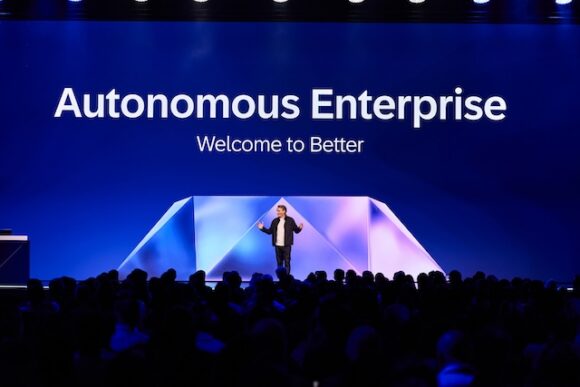
SAP Enters Payments as Joule Assistants Expand Across Every Line of BusinessSAP has launched new AI-powered Joule Assistants across various business functions as part of its Autonomous Enterprise vision, aimed at automating critical workflows and enhancing operational efficiency, with the broader goal of integrating intelligence throughout organizations, despite some assistants not being available until 2027.
5 minute read