1 minute read

Meet the Experts
Key Takeaways
What you need to know
Levi's is replacing nine heavily customized legacy ERP systems with one global SAP S/4HANA Fashion Private Cloud instance on Microsoft Azure, ending with a single ERP instance for every brand, and every channel.
The modernization is enabling an AI-ready clean core strategy, with more than 80% of global business processes standardized and AI agents already automating sales orders, invoice capture, and vendor compliance.
Large-scale SAP transformation requires layered governance, strong process documentation, and internal leadership rather than full outsourcing.
Levi Strauss & Co. has spent 173 years reinventing itself, from outfitting Gold Rush miners to becoming a global retailer with approximately $6.5 billion in revenue and operations in more than 100 countries. Its latest reinvention is happening beneath the surface. In a wide-ranging conversation at SAP Sapphire 2026, Chief Digital and Technology Officer Jason Gowans and VP of ERP & Market Operations Saravana Ramaratnam walked SAPinsider through one of the most ambitious ERP modernization programs in retail and explained how it supports Levi’s goal of becoming what Gowans calls a “frontier firm.”
Where the Program Stands
Levi’s began its SAP journey in 1999 on the apparel and footwear platform AFS, with its first go-live in 2003. The current modernization effort began in 2019 and is replacing a complex landscape of nine heavily customized legacy systems with a single global instance of SAP S/4HANA Fashion, Private Cloud Edition on Microsoft Azure. According to Ramaratnam, Levi’s was “the second customer globally to sign for fashion on the cloud”.
Now, the finish line is approaching. “We are, I’d say, 80% there, close to the finish line,” Ramaratnam told SAPinsider. “It’s ending next year. By the end of next year, we’ll be in one global ERP instance across the 110 countries, every market, every brand, every channel.”
Explore related questions
Ask SAPi
The company recently completed the migration of 14 East Asia Pacific and Greater China countries, including Japan, China, Thailand, Taiwan, and Australia, in a single cutover. That milestone followed go-lives in the United States, Canada, Mexico, South Africa, India, and for Beyond Yoga, Levi’s premium activewear brand. “Now we are moving to Europe, which is our final phase next summer,” Ramaratnam said.
According to a press release published by the company in conjunction with Sapphire, the program has retired more than 90 legacy systems, standardized more than 80 percent of global business processes, and moved more than 2,600 employees onto a common platform with shared data and processes.
The Target Environment
The destination is a consolidated landscape. Levi’s began with what Ramaratnam described as “three SAPs. We had about 11 ERPs, three AFS instances, one SAP ECC, which we acquired, and then a bunch of non-SAP.” All of them are being brought into a single global SAP S/4HANA Fashion instance.
The company evaluated public cloud and decided it was not the right fit. “We explored using public cloud,” Ramaratnam said. “But it would not have worked for us given our maturity requirements.” Private cloud on Microsoft Azure provided the flexibility Levi’s needed for a business that spans 50,000 points of distribution and more than 3,000 owned stores.
That architectural choice has delivered clear benefits. According to the company’s press release, Levi’s co-developed an upgrade process with SAP that takes about 20 minutes, compared with an industry norm closer to 48 hours, allowing the business to stay current with minimal disruption.
Lessons Learned
Ramaratnam said the program has been shaped by three principles: governance, partnership, and people.
The first was a clean-core discipline that predated SAP’s own use of the terminology. “We were focused on clean core even before clean core was a thing in 2019,” he said. “There was heavy top-down governance because we’ve been on the other end of the spectrum, with nine heavily customized instances. Governance was number one. Internally, we had to rewire our teams to leave behind the mindset of customizing everything. It took us a year to land in that mindset, but it worked well for us.”
The second was a deep partnership with SAP, including co-engineering capabilities such as near-zero-downtime upgrades. The third was a decision to lead the program from within rather than hand it off entirely to a systems integrator. “We did not fully delegate the project to a partner. We led the charge, and it was a case of use walking with the partner,” Ramaratnam said, crediting leaders with more than 20 years of SAP experience, much of it at Levi’s.
Coordinating the Dependencies
A program of this scale cannot run in isolation. Levi’s recent Asia Pacific launch touched 1,100 integration points and about 150 external applications spanning B2B, B2C, and distribution centers. To manage that complexity, Ramaratnam’s team uses a three-layer governance model: an operational steering committee with business leaders, a dedicated program and change management structure with a separate business cutover workstream, and a technical governance layer that synchronizes release calendars with third-party systems.
The internal coordination is just as demanding. “SAP is not the only project we are doing in the company. In fact, we are one among probably 60 or 70 other initiatives,” Ramaratnam said. To avoid collisions, Levi’s runs what he calls an SAP Release Council. “This is where every program that touches SAP comes and presents, and then aligns with our timeline, the mothership’s timeline. They align to that so there is no disruption.”
AI Is Already in Production and Scaling
Levi’s is not waiting for the ERP program to finish before unlocking AI value. “As a company, we’re all in on AI, and it starts at the top,” Gowans said, citing CEO Michelle Gass’s vision of Levi’s as a “frontier firm.” According to the company’s press release, AI agents are already processing sales orders, capturing invoices, and managing vendor compliance tasks.
On the SAP side, Ramaratnam described “a roadmap of about 70-odd use cases at various stages.” Some are already live in order management and AR claims. Supply chain use cases are in ideation, and engineering use cases, including agentic capabilities for end-to-end testing, are moving ahead in parallel. “A year from now, we’ll have a lot more that are live and productive than where we are today, along with the launch of new markets,” he said.
One key accelerator was the documentation discipline Levi’s had already established in financial operations. Gowans pointed to what SAP CEO Christian Klein had described in the Sapphire Day 1 Keynote as ‘business memory’. “We were fortunate that we had the foresight to author more than 1,100 standard operating procedures, 19,000 discrete steps,” Gowans said. “Saravana and team built an agent to ingest all of those SOPs and then interrogate the agent on where the opportunity was to automate.”
Just as important was the decision not to invest in AI for systems that were being retired. “We did not invest in any AI capability for our legacy platforms, because we’re in the middle of transformation,” Ramaratnam said. Every dollar invested in a clean core is delivering value through early AI adoption. Every dollar invested in clean core is delivering value through early AI adoption.
Real-Time Visibility and a Reimagined Operating Model
The transformation has changed what Levi’s expects from its data. Operating at retail speed across 110 markets requires, in Gowans’ words, “a single backbone, a single data plane in which you can operate the business.” The company’s press release makes the same point, describing “real-time visibility across our global business, AI embedded directly into our operations, and the agility to operate like the world-class retailer we’re becoming.”
Gowans also made clear that the technology matters only if the organization is willing to rethink how it operates. “If we were starting the company in 2026, is this the process that we would have? And 99 times out of 100, the answer is no.”
Recommendations for Other Organizations
Asked what advice he would give companies embarking on a similar journey, Ramaratnam emphasized balance. “It’s important to experiment and learn some of the newer capabilities coming in, but not to lose sight of the importance of process, standardization, and data,” he said. “For us, that’s what helped. We could not have scaled some of the use cases the way we did if we hadn’t done the work on the data and process.”
Gowans offered a broader perspective. “Having the ambition to reimagine what’s possible is probably the biggest piece of advice. This is far more than another automation project.”
What This Means for SAPinsiders
Commit to clean core and standard processes before AI, not after. Levi’s adopted a clean-core discipline in 2019, before SAP started widely using the term, and spent a year retraining teams to move beyond a customization mindset. That decision is now one of the main reasons Levi’s can deploy AI agents continuously and complete SAP S/4HANA upgrades in about 20 minutes. SAPinsiders planning their own transformations should treat clean core as a non-negotiable design principle and resist investing in AI on legacy platforms which may contain disorganized or disharmonized data and processes.
Build layered governance and an integration release council early. With 1,100 integration points and 150 external applications involved in a single regional cutover, alongside more than 60 other corporate initiatives competing for calendar time, Levi’s relies on three layers of governance and a dedicated SAP Release Council to keep dependencies aligned. SAPinsiders should establish comparable governance structures from day one, with clear roles for operational steering, business cutover, technical release coordination, and third-party alignment.
Treat documented processes as the foundation for AI value. Levi’s was able to move quickly on AI in financial operations because it had already documented more than 1,100 standard operating procedures covering 19,000 discrete steps. That created a ready-made knowledge base an agent could ingest. SAPinsiders should assess the depth of their SOP coverage, close documentation gaps in high-value processes, and pair that effort with disciplined value quantification. Levi’s, for example, filters use cases through a center of excellence that reduced an initial list of 15 to 20 candidates for automation to four or five worth pursuing.
More Resources
See All Related Content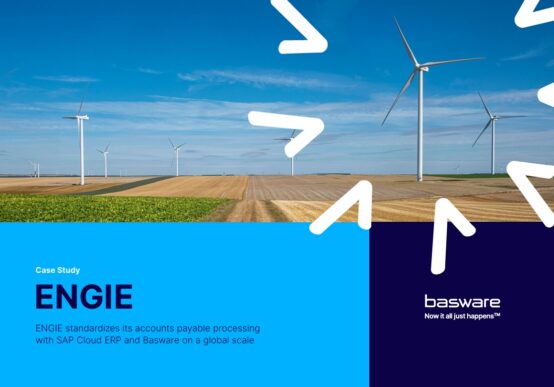
Case study: ENGIE As ENGIE advances its SAP Cloud ERP transformation, it chose Basware to manage supplier invoices outside the ERP core. This enables a scalable, compliant and automated AP model across nearly 900 entities while keeping SAP standardized. Within two years, automatic matching increased from 20% to 82%, supporting high-volume processing at global scale.
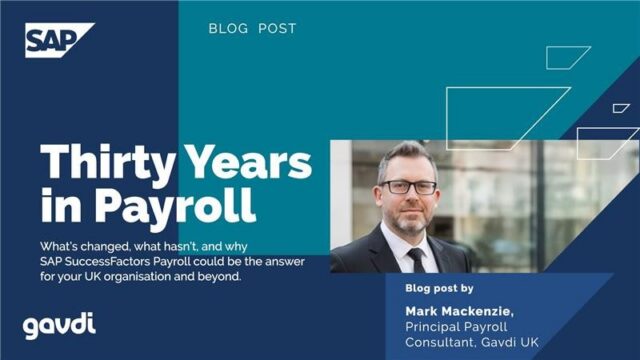
Thirty Years in Payroll: What’s changed, what hasn’t, and why SAP SuccessFactors Payroll could be the answer for your UK organisation and beyondMark Mackenzie highlights the persistent resistance to change within payroll systems despite advancements elsewhere in HR and finance, emphasizing the importance of adapting to modern technology like SAP's SuccessFactors Payroll to foster better integration, communication, and responsiveness in payroll operations.
9 minute read
Part Two: The Hidden Costs of Hybrid SAP Landscapes: The Human Toll of TransformationSupporting legacy environments while learning and operating new cloud-based SAP models creates dual responsibilities, fragmented workflows, and constant context switching for Basis and operations teams. Readers will explore how hybrid SAP strategies, while rational from an architecture and risk perspective, quietly create a heavy human and organizational toll on the teams that run them. The […]
1 minute read

SNP Advances AI for Unstructured Data in M&A with Kyano OrosSNP is extending its Kyano platform with Kyano Oros, an AI capability that brings unstructured data—contracts, HR records, and compliance documents—into SAP M&A and transformation workflows, helping deal teams manage risk, carve-outs, and Day 1 readiness.
3 minute read