3 minute read

Meet the Authors
Key Takeaways
-
Volaris is deploying SAP Cloud ERP Private to modernize core business operations and support growth.
-
The airline is integrating SAP Ariba, SuccessFactors, Concur, and Datasphere for end-to-end process visibility.
-
The transformation positions cloud ERP as the foundation for scalable, data-driven decision-making.
Mexican airline Volaris is undergoing a major digital transformation by migrating its core business operations to the cloud. Utilizing the SAP Cloud ERP Private (formerly RISE with SAP) platform, the company has modernized its financial management, supply chain, and human resources departments to increase administrative agility, as it marks its 20th anniversary.
As part of this initiative, the low-cost carrier has implemented SAP Cloud ERP Private alongside solutions including SAP Ariba, SAP SuccessFactors, SAP Concur, and SAP Datasphere to modernize core business processes across procurement, finance, workforce management, and analytics.
The airline says it completed the migration to the cloud in a record implementation time, positioning the project as a foundation for continued growth in a highly competitive market.
Explore related questions
Cloud ERP foundation enables scalable, real-time operations
Volaris adopted SAP Cloud ERP Private to manage and modernize mission-critical business processes through a unified cloud ERP foundation.
The airline completed its transition to the cloud on an accelerated timeline, enabling a more flexible and scalable infrastructure designed to support growth and respond to market changes.
Paola Becerra, president of SAP Mexico, said, “Airlines today face the challenge of operating with high levels of efficiency, resilience, and agility. Adopting cloud platforms like SAP Cloud ERP Private allows organizations like Volaris to innovate faster, optimize their processes, and make data-driven decisions to continue growing in a dynamic environment.”
This cloud-based foundation is designed to support a more responsive operating model in an industry where demand volatility, cost pressures, and operational complexity remain high.
Furthermore, Volaris’ cloud move also addresses the internal barriers that often blunt AI’s impact, such as fragmented data, overlapping systems and shadow IT. By pulling core finance, procurement, workforce and operational data into a governed SAP landscape, Volaris is tackling the integration and governance issues that leave many organizations with impressive AI proof-of-concepts but modest productivity gains.
Extending transformation across finance, HR, procurement, and analytics
Under the new model, SAP Cloud ERP Private provides the managed cloud ERP environment, while SAP Ariba digitalizes procurement and supplier collaboration. SAP SuccessFactors supports talent management processes such as recruiting, development and performance management. SAP Concur handles travel and expense workflows, and SAP Datasphere is used to integrate data from multiple sources for reporting and analysis. Together, the systems are meant to reduce manual work, increase transparency and improve compliance with internal policies.
The new setup is intended to give Volaris more timely data for planning and decision-making as it adds routes and navigates fuel, labor and regulatory pressures.
Positioning for the next phase of growth
Volaris said the transformation is intended to support its next stage of expansion by enabling a more intelligent, connected, and scalable operating model.
Carlos Gonzalez, CTO of Volaris said, “At Volaris, we are committed to innovation and the continuous improvement of our operations. Adopting SAP cloud solutions allows us to strengthen our processes, scale efficiently, and have a technological platform that supports the airline’s growth and underpins our strategic decision-making.”
Volaris’ decision pairs its technical migration with a cloud operating model, including clearer governance, financial oversight and structured change management around the new SAP landscape. For an ultra-low-cost carrier, that kind of discipline around scope, standardization and cost management underpin the economics of the business and determines whether cloud and AI investments translate into durable unit‑cost advantages.
What This Means for SAPinsiders
Cloud ERP defines operational competitiveness. Organizations are shifting ERP from transactional systems to execution engines that directly impact cost structures and responsiveness. For large enterprises, this reframes ERP investment as a lever for margin control and operational agility.
Integrated data enables scalable AI outcomes. Unifying finance, HR, and procurement data creates the foundation required to move beyond isolated AI pilots. This increases the likelihood that automation and analytics initiatives deliver measurable, enterprise-wide productivity gains.
Transformation success depends on operating model discipline. Technology adoption alone is insufficient without governance, standardization, and change management embedded from the start. Enterprises that align cloud ERP with operating model redesign are more likely to sustain long-term value realization.
More Resources
See All Related Content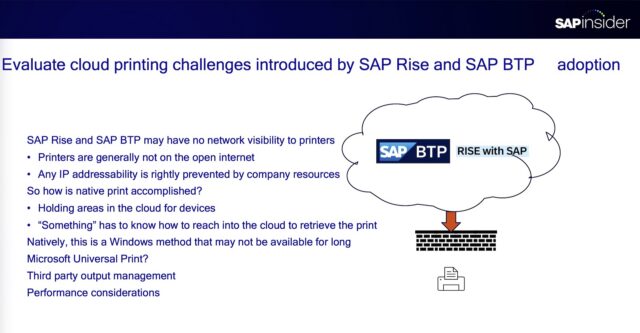
SAP Printing Becomes a First-Class Citizen in Cloud ArchitecturesSAP technology leaders must prioritize output management as critical to business continuity in the cloud era, redesigning printing strategies for new architectures to avoid operational disruptions from evolving security standards and network limitations.