3 minute read

Meet the Authors
Key Takeaways
What you need to know
Stern-Wywiol Group deployed SAP Cloud ERP across nine countries using a two-tier architecture.
The move improves supply chain coordination, reduces errors, and standardizes global processes.
The unified ERP backbone is helping enable faster expansion and better compliance across regions.
Germany-based Stern-Wywiol Gruppe is replacing its patchwork of legacy ERP systems with a unified SAP Cloud ERP backbone that links production, warehousing, and finance across nine countries, aiming to smooth product flows, cut errors and IT costs, and give local subsidiaries a faster, more compliant way to respond to regional demand, SAP said.
The Hamburg-based company develops and produces ingredients and including emulsifiers, enzymes, stabilizers, and vitamins, for products like flour, dairy, meat, and plant-based foods. They also make functional solutions for animal nutrition products, cosmetics, and oleochemistry, and are recognized as a global top player in specialty ingredients markets.
The company’s move to SAP marks a key milestone in its broader digital transformation journey, as it looks to modernize its ERP landscape while balancing global standardization with local business requirements.
Explore related questions
Ask SAPi
Building a Cloud-First, Two-Tier ERP Foundation
With growing complexity across global supply chains, product formulations, and compliance requirements in the food and feed industry, Stern-Wywiol Group, like many midmarket companies, found its legacy ERP system no longer fit for purpose.
Sven Dudzik, director of digital transformation, explained the situation: “Our IT landscape with the Navision system had reached the end of its lifespan due to the age of the software, but also because of our company growth and international presence. Upgrades were impossible, stability was no longer guaranteed, and legal requirements could no longer be met. The decision to switch to SAP eventually became easy for us, as it allowed us to best meet both our IT and industry requirements, as well as our two-tier approach.”
To fix this, the company rolled out SAP Cloud ERP globally with implementation partner Innovabee GmbH.
The transformation included implementing a cloud-first, two-tier SAP ERP strategy with SAP Cloud ERP (SAP Cloud ERP Private at group core, and SAP S/4HANA Cloud Public Edition for smaller entities).
The two-tier approach aimed to establish a unified digital backbone that links international locations while enabling regional flexibility.
Connecting Global Operations While Preserving Local Agility
A key priority for Stern-Wywiol Group was ensuring that its ERP transformation did not come at the expense of local responsiveness.
By implementing a two-tier ERP model, the company can standardize core processes, such as finance and reporting, while enabling business units to operate with the agility required in diverse regional markets.
“Our international locations and subsidiaries are often characterized by a unique dynamic and independent nature in terms of IT and regulatory frameworks. What works well in Ahrensburg might look completely different in Singapore, for example, regarding taxes, reporting standards, or language localization. The two-tier approach in the context of cloud ERP was the best response,” Dudzik explained.
Feedback from teams in Asia showed they were able to go live quickly with local partners without relying on the ‘mothership’ in Germany, he added.
This model is increasingly being adopted by global organizations as a way to scale operations without introducing excessive complexity. Two-tier ERP strategies allow companies to phase cloud adoption gradually while maintaining control over core enterprise systems.
For Stern-Wywiol Group, a single global ERP backbone also enables tighter integration across business units, improving visibility and coordination across the organization by enabling faster onboarding of new entities, and ensuring consistent compliance across regions. The result is a system that supports scalable growth without the need to rebuild systems with each expansion.
Driving Efficiency and Process Harmonization
The company reports that the new SAP-based environment is already delivering tangible operational benefits including:
Smoother product flow through the supply chain, because orders, inventory, and production plans now run on one platform instead of local systems and manual workarounds.
Fewer errors in warehouse operations, as pallet spaces no longer need to be counted manually.
Faster confirmations from manufacturing.
Time and cost savings as more than 700 users work in the new system.
By consolidating systems and aligning processes across locations, Stern-Wywiol Group has created a more efficient and connected operating model.
This reflects a common outcome of cloud ERP transformations, where organizations move away from fragmented legacy systems toward unified platforms that support real-time data sharing and decision-making.
Establishing a Foundation for Scalable, Long-Term Growth
Beyond immediate efficiency gains, the transformation is positioned as a long-term strategic investment.
With core processes now running on SAP Cloud ERP, Stern-Wywiol is positioning its digital backbone for the next wave of growth. The new environment creates room to introduce AI-driven scenarios such as smarter minimum shelf-life management, more automated invoice approvals, and faster, more reliable quality inspections.
All this with an eye toward having embedded intelligence take over routine decisions so employees can focus on higher-value work. This shift recasts ERP from a transactional system into an engine for continuous optimization.
At the same time, the rollout is designed as a template for scalable international expansion. By standardizing on a two-tier SAP model, Stern-Wywiol can bring new countries and subsidiaries live faster while still meeting local tax, language, and regulatory requirements through local partners.
Instead of standing up bespoke IT stacks for each market, the group can plug new entities into a common cloud platform, keeping complexity in check as its global footprint grows.
Longer term, the company is betting on the value of a stronger data and process backbone. Harmonized processes and better master data are expected to sharpen analytics, planning, and margin visibility, giving leaders more reliable insight into supply chain performance and regulatory exposure.
As the global template matures, Stern-Wywiol expects to respond more quickly to disruptions and new requirements, supported by consistent, real-time information across the business as the basis for sustainable, scalable growth.
What This Means for SAPinsiders
Cloud ERP is shifting from modernization to operational strategy. Companies are no longer moving to the cloud just to upgrade technology. They are using it to enable new operating models that balance standardization, agility, and scalability.
Process harmonization is the real ROI driver. The biggest gains are coming from aligning workflows and data across entities. This creates the foundation for real-time visibility, better decisions, and future AI adoption.
Partner ecosystems remain critical to execution success. ERP transformations at this scale require tight collaboration between business teams and implementation partners. Execution, not just technology choice, determines long-term value realization.
More Resources
See All Related Content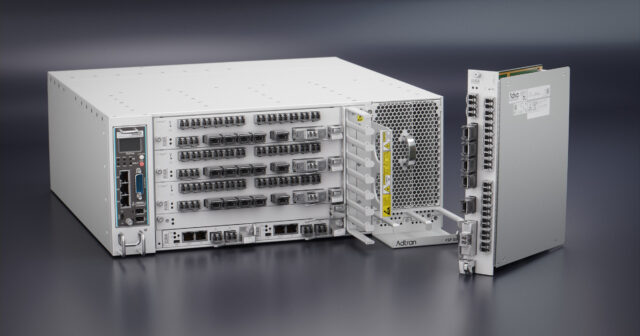
SAP Strengthens Its German Cloud Infrastructure with BSI-Approved Layer 1 Encryption from Adva Network SecuritySAP is securing connectivity between its Walldorf and St. Leon-Rot data centers with BSI-approved, quantum-safe Layer 1 encryption from Adva Network Security, extending its sovereign cloud architecture down to the optical transmission layer for public sector and regulated workloads.
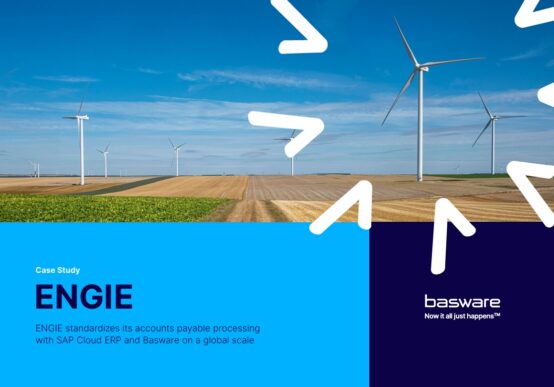
Case study: ENGIE As ENGIE advances its SAP Cloud ERP transformation, it chose Basware to manage supplier invoices outside the ERP core. This enables a scalable, compliant and automated AP model across nearly 900 entities while keeping SAP standardized. Within two years, automatic matching increased from 20% to 82%, supporting high-volume processing at global scale.
1 minute read

Atturra Builds SAP Integration Strategy Around Boomi and Enterprise-Wide ConnectivityAtturra is expanding its SAP integration practice around Boomi, connecting SAP with finance, HR, CRM, procurement and analytics platforms while extending its capabilities into API governance and enterprise automation.
3 minute read

How Arthrex Rebuilt SAP GTS Automation for RISE with SAPArthrex rebuilt a critical SAP GTS screening workflow across Microsoft Azure, Redwood RunMyJobs and SAP-managed services as it moved into RISE with SAP. The project established a tested approach for file-based automation that can inform future GRC and S/4HANA migrations.
4 minute read